
A standby generator can look ready until an outage exposes a failed start, warning alarm, unstable output, or transfer problem. Smoke, fuel odor, unusual vibration, and repeated shutdowns deserve more than a quick reset, especially when electrical equipment or gas connections may be involved.
Call (747) 999-6090 to request generator service
Altadena generator repair is appropriate when a generator will not start or transfer power. It is also appropriate when the unit shuts down repeatedly, shows an error code, or displays signs of an electrical, fuel, or exhaust problem. Homeowners can observe indicators and check obvious conditions when safe, but should not open panels, bypass controls, or troubleshoot fuel and transfer equipment.
Knowing which symptoms point to a developing fault, and which indicate an immediate hazard, helps you protect your home and give a technician useful information. Start by looking at the warning signs that most often appear before or during a generator failure.
What are the most common signs a generator needs repair?
Short answer: A failed start, repeated shutdown, warning code, unstable power, unusual noise, smoke, fuel odor, overheating, or a fluid leak should be treated as a service signal. You may observe the unit from a safe location, but do not open an electrical panel, bypass a safety device, or attempt fuel-system repairs.
Generator trouble is not always obvious during a quiet day. A standby unit can appear ready and still fail when an outage places it under demand. Pay attention to changes during an automatic exercise cycle, a test, or an actual power interruption. Record the exact indicator or error message, when the symptom occurred, and whether the home lost power. That information helps a technician distinguish a generator issue from a transfer-switch, panel, fuel, ignition, or connected-load problem.
| What you notice. | What it may indicate. | What to do. |
|---|---|---|
| The unit does not start during an outage or test. | A starting, maintenance, fuel, ignition, or control problem may require diagnosis. | Stop repeated reset attempts and request professional service. |
| A warning light, alarm, or error code appears. | The controller has detected a condition that needs interpretation. | Note the code and follow the manufacturer guidance without opening the equipment. |
| Power is inconsistent, or the transfer does not complete. | The generator, transfer equipment, backed-up circuits, or electrical integration may need testing. | Do not operate transfer equipment manually; arrange electrical troubleshooting. |
| Grinding, knocking, squealing, or unusual vibration occurs. | A mechanical or operating condition should be inspected before continued use. | If the symptom is significant or recurring, stop the unit and call a professional. |
| Smoke, burning or fuel odor, overheating, or a fluid leak is present. | A potentially hazardous electrical, fuel, cooling, or mechanical problem. | Keep clear, follow appropriate emergency precautions, and seek professional help. |
Routine service being overdue is another reason to schedule an inspection, especially if the generator has also shown a warning sign. Annual maintenance visits can include oil changes and testing, while a recurring failure may require broader electrical troubleshooting rather than a routine service alone. A standby generator maintenance guide can help you understand the preventive side without replacing a diagnosis.
For active symptoms in Southern California, professional electrical troubleshooting and diagnostics can evaluate the complete backup-power path. Expert Electric Group also provides remote generator monitoring setup, which may help identify alerts before the next outage. If the generator has failed when power is out, request service at (747) 999-6090.
Which generator checks are safe for an Altadena homeowner?
Short answer: Stay outside the equipment enclosure and limit your inspection to visible indicators, obvious fuel availability, and clear signs of a utility interruption. If you notice a fuel smell, overheating, electrical hazard, repeated shutdowns, a failed start, or a transfer-switch concern, stop checking and call a qualified professional.
A standby generator combines mechanical, fuel, electrical, and automatic transfer equipment. A visual check can provide useful information for a service call, but it cannot establish that the system is safe to operate. Do not open an electrical panel, remove covers, bypass a safety device, adjust a fuel system, or work inside transfer equipment. Those tasks can expose you to energized parts, moving components, combustion hazards, or an unexpected change in how power reaches your home.
- Observe the unit from a safe position. Look for a status light, displayed fault message, or other visible indicator without removing any cover. Note the exact wording or take a photo from a safe distance. Do not keep resetting the system if it shuts down again.
- Check for an obvious fuel or utility interruption. If there is no danger and you can do so without touching equipment, confirm whether the home has its expected natural gas or propane supply. You may also check whether the neighborhood outage is still affecting utility power. Do not inspect, tighten, modify, or repair fuel connections.
- Look for visible warning conditions. From outside the equipment area, note smoke, sparks, fluid pooling, unusual vibration, visible damage, blocked airflow, or signs of overheating. A fuel or burning odor is a reason to move away and seek professional guidance, not to investigate further.
- Consult the manufacturer instructions. Use the model-specific manual to identify the meaning of a visible status indicator and the manufacturer-approved owner checks. Do not follow any step that requires opening panels, defeating a safety control, entering transfer equipment, or handling fuel-system components.
- Record what happened for the technician. Write down when the problem began, whether an outage was in progress, what the indicator showed. Whether the generator attempted to start, and whether the same issue has happened before. This context can help a technician separate an isolated event from a recurring fault.
When a generator fails during an outage or shows recurring symptoms, professional diagnosis should cover more than the engine. The generator, transfer equipment, electrical distribution, and backed-up circuits must work together. Expert Electric Group provides electrical troubleshooting and diagnostics for homeowners who need a safer path to identifying the problem.
When is a generator problem an emergency?
Short answer: Treat smoke, sparks, a fuel or burning odor, overheating, water near electrical equipment, or a carbon monoxide alarm as an emergency. Move people away from the hazard, call 911 when there is fire, suspected poisoning, or immediate danger, and do not approach the generator to troubleshoot it. Once emergency responders make the area safe, a qualified electrical professional can diagnose the generator, transfer equipment, and affected circuits.
Leave immediately when there is smoke, fire, or a strong odor
Smoke, visible sparks, a burning smell, or a strong fuel odor can indicate an electrical fault, overheating, or a fuel-system problem. Do not open the generator enclosure, remove an electrical panel cover, shut off components you cannot safely identify, or attempt a repair. If you can leave without passing through smoke or moving toward the equipment, get everyone outside and call 911 for fire or immediate danger. From a safe location, tell responders what you observed and whether the generator is connected to natural gas, propane, or another fuel source.
Take every carbon monoxide alarm seriously
Carbon monoxide is an odorless, colorless gas that can cause sudden illness and death if inhaled. The CDC explains that carbon monoxide can build up indoors and poison people and animals. If a CO alarm sounds, or anyone has headache, dizziness, weakness, upset stomach, vomiting, chest pain. Confusion, or unusual fatigue, leave the building immediately and call 911 or your local emergency number. Do not re-enter until emergency personnel say it is safe. A generator technician should investigate the equipment and exhaust path afterward, but electrical service is not a substitute for emergency medical or fire response.
Water and electrical equipment require distance
Flooding, standing water, or active leaks near a generator, transfer switch, panel, receptacle, or wiring create a shock risk. Keep people and pets away. Do not touch wet equipment, operate switches in the affected area, or try to restore power yourself. Call emergency responders when there is an active hazard, then request professional emergency electrical services for outage diagnosis and restoration support after the scene is safe.
For less immediate problems, such as a failed start, repeated shutdown, warning code. Or transfer-switch concern without smoke, odor, water, or a CO alarm, stop repeated restart attempts and arrange professional electrical troubleshooting and diagnostics. Expert Electric Group provides emergency electrical service on request, including outage diagnosis and restoration support. Call (747) 999-6090 when it is safe to do so.
Could maintenance-related issues cause generator failure?
Yes. A neglected battery, contaminated filter, low fluid level, restricted airflow, corrosion. Or damage from pests can leave a standby generator unable to start or carry its intended load when an outage occurs. Maintenance-related symptoms can overlap with fuel, ignition, electrical, or transfer-switch faults, so a failed start should not automatically be treated as a simple reset issue.
Common maintenance-related causes
The starting battery is one of the first areas a technician may evaluate. A weak battery can prevent the engine from cranking, while loose or corroded connections can interfere with reliable starting. Age, heat, and infrequent exercise can also affect battery performance. Do not remove covers or work around energized equipment to test it yourself. Record the controller message or status light and leave the detailed diagnosis to a qualified professional.
Fluids and filters matter as well. Oil changes and operational testing are included in the customer’s documented annual generator maintenance visits. But the appropriate schedule can depend on the equipment, how often it operates, and local conditions. Avoid treating one interval as a universal rule. The owner’s manual and the service requirements for the specific generator should guide the plan. Maintenance providers may also inspect filters, replace worn parts, and test the system under operating conditions. See the generator maintenance plan page for ongoing service options.
Restricted airflow can contribute to overheating, especially when leaves, dirt, or other obstructions surround the enclosure. Corrosion may affect connections or components over time, and rodents can damage wiring or other accessible parts. These conditions are reasons to arrange an inspection, not invitations to open the generator or repair wiring, fuel systems, or safety controls.
When maintenance is not the whole explanation
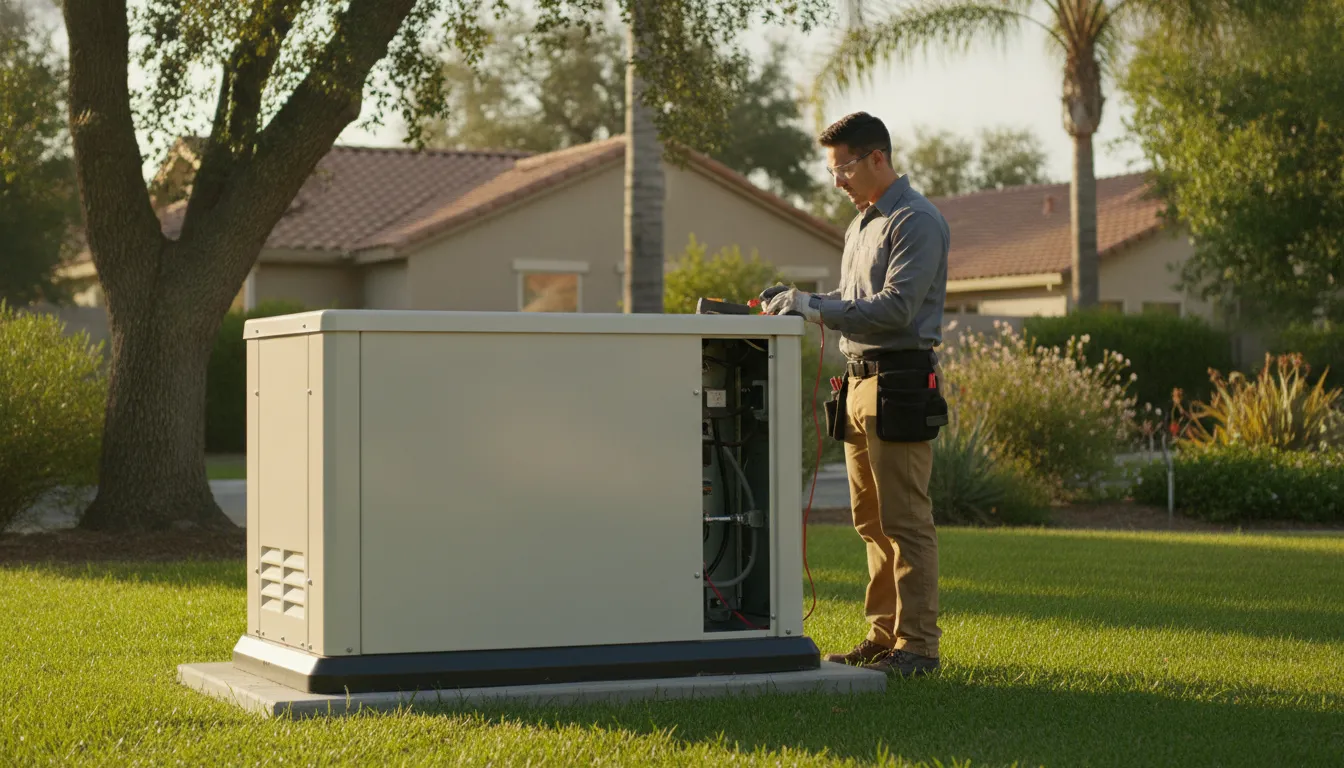
A generator that starts but does not transfer power, shuts down repeatedly, produces unstable output. Or fails under load may have an electrical integration or transfer-switch problem in addition to a maintenance issue. Professional diagnosis should consider the generator, transfer path, backed-up circuits, and operating load together. Expert Electric Group provides generator maintenance, electrical repair, and Generac-authorized service. If you notice a failed start, overheating, fuel odor, repeated shutdown, or another hazard, stop inspecting and request professional help rather than continuing to restart the unit.
How does a technician diagnose standby generator trouble?
Short answer: A technician traces the complete backup-power path, from the generator and fuel supply through the transfer equipment, electrical panel, backed-up circuits, and connected load. That process helps separate an engine, control, wiring, sizing, or transfer problem instead of assuming the generator itself is at fault.
- Confirm the symptom and generator condition. The technician reviews what happened, when it occurred, and whether the unit failed to start, stopped repeatedly, produced an alarm, or delivered unstable power. They inspect the generator’s operating condition and control indications, while treating recurring symptoms, failed starts, and outage failures as reasons for professional diagnosis rather than repeated resets.
- Check the battery and charging system. A standby generator can appear ready but still fail to crank if its battery or charging system is not maintaining starting power. The technician evaluates those components as part of the starting sequence, along with relevant maintenance conditions. Instead of asking a homeowner to open an electrical panel or work on the equipment.
- Evaluate fuel and ignition. Diagnosis includes checking whether the fuel arrangement matches the system and whether a fuel or ignition problem is affecting operation. Natural gas and propane configurations require qualified evaluation. Fuel smells, overheating, or other hazards are stop-and-call conditions, not opportunities for owner repairs.
- Test generator output safely. The technician checks whether the unit is producing usable power and whether output remains stable under an appropriate demand. A proper assessment considers the home’s actual electrical requirements, since generator service can include load assessment and system sizing for critical circuits or whole-building coverage.
- Trace the transfer equipment and panel. If the generator runs but the property does not receive backup power, the transfer path deserves attention. The technician examines the transfer switch and its integration with the electrical panel and backed-up circuits. Do not bypass safety devices or work inside transfer equipment. If the issue involves switching or integration, transfer switch installation expertise is relevant.
- Review circuits, load, and monitoring data. The final step compares the intended backed-up circuits with the actual load and looks for overload-related or circuit-specific symptoms. When available, alerts and history from remote generator monitoring can help identify developing problems. A broader electrical troubleshooting and diagnostics evaluation may be appropriate when the generator is functioning but the building still has a power problem.
This sequence gives an Altadena generator repair visit a clear evidence trail. It also helps identify whether the next step is maintenance, electrical repair, fuel or ignition service, transfer-equipment work, or a closer review of system capacity.
What should you do before requesting Altadena generator repair?
Short answer: Note what happened, record any visible status message or error code, and identify whether the problem affects the generator, the transfer of power, or only selected circuits. Make only safe external observations. Do not open an electrical panel, bypass a safety device, or attempt fuel-system or mechanical repairs.
Before contacting a professional, write down when the problem began and what the generator was doing at the time. Did it fail to start during an outage, start and then shut down, run without powering the home, or show an alarm? If the unit has a display or indicator light, record the wording or take a photo from a safe distance. Also note unusual noise, vibration, smoke, fuel odor, overheating, or visible damage. These details can help the technician understand the failure pattern without asking you to perform hazardous troubleshooting.
Make only safe, external checks
From outside the equipment area, you may observe the status indicators and check for an obvious utility interruption or fuel issue when it is safe to do so. Follow the manufacturer’s instructions for ordinary owner observations. If you smell fuel or exhaust, see sparks or smoke, find water near electrical equipment, or suspect overheating, move away and request professional help. Repeated shutdowns, failed starts, and transfer-switch concerns also warrant a qualified inspection rather than repeated resets.
Have useful service information ready
Share the generator’s make and model, approximate age, recent maintenance history, and whether the issue is new or recurring. Tell the technician which circuits or appliances were expected to receive backup power. If you have a maintenance record, prior error code, or monitoring alert, keep it available. Expert Electric Group provides Generac home generator installation and maintenance, including generator electrical repair, and is a Generac Authorized Dealer and Certified Installer. The company serves Los Angeles County and surrounding Southern California counties, rather than operating from a dedicated Altadena office.
This request is different from arranging a new installation or enrolling in a recurring maintenance plan. Installation focuses on system design, sizing, fuel configuration, and transfer equipment. A generator maintenance plan focuses on prevention and scheduled care. An active repair request should focus on symptoms, safe diagnosis, and restoring the intended backup-power function. For outage-related or hazardous electrical conditions, review emergency electrical services, then request generator service with the details you recorded. Emergency diagnosis and restoration support are available upon request, but arrival and repair timing depend on the situation.
Call (747) 999-6090 to request Altadena generator repair before the next outage.
Frequently Asked Questions
What can I safely check before calling for generator service?
Observe the unit’s status indicators, check for fuel or an obvious utility interruption if it is safe, and review the manufacturer’s instructions. Do not open electrical panels, bypass safety devices, or attempt fuel-system repairs.
Should I use a generator if it smells like fuel or is overheating?
No. Stop using the system and keep people away from the equipment. Fuel smells, overheating, electrical hazards, smoke, and repeated shutdowns require professional attention rather than additional restart attempts.
Why does a generator start but fail to power the house?
The problem may involve the transfer switch, panel integration, backed-up circuits, or the generator’s ability to produce stable output. A qualified technician should evaluate the complete transfer path instead of repeatedly restarting the unit.
How often should a standby generator receive maintenance?
Follow the manufacturer’s maintenance schedule and arrange regular professional service. An annual visit may include oil changes and testing, while batteries, filters, airflow, corrosion, and other conditions can also affect performance.
What information should I provide when requesting Altadena generator repair?
Note whether the unit failed to start, stopped repeatedly, displayed an error, made unusual sounds, or failed to transfer power. Share any status code and recent maintenance details, but do not remove covers or perform hazardous troubleshooting.
Ready to request Altadena generator repair?
If your generator symptoms continue or you are unsure whether the problem is safe to address yourself. A professional evaluation can help identify the issue across the generator and connected electrical equipment. Call Expert Electric Group at (747) 999-6090 to request Altadena generator repair or related generator service in Altadena.
