
When a Southern California outage hits, a standby generator cannot safely power your home just because it is connected to the electrical system. The transfer equipment must be selected for the generator, service equipment, wiring, and loads you need to keep running.
Call (747) 999-6090 to plan your transfer switch installation
Automatic transfer switch installation connects a home’s electrical load to a backup generator when utility power fails, while helping prevent dangerous backfeed to the utility grid. The switch detects the outage, signals the generator to start, checks that voltage and frequency are stable, and then transfers the designated load, as described by the Pacific Northwest National Laboratory.
That sequence sounds simple, but the right setup depends on whether you are backing up selected critical circuits or more of the home, along with local permitting and safe connection requirements. First, it helps to understand what the switch actually does during an outage.
What Does an Automatic Transfer Switch Do During an Outage?
Short answer: An automatic transfer switch, or ATS, monitors the utility supply and signals a standby generator to start when primary power fails. It checks that generator power is stable, then transfers selected electrical loads. When utility power returns and remains stable, it moves those loads back to the grid.
Think of the ATS as the traffic controller between your home, the utility, and the generator. It does not create electricity. Instead, it manages which source can safely supply the circuits connected to the backup system. Depending on the system design, those circuits may be selected critical loads rather than every circuit in the home.
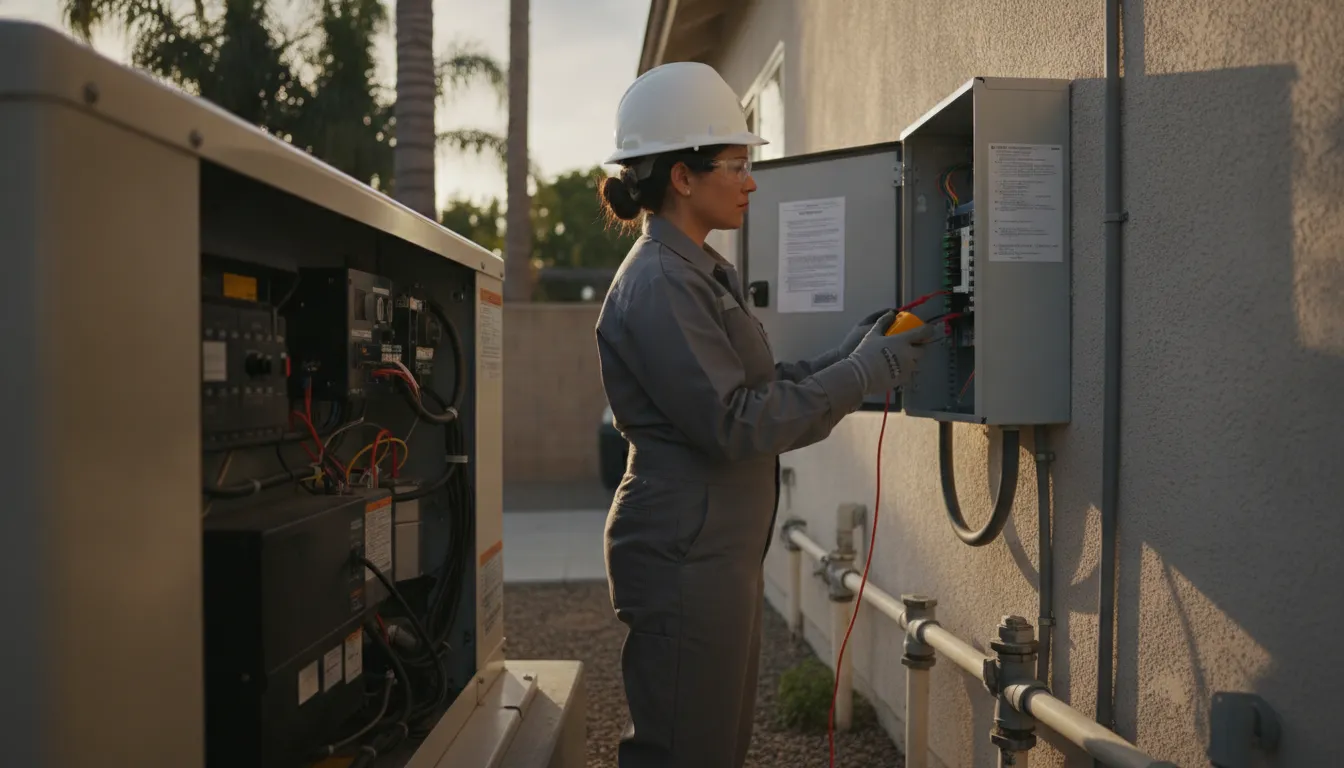
1. The ATS detects a utility outage
The switch continually monitors the primary electrical source. When it detects a disruption or failure, its controls begin the generator-start sequence. This automatic response is why a homeowner does not need to stand at the electrical panel during an outage and manually move a switch.
2. The generator starts and reaches stable output
After receiving the start signal, the standby generator runs through its startup process. The ATS does not immediately connect the home’s load. It allows the generator to reach steady-state operation, then verifies the required voltage or frequency before making the transfer. This check helps the backup system connect only when its output is suitable for the connected electrical equipment. Compatibility still depends on the generator, service equipment, wiring, and load design, so an automatic transfer switch installation should be planned as part of the complete electrical system.
3. The ATS transfers power without backfeeding the grid
Once the generator output passes its checks, the ATS transfers the connected load from the utility source to the backup source. Its design also prevents electricity from being sent backward onto the utility grid. That anti-backfeed function is a central safety purpose of the equipment. Directly connecting a generator to home wiring without a properly installed transfer switch can create serious hazards for occupants, equipment, and utility workers.
4. Utility power returns, then the load transfers back
When utility service is restored and stable, the ATS automatically switches the connected load from the generator back to the grid. The generator then follows its normal shutdown sequence according to the equipment and system controls. The transfer does not guarantee that every home circuit will remain energized or that every outage will be seamless. The result depends on the selected loads, generator capacity, installation, and equipment compatibility.
For a system that responds predictably, have a licensed electrician evaluate the existing panel, generator connection, and intended backup circuits. Expert Electric Group provides transfer switch installation for Southern California homeowners.
How Do You Choose the Right ATS Setup for Your Home?
Short answer: Choose an automatic transfer switch setup by matching the backup source to the circuits you need, the generator’s running and starting loads, and the home’s service equipment. Whole-home coverage may be appropriate for some properties, while a critical-circuit design can focus available capacity on selected essentials. The right choice depends on the equipment and electrical system, not a universal setup.
Start by listing what you want available during an outage. A refrigerator, lighting, internet equipment, sump or well pump, medical equipment, heating or cooling, and security systems may have different priorities and electrical demands. Generator selection should begin with the appliances you actually need in an emergency, rather than assuming every household load must operate at once. An electrical load calculation helps organize those demands and identify which circuits a backup system can realistically serve.
| Approach | What it may support | Key planning question |
|---|---|---|
| Whole-home | Most home circuits, subject to system capacity | Can the generator handle combined starting loads? |
| Critical-circuit | Designated essential circuits instead of the entire property | Which loads matter most, and can they fit available capacity? |
Whole-home coverage is not automatically the better option. It can require more generator capacity and more detailed coordination between the transfer equipment, service rating, and connected loads. A critical-circuit setup can narrow the backup scope, but the selected circuits still need to be reviewed together. Adding several motor-driven appliances, for example, may create a larger demand when they start than their normal running use suggests. Load planning should account for the highest expected starting load, not only average consumption.
The ATS and generator are separate components that must work as one system. Compatibility may depend on the generator model, service equipment, voltage, amperage, wiring configuration, control connections, and completed load calculation. That is why a switch that appears suitable on paper may not be appropriate for every panel or generator. For a broader equipment-planning discussion, see how to choose the right generator size.
Before automatic transfer switch installation begins, have the existing panel and intended backup loads assessed by a qualified electrician. The review can identify capacity limits, required equipment changes, and compatibility questions before materials are selected. It also helps keep the design focused on safe operation rather than promising that every appliance will run simultaneously.
What Happens During Automatic Transfer Switch Installation?
Short answer: A licensed electrician evaluates your electrical service and selects a safe ATS location. The electrician connects the equipment to the appropriate circuits and generator controls, then tests the transfer sequence before service. The work is planned around your home, generator, wiring, load requirements, and local utility and permit requirements.
Because an automatic transfer switch connects utility power and backup power to building wiring, installation is not a plug-in project. A qualified electrician should perform the work, and a generator connected to existing wiring requires a properly installed transfer switch. The New York State Division of Homeland Security and Emergency Services gives the same safety guidance for residential generator connections: never connect a generator directly to building wiring without a properly installed transfer switch.
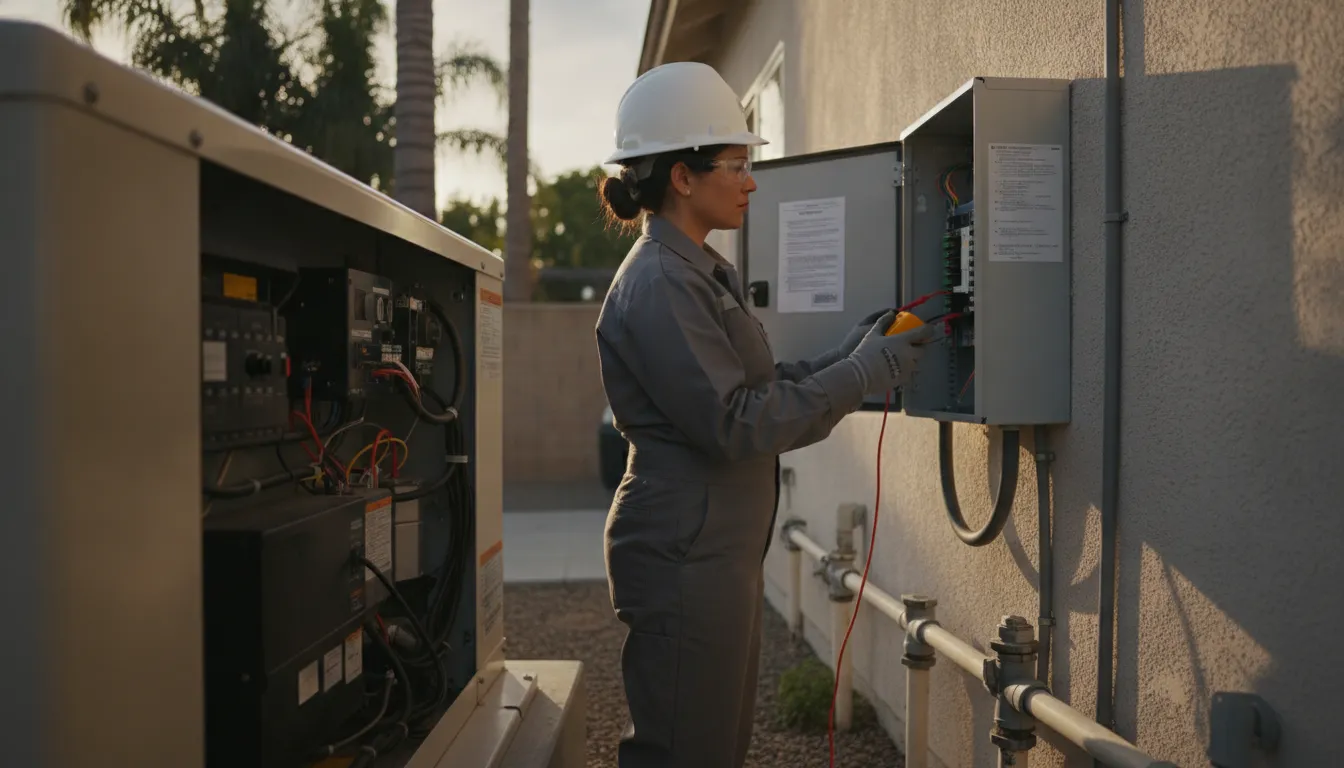
- Assess the existing electrical system. The electrician reviews the service equipment, panel condition, voltage, amperage, wiring, generator model, and expected loads. This may include identifying critical circuits, checking whether the panel has adequate capacity, and determining whether panel upgrades and power distribution work are needed. Compatibility depends on the complete system, not the ATS label alone.
- Choose the location and transfer strategy. The ATS must be positioned so it can be safely accessed and connected to the utility-side equipment, selected household circuits, generator, and control wiring. The design may support load-specific backup rather than every circuit in the home. Expert Electric Group provides load-specific backup planning and load balancing when the property and equipment require it.
- Install and connect the equipment. With the appropriate safety controls in place, the electrician installs the ATS and routes the necessary conductors and communication wiring. The connections are matched to the generator and service equipment. Homeowners should not open energized equipment or attempt to duplicate this wiring, since improper connections can create shock, fire, equipment-damage, or backfeed hazards.
- Integrate the generator controls. The electrician coordinates the ATS with the generator so the equipment can recognize a utility interruption, request generator operation, and transfer the planned load only when the backup source is ready. For Generac equipment, Generac home generator installation and maintenance can include the related generator setup, transfer switch work, and service planning.
- Test the complete sequence. The final step includes checking connections, controls, load behavior, and the return to utility power after conditions are stable. The electrician also reviews operation and maintenance expectations with the homeowner. Expert Electric Group can coordinate permits and utilities as part of the installation process, helping keep the project aligned with the applicable requirements in your Southern California jurisdiction.
The result should be a documented, tested system designed for your home’s actual electrical needs. For professional transfer switch installation in Southern California, an electrician can review the property and explain the appropriate next steps.
What Permits and Code Checks Apply in Southern California?
Short answer: Permitting for an automatic transfer switch installation depends on the city or county, the home’s existing service equipment, the generator, and the scope of electrical work. The design must satisfy the National Electrical Code (NEC), California requirements, and local agency rules before the system is connected.
Southern California does not use one universal permit checklist. The authority having jurisdiction may review the transfer switch, generator connection, service rating, disconnects, grounding, wiring methods, equipment location, and load calculations. Local rules can also affect setbacks, noise, fuel systems, fire safety, and utility requirements. That is why a permit approval in one city should not be treated as a guarantee for a project in another.
How do local requirements vary?
Menifee provides one useful example, but it is not a rule for all of Southern California. Its residential standby-generator guidance directs applicants to create an account and submit a Residential Electrical permit through the city’s permit portal. The same document identifies California Model Codes under Title 24, including residential, electrical, mechanical, fire, green-building, and energy provisions. Homeowners in Los Angeles, Ventura, Orange, Riverside, or San Bernardino counties may work with different portals, forms, review steps, or supplemental requirements.
For Los Angeles homeowners, the Los Angeles electrical code may help explain local considerations, but the permitting authority for the specific property remains the final source for current requirements. The utility may also need to be involved when the work affects service equipment, metering, disconnects, or the relationship between utility power and the standby source.
Why does the electrician handle the submittal?
A qualified electrician can inspect the existing panel, confirm the generator and transfer equipment are compatible, prepare the required scope or drawings, and coordinate permit and utility requirements. Expert Electric Group provides permit and utility coordination as part of its generator services. This process helps align the equipment, wiring, load calculation, and inspection requirements before installation, rather than discovering a mismatch after the work is complete.
Is DIY Automatic Transfer Switch Installation Safe?
Short answer: For most homeowners, no. Automatic transfer switch installation is not a safe do-it-yourself project because it connects backup generation equipment with a home’s electrical system and utility service. A qualified electrician should handle the design, disconnection, wiring, testing, and code coordination.
The most serious risk is backfeed. A generator connected directly to building wiring without a properly installed transfer switch can send electricity back toward the utility lines. That can endanger utility workers and damage equipment. Before generator work begins, the home must be properly disconnected from utility service. The transfer equipment must also be configured so the utility and backup sources cannot be connected in an unsafe way. Guidance from the New York Division of Homeland Security and Emergency Services specifically warns against connecting a generator to a structure’s electrical system unless a qualified electrician has installed the transfer switch.
What makes the work unsafe for a DIY installation?
Even when the equipment appears straightforward, the installation depends on the generator, service equipment, voltage, amperage, wiring, and load calculation. An error can create electrical hazards, damage equipment, or leave the home out of compliance with applicable requirements. Follow the manufacturer’s installation and operating instructions, but do not treat those instructions as a substitute for electrical training or a site-specific assessment.
There are also hazards beyond the transfer switch itself. Generators should operate outdoors in a clean, dry area, away from indoor spaces where exhaust can accumulate. The generator must not be overloaded with too many appliances. Starting loads can exceed normal running demand, so the connected circuits need to be evaluated rather than selected by guesswork.
When should you stop and call an electrician?
- You are unsure whether the main service can be safely disconnected.
- You cannot confirm generator and transfer-switch compatibility.
- The panel, grounding, wiring, or load requirements are unclear.
- You notice heat, burning odor, arcing, nuisance trips, or unexpected generator behavior.
- You are considering a temporary connection directly to a receptacle or panel.
Use this home electrical safety inspection as a planning reference, then have a licensed professional assess the installation before work begins.
How Should You Test and Maintain an ATS?
Short answer: Have a qualified electrician commission the automatic transfer switch, test the transfer sequence under controlled conditions, and follow the generator and ATS manufacturer’s maintenance schedule. Between professional visits, homeowners can look for visible warning signs, but should not open energized equipment or attempt to force a transfer.
Start with professional commissioning
Commissioning confirms that the installed equipment works as a system, not just as separate components. A professional can verify the control wiring, generator connection, sensing functions, and the circuits assigned to backup power. The ATS should recognize a utility interruption, signal the generator to start, allow the generator to reach stable operating conditions, and then transfer the selected load. This sequence should be tested safely and documented during installation or service.
A licensed electrician may also perform a controlled outage simulation rather than waiting for a real utility failure. The test should confirm that the load transfers as intended and that the generator does not exceed its designed capacity. When utility power returns and remains stable, the ATS can switch the load back to the utility grid, allowing the generator to cool down according to the equipment’s controls. The transfer process is described by the manufacturer and installation guidance.
Follow the schedule and watch for changes
Regular ATS maintenance supports reliability during an outage, so it should be planned and budgeted as part of standby-system care. Follow the equipment manufacturer’s recommendations for inspection, exercising, cleaning, connection checks, and service intervals. Requirements vary by model, environment, and installation configuration. Keep records of tests, alerts, service visits, and any generator-start or transfer delays.
At a safe distance, homeowners can check for visible corrosion, water intrusion, loose covers, unusual odors, pest damage, or new warning indicators. Stop and request service if the generator starts but the home does not receive backup power, the ATS remains in an unexpected position, or a breaker trips repeatedly. For a broader maintenance checklist, review this guide to standby generator maintenance.
When Should You Call a Licensed Electrician?
Short answer: Call a licensed electrician before connecting a generator to your home, especially when the panel capacity, wiring, equipment compatibility, permits, or utility requirements are uncertain.
A new generator is one of the clearest reasons to schedule professional help. A generator connected to existing building wiring requires a properly installed transfer switch, and a qualified electrician should handle the work whenever possible. This protects the home from unsafe connections and helps prevent utility backfeed. If you are planning transfer switch installation, an electrician can evaluate the complete system rather than treating the switch as a standalone device.
Call before choosing equipment
Do not assume an automatic transfer switch will work with every generator or panel. Compatibility can depend on the generator, service equipment, voltage, amperage, wiring, and load calculation. An electrician can inspect your existing panel, identify its capacity, and determine whether the proposed setup should serve selected critical circuits or a broader portion of the home. A load calculation also helps account for equipment that draws more power when it starts, such as pumps or air-conditioning systems.
Call when permits, symptoms, or coordination are involved
Permitting and utility requirements vary across Southern California jurisdictions. Expert Electric Group can coordinate permits and utilities as part of its generator services, while the electrician confirms the installation meets the applicable requirements. You should also request an assessment if the panel is crowded, breakers trip, lights flicker, the generator fails to transfer, or the system shows unusual sounds or odors. These symptoms can point to a problem that should not be diagnosed through trial and error.
Project cost depends on the equipment, configuration, site conditions, permits, and materials, so a site-specific assessment is more useful than a fixed price. For help evaluating a Generac system, review Generac home generator installation and maintenance, then call Expert Electric Group at (747) 999-6090 to discuss the next step.
Call (747) 999-6090 for automatic transfer switch installation help
Frequently Asked Questions
How much does automatic transfer switch installation cost?
There is no dependable flat price for every Southern California home. The total depends on the generator and ATS, service equipment, voltage, amperage, wiring, load calculation, site conditions, permits, and materials. A licensed electrician can review the existing panel and provide a scope-based assessment rather than a misleading universal figure.
Can I install a generator transfer switch myself?
Generator connections to building wiring should not be a DIY project. A generator must be properly disconnected from utility service, and a qualified electrician must install the transfer switch to prevent unsafe backfeed. The New York Division of Homeland Security and Emergency Services advises having generator installation performed by a qualified electrician when possible.
How do I know whether an ATS will work with my generator?
Compatibility is a system-level question, not just a matter of matching brand names. The electrician should evaluate the generator, transfer switch, service equipment, voltage, amperage, wiring, load calculation, and appliance starting loads. That review helps determine whether the system should serve the whole home or selected critical circuits.
Do I need an electrician to install a transfer switch?
Yes, professional installation is the safest choice when the switch connects a generator to existing home wiring. Permit and inspection requirements vary by Southern California jurisdiction, so an electrician can coordinate the local requirements and utility considerations. Local rules should be confirmed with the authority having jurisdiction rather than assumed from another city.
Ready to Plan Your Backup Power Setup?
A properly matched transfer switch can help your generator and home electrical system work together safely, with compatibility checks and permit coordination considered before installation. For a Southern California project, call Expert Electric Group at (747) 999-6090 to discuss automatic transfer switch installation, generator compatibility, and the next practical step for your home.
