
Choosing the best generator for Pasadena home backup starts with the loads you need, the way you want the system to operate, and the conditions at your property. Call Expert Electric Group at (747) 999-6090 to discuss generator sizing and installation needs before you order equipment.
Call (747) 999-6090 to discuss generator sizing
Quick answer: The right generator is the one that matches your priority circuits, starting demands, fuel supply, transfer equipment, placement, and maintenance plan. A larger unit is not automatically better. A practical assessment should show which loads can run together, what happens during an outage, and what work the installation requires.
Which loads should a Pasadena home generator support?
Short answer: Make a list of essential appliances and systems, then decide which of them may operate at the same time. That operating plan is more useful than choosing by square footage or service rating alone.
Start with a normal outage scenario. You may want refrigeration, selected lights, internet equipment, garage access, a security system, and several receptacles. You may also need heating or cooling, a water pump, a sump pump, or powered medical equipment. Each addition changes the load plan. A home that needs a refrigerator and lights has different requirements from a home that expects to run air conditioning, cooking equipment, and a pump together.
Write down the equipment you consider essential and separate it from convenience loads. Mark anything with a motor or compressor because it can have a higher starting demand than its running demand. Air-conditioning equipment, pumps, refrigerators, and some tools may not behave like simple resistive loads. A qualified electrician can review nameplate information and the proposed circuit arrangement without asking you to remove covers or take unsafe measurements.
- List the rooms and systems that must remain usable during an outage.
- Record appliance ratings when labels are safely accessible.
- Identify motors, compressors, pumps, and other starting loads.
- Mark loads that can be delayed or switched off temporarily.
- Choose between selected-circuit coverage and broader household coverage.
For example, a homeowner may prioritize the refrigerator, bedroom lighting, internet equipment, and one heating or cooling circuit. Another homeowner may prioritize a pump and several kitchen circuits but accept that a large cooling load will be managed separately. Neither plan is automatically correct. The important point is to state the priority and simultaneous-use assumptions before capacity is selected.
Use the company’s guides to review how to check generator load, understand minimum generator load, and consider generator sizing for 400-amp service. The service rating describes part of the electrical system; it does not by itself determine the generator you need.
What generator type and fuel fit your property?
Short answer: Decide whether you want an installed backup system or a portable arrangement, then verify that the fuel supply, operating method, and property conditions support that choice.
A permanently installed standby generator may suit a household that wants an integrated backup plan. Depending on the selected equipment and configuration, it can serve defined circuits or broader household loads through compatible transfer equipment. A portable generator has a different setup, connection, refueling, and supervision plan. Never connect a portable unit to household wiring through a wall outlet. That can create dangerous backfeed and expose utility workers or occupants to energized conductors.
Fuel is a design constraint, not a detail to solve after purchase. A compatible natural-gas connection may be useful, while propane requires suitable storage and delivery planning. Confirm the available supply, its capacity, the proposed generator location, and the route for connections. Do not assume that a neighbor’s installation or an online product listing reflects your property.
| Decision factor | Installed standby system | Portable system |
|---|---|---|
| Connection | Planned with compatible transfer equipment and selected household circuits | Needs a properly designed connection method; never backfeed through an outlet |
| Operation | May support automatic operation when the generator and controls are specified for it | Typically requires manual setup, supervision, and operating steps |
| Fuel planning | Depends on a compatible utility or stored-fuel arrangement and site conditions | Requires safe fuel storage, refueling, and run-time planning |
| Best planning question | Which circuits should be available as an integrated backup? | Who will set up, operate, monitor, and safely shut down the unit? |
Call (747) 999-6090 to compare generator options
Expert Electric Group is a Generac Authorized Dealer and Certified Installer and provides generator sales, installation, and maintenance. Review its information on home generator installation and maintenance and installing a whole-home generator before discussing a specific system.
How does transfer equipment affect the choice?
Short answer: The generator, transfer equipment, service, controls, and selected circuits must work as one planned system. Transfer equipment separates the home from utility power and directs generator power to the intended circuits.
An automatic arrangement can detect a utility outage and change sources according to its design. A manual arrangement requires a person to follow a switching procedure. Your preferred approach may depend on how quickly you want backup available, who is normally at home, which circuits are included, and what the equipment supports.
Do not buy a generator first and assume any transfer switch will be compatible. The installer should review output, controls, service configuration, circuit layout, installation space, and the intended operating sequence. Ask specifically which circuits transfer, which remain unavailable, whether load management is required, and what you must do when utility power returns.
The guides to manual transfer switches and types of generator transfer switches can help you prepare questions. The goal is not simply to own a generator. It is to have a clear, safe method for supplying the circuits you planned to protect.
Where should a generator be placed in Pasadena?
Short answer: Placement must account for manufacturer clearances, exhaust, airflow, service access, utility connections, property layout, and applicable local requirements. A convenient empty spot is not automatically a suitable location.
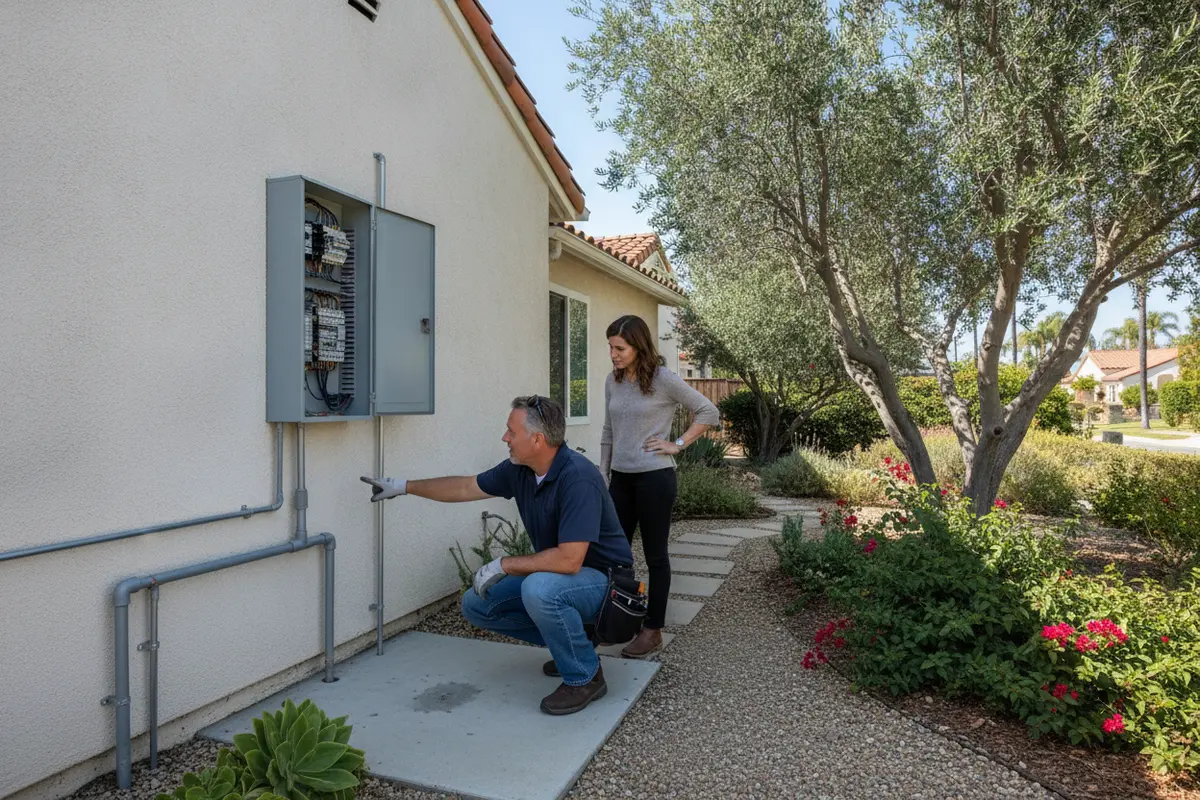
Review the proposed location in relation to doors, windows, walkways, neighboring properties, landscaping, gates, and fuel and electrical connection routes. The unit needs adequate airflow and safe exhaust management. It also needs room for inspection and service. Do not enclose, screen, or relocate equipment in a way that conflicts with the manufacturer’s instructions.
Noise should be discussed using the exact model and the actual site. Distance, orientation, nearby walls, and property lines can affect how sound is experienced, but a visual barrier is not a substitute for required clearances. Ask the installer to explain the proposed orientation and how service access will be preserved.
Pasadena properties vary in lot size, side-yard access, slope, landscaping, and utility layout. A site review is more reliable than selecting a location from a photograph. The company’s generator placement and safety guide concerns another locality, so use it only as general background and confirm requirements for your address.
Walk the proposed route before work begins. A narrow gate, detached garage, mature planting, or long conduit path can affect the installation plan. Ask whether the equipment can be delivered and serviced, whether any landscaping must be moved, and where the transfer equipment will be placed. These questions help identify site work before equipment is ordered.
Which permits and installation steps should you expect?
Short answer: Requirements depend on the equipment, project scope, site, and authorities having jurisdiction. Before buying, ask who verifies permits, inspections, electrical work, fuel work, and final handoff requirements.
- Define priority loads and the level of coverage you want.
- Review the electrical service, circuits, fuel source, and proposed location.
- Confirm compatibility among generator, transfer equipment, controls, and fuel.
- Clarify permits, inspections, utility coordination, installation roles, and scheduling.
- Test the operating sequence and receive instructions and maintenance information.
Approvals may apply to electrical work and may also involve fuel connections or equipment placement. The exact process should be confirmed for your property rather than copied from a nearby project. Ask the installer to identify what it will coordinate and what remains your responsibility.
Request a written description of the proposed system. It should identify the generator capacity, included circuits, transfer method, fuel assumptions, proposed location, required site work, and any owner operating steps. If the recommendation changes after the site review, ask which condition caused the change. This makes proposals easier to compare.
Generator connections can be hazardous. Do not connect a generator to household wiring yourself, bypass transfer equipment, or remove covers to inspect energized components. The company’s electrical services page is a starting point for discussing scope, not a replacement for project-specific approvals.
How should you compare generator proposals?
Short answer: Compare the complete system and its assumptions, not just the model name or advertised capacity.
Two proposals can appear to cover the same home while offering different operating experiences. One may include selected circuits and automatic transfer. Another may include broader circuits but assume manual load management. One may assume an existing fuel connection and nearby equipment location. Another may include additional electrical or fuel work. These differences can matter as much as the generator itself.
Use a line-by-line comparison:
- Coverage: Which breakers or loads are included, and which are excluded?
- Starting demand: How are motors, compressors, and simultaneous loads addressed?
- Transfer: Is operation automatic or manual, and what happens when power returns?
- Fuel: What supply, storage, pressure, and connection assumptions apply?
- Site work: Is the proposed pad, conduit route, access, and service clearance practical?
- Approvals: Who handles permits, inspections, and required coordination?
- Handoff: What testing, instructions, exercise schedule, and maintenance plan are included?
Ask for unclear assumptions in writing. For example, if a proposal says it supports the home, ask whether that means every circuit or a defined list. If it mentions automatic operation, ask which transfer equipment and controls provide it. If fuel work is not described, ask whether the existing supply was evaluated.
What maintenance keeps a standby generator ready?
Short answer: Follow the schedule for the exact model, keep service records, and learn what the system’s warnings mean. Equipment that runs infrequently still needs attention.
Maintenance may include inspections, exercise cycles, oil and filter service, battery checks, connections, and other model-specific tasks. The manufacturer’s instructions determine what applies. Keep the equipment accessible and record the date and work performed. Ask which owner checks are safe and when professional service is appropriate.
Before choosing a system, ask about recommended service intervals, how a failed self-test is handled, and who can service the selected equipment. Include maintenance planning in your comparison. A clear handoff should explain routine indicators, safe reset procedures, outage operation, and whom to contact when the generator reports a fault.
For general portable-generator carbon monoxide safety, review the U.S. Consumer Product Safety Commission’s carbon monoxide questions and answers. Operate equipment only as directed by the manufacturer and follow applicable requirements for the installation.
What should you prepare before requesting sizing help?
Short answer: Bring your priority-load list, service information if known, fuel details, property constraints, and preferred operating method. Better inputs make the assessment more useful.
Write down the appliances and systems you want available during an outage. Note whether automatic operation matters, whether anyone depends on powered equipment, and whether you prefer essential-circuit coverage or broader coverage. Photograph labels only when they are safely reachable. Do not remove electrical covers or attempt measurements yourself.
Have questions ready about capacity, starting loads, transfer equipment, fuel, placement, sound, permits, maintenance, testing, and service access. If the property is older or the electrical service has changed over time, mention that during the conversation. Related electrical work, such as an electrical panel upgrade, may need to be evaluated as part of the overall plan, but the required scope depends on the actual home.
Expert Electric Group serves residential and commercial customers across the Greater Los Angeles metropolitan area and offers generator sales, installation, and maintenance. You can review its Southern California service areas, recent projects, and company background while preparing for a consultation.
Call (747) 999-6090 to plan your generator installation
Frequently asked questions
Can one generator power every circuit in my Pasadena home?
That depends on generator capacity, the home’s electrical system, starting demands, and how loads are managed. A load assessment helps determine whether selected circuits or broader coverage is appropriate.
Is the largest generator automatically the best choice?
No. Capacity should match the intended loads, starting requirements, transfer equipment, fuel arrangement, site conditions, and operating plan. Oversizing does not remove the need for compatible installation and maintenance.
Does every standby generator start automatically?
No. Automatic operation depends on compatible generator controls and transfer equipment that are specified for the installed system. A manual arrangement requires the homeowner to follow the operating procedure.
Can a generator go anywhere there is room?
No. Manufacturer instructions, exhaust, airflow, service access, property conditions, utility connections, and applicable rules affect the practical location. Have the site reviewed before installation.
How often should a standby generator be serviced?
Follow the schedule and operating instructions for the exact model. Ask the installer to explain routine checks, exercise cycles, warning indicators, and recommended professional service.
Call (747) 999-6090 for generator sizing and installation help
The best generator for your Pasadena home is the system that fits your priority loads, fuel options, transfer equipment, property, permits, and maintenance plan.
