
Calabasas construction site power needs to be planned around the building phase, equipment, weather exposure, and who will use each circuit. A safe setup is more than a generator or a temporary pole: it includes an approved source, protected distribution, suitable grounding and GFCI protection, inspections, and a plan for changing loads. For project-specific support, call (747) 999-6090.
Call (747) 999-6090 to discuss your construction power plan
Short answer: Have a qualified electrical contractor and the local utility or permitting authority confirm the temporary service arrangement before crews energize it. Then map the loads, install protected distribution, arrange required inspections, and update the setup as the site changes.
What should a temporary power plan cover?
A construction site may need power for tools, task lighting, temporary offices, pumps, and other equipment. A project environmental review, for example, identifies lighting, temporary construction offices, and electronic equipment among construction energy uses. That list illustrates why a site load plan should account for more than hand tools; it is not a wiring standard or a substitute for local requirements.
Start with a brief written scope that answers these questions:
- What needs power? List each tool, appliance, temporary building, pump, and lighting zone, including nameplate information where available.
- When will it run? Note expected operating hours and whether equipment starts together or runs continuously.
- Where will it be used? Mark work areas, access routes, damp or outdoor locations, and places where cords could be damaged.
- How will the source change? Identify milestones such as adding a crane, HVAC equipment, a larger crew, or permanent service.
- Who approves and maintains it? Establish who coordinates the utility connection, permit and inspection questions, daily checks, and repairs.
Turn the list into a practical site map. Mark the source, distribution points, work zones, paths for people and vehicles, and the locations of equipment that may move. This makes it easier to spot a route that crosses a delivery lane or puts a cord where a new wall will soon block access. Include the planned duration for each temporary area; an office trailer that remains through several phases needs a different coordination plan from a short task-lighting setup.
Temporary construction energy can include lighting, offices, and electronic equipment, as the project utilities review describes. For a commercial or multi-phase project, discuss the complete electrical scope with a contractor through the company’s electrical services page.
How do you choose the temporary power source?
Short answer: Choose the source only after the contractor has checked the expected loads, site duration, service availability, and approval requirements. Utility-fed temporary service and generator power each have different coordination and operating needs; neither should be improvised.
| Option | Best considered when | Planning checks | Common limitation |
|---|---|---|---|
| Utility-fed temporary service | The utility can provide a suitable temporary connection and the project needs sustained site power. | Confirm service location, capacity, metering, equipment placement, application steps, and inspection sequence with the utility and local authority. | Lead times, service availability, and connection requirements can affect the schedule. |
| Portable generator | Short-term, mobile, or remote loads need power, subject to site and safety requirements. | Size for operating and starting loads; plan placement, fuel, ventilation, weather protection, distribution, grounding, and safe refueling. | Fuel, noise, runtime, maintenance, and changing loads require active management. |
| Standby generator with transfer equipment | A project has a defined backup-power need and equipment designed for that use. | Have a qualified electrician confirm generator and transfer-equipment compatibility, permitted connection, load priorities, and inspection requirements. | It is not a shortcut for connecting a generator to building wiring; installation and transfer arrangements must be designed for the system. |
These are planning categories, not a one-size-fits-all recommendation. A temporary utility service may be practical for a long build, while a generator may suit a limited work area or backup need. The project team should confirm the actual requirements with the utility, electrical contractor, and permitting authority. For ongoing backup planning, the site’s commercial generator guide outlines considerations to discuss before selecting equipment.
Before committing to a source, compare not only its capacity but also the work it creates for the project team. A utility service may require an application, a service location that remains accessible, metering coordination, and a schedule that accounts for approvals. A generator plan has its own daily responsibilities: fuel supply, runtime, inspection, noise considerations, secure placement, and a response if it stops. Discuss which trades need power at the same time and whether any critical loads need priority. Write down the assumptions so later project changes can be compared with the original plan.
Do not connect a generator to building wiring with an improvised cord or without an approved transfer arrangement. Improper connections can energize wiring unexpectedly and endanger workers or utility personnel. A contractor can help assess a planned generator installation and its relationship to the site’s electrical system.
How should temporary distribution and GFCI protection be planned?
Short answer: Put distribution equipment where it can be accessed and protected, use equipment rated for its environment, and have the required GFCI protection and grounding confirmed for the particular installation. Keep installation, changes, and repairs in the hands of qualified personnel.
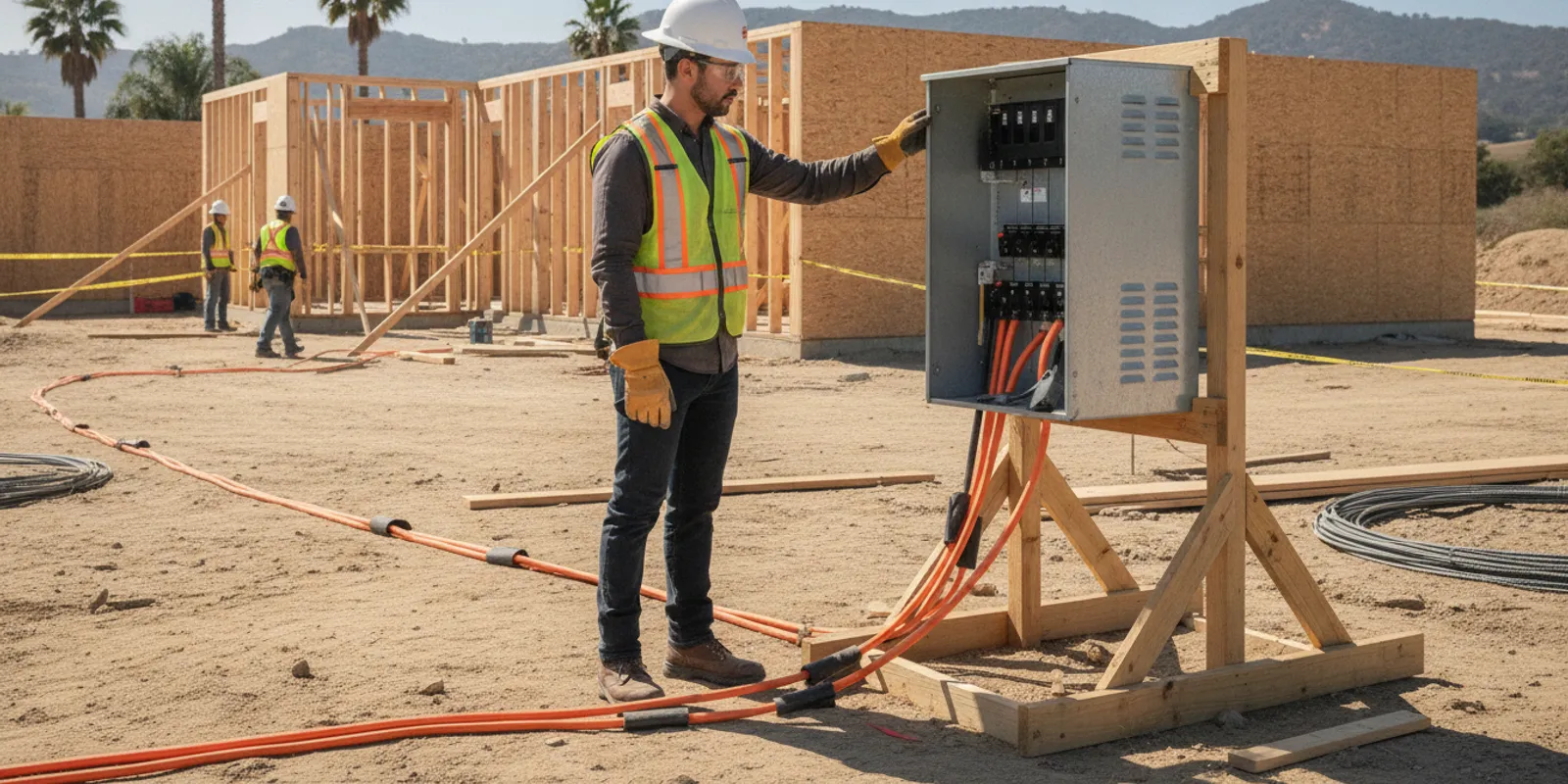
Sketch the route from the power source to each work zone. Include panel or distribution locations, cord paths, work platforms, vehicle routes, entrances, and wet or exposed areas. Avoid routing cords where vehicles, material handling, sharp edges, standing water, or doorways could damage them. Where a route cannot be avoided, the responsible electrical professional should specify a suitable protective method rather than relying on a warning or improvised covering.
Construction equipment and conditions change often. Use distribution equipment and cords suited to the location and intended duty. Keep enclosures closed, preserve required working access, and do not use damaged plugs, cords, or receptacles. Workers should know how to report a defect and stop using suspect equipment. GFCI protection helps reduce shock risk in applicable situations, but it does not make damaged equipment or unsafe connections acceptable. Ask the electrician to identify the GFCI protection method, test procedure, and inspection responsibility for the site.
It also helps to define who is allowed to reset a protective device and what should happen if it trips. A trip can signal a fault or a changed load; repeatedly resetting it without investigating the cause can leave a hazard in place. Put the reporting contact and the procedure for taking suspect equipment out of service in the site orientation materials. Keep replacement cords or equipment from becoming an informal workaround unless the responsible person has confirmed they are appropriate for the circuit and environment.
For projects with larger or three-phase equipment, make sure the design accounts for how loads are distributed. A plain-language three-phase panel diagram guide can help owners understand the terms to raise with their electrician. On commercial systems, review whether load characteristics merit further evaluation; the company’s overview of power factor correction explains one related power-quality topic.

How do changing project loads affect the setup?
Short answer: Recheck capacity whenever the work scope or equipment changes. A system that supported a small crew and basic lighting may not support new machinery, heating or cooling equipment, pumps, or simultaneous tool use.
Keep a current load schedule with equipment name, voltage and phase information from its nameplate, approximate operating hours, and any known starting demand. Have an electrician use that information to evaluate the supply, conductors, overcurrent protection, distribution, and expected simultaneous use. Do not determine capacity by adding receptacles or relying on whether a breaker has tripped so far.
Separate the list into equipment that runs continuously, equipment used occasionally, and equipment with a starting demand that may overlap with other loads. For example, note whether a pump is expected to run during the same work period as several high-demand tools, rather than treating each item as an isolated connection. The schedule is a planning aid, not a method for deciding circuit capacity yourself. Give the electrician the actual equipment information and expected use so the assessment reflects the way the crew works.
Use project milestones as review points. Before a major new piece of equipment arrives, confirm where it will connect and whether the existing service and distribution can support it. Repeat that check when temporary offices move, a new trade begins, or the work transitions from framing to finish equipment. If permanent building work is involved, Expert Electric Group provides rewiring and electrical upgrade services; a contractor can help distinguish the permanent scope from the temporary site setup.
If a generator is part of the system, confirm that its capacity and distribution suit the actual loads and operating sequence. Ask who may connect or disconnect equipment, how fuel and ventilation are managed, and what happens if the generator needs service. For generator testing, see the overview of electrical load-bank testing and the guide to balancing a three-phase generator. Those resources explain related equipment concepts; the contractor must determine what applies to the project.
What inspections and coordination should happen before energizing?
Short answer: Confirm the required permits, utility arrangements, and inspection hold points before installation begins. The exact process depends on the work and the authorities responsible for the site, so do not assume that a temporary installation is exempt.
- Confirm jurisdiction and scope. Identify the property location, the utility serving it, and the permitting authority. Describe whether the work includes a temporary service, generator connection, distribution equipment, or permanent electrical changes.
- Coordinate the utility connection. Ask the utility about application timing, approved service location, metering, and connection steps. Do not energize equipment before required approvals.
- Agree on inspection milestones. Ask the permitting authority and electrical contractor which inspections apply and whether work must remain accessible for inspection before concealment or use.
- Keep the records together. Retain plans, approvals, equipment information, inspection results, and notes of authorized changes where the project team can find them.
- Revisit approvals when the scope changes. A different source, service rating, connection method, or equipment location can change what coordination is needed.
Make these milestones visible on the construction schedule. If a required inspection must happen before equipment is covered or energized, the superintendent and electrical lead should know who requests it and who confirms that the work is ready. Keep a current contact list for the utility, permitting office, project decision-maker, and electrical contractor. This prevents a common planning gap: work is physically installed, but the person responsible for arranging the next approval or inspection has not been assigned.
For any temporary setup that will be moved or modified, ask in advance whether the change affects inspection or utility coordination. Record what changed, who authorized it, and whether a follow-up review is needed. These records help new crew members understand what is approved rather than relying on an informal account of how the system was first assembled.
A contractor who handles commercial electrical work can help coordinate the electrical scope and inspection schedule. For coverage information, check the company’s service areas and discuss the job directly. Do not treat a general guide—or a different city’s published agenda—as a determination of Calabasas permit requirements.
What daily practices help keep a site safer?
Short answer: Assign responsibility for visual checks, keep equipment protected and accessible, and take damaged or questionable components out of service until qualified personnel evaluate them.
- At the start of work, look for visible cord damage, loose connections, broken covers, water intrusion, or equipment that has shifted.
- Keep panels and disconnecting means identifiable and accessible to authorized workers; do not use them as storage space.
- Keep temporary cords and equipment away from vehicle paths, sharp materials, and areas where water collects whenever the layout allows.
- Do not daisy-chain power strips or adaptors to solve a capacity problem. Ask for an approved circuit or distribution change.
- Make sure crews know the designated contact for electrical concerns and what to do if a protective device trips repeatedly.
- Before moving equipment or changing connections, confirm who is authorized to do the work and whether the change requires a new review.
Make the inspection routine realistic for the pace of the job. A brief check at the start of a shift can note visible changes after deliveries, overnight weather, or relocation of temporary equipment. When a deficiency is found, identify the item, mark it so it is not used, and notify the assigned electrical contact. Do not ask a worker to repair a plug, open a panel, or improvise a new connection as part of a walk-through.
These checks are not a substitute for installation, testing, or inspection by qualified professionals. For an unexpected outage or urgent electrical concern, consult a qualified electrician; the company’s emergency electrician information describes its emergency service option.

When should you bring in an electrical contractor?
Bring a contractor into planning before requesting a temporary connection or placing a generator, not after the site is already relying on improvised power. Early review can help the team identify equipment needs, service constraints, routing risks, inspection questions, and later transitions to permanent power. It also gives the builder and trades a clear point of contact when the load plan changes.
Have these details ready for the first discussion: project address, expected start date and duration, major equipment list, intended power source, site plan or work-area sketch, and any known utility or permit communications. Note what is still undecided. An electrician can then identify the information needed to develop a safe, code-compliant scope, subject to the applicable authority’s requirements.
For example, bring a draft equipment schedule even if some selections are not final. Label estimates as provisional and update them when equipment is chosen. Share the expected construction sequence and the date a new trade or major machine will need power. This lets the contractor assess not just the initial temporary setup but also the likely changes that could affect distribution, location, or inspection planning. If you need to discuss a broader commercial electrical scope, use the company’s services information as a starting point.
Call (747) 999-6090 to review construction site power needs
Frequently Asked Questions
Can a portable generator power a construction site?
It may be suitable for some project loads, but size, placement, ventilation, fuel handling, distribution, grounding, and connection method all need to be evaluated. Have a qualified electrician confirm the setup, and never connect a generator to building wiring through an improvised method.
Does temporary construction power need a permit or inspection in Calabasas?
Requirements depend on the installation and the authority having jurisdiction. Contact the relevant permitting authority and utility before work starts; the electrical contractor can help identify and coordinate applicable approvals and inspection milestones.
Does GFCI protection make any extension cord safe to use?
No. GFCI protection can help reduce shock risk in applicable settings, but it does not repair damaged equipment or make an unsuitable cord safe. Use equipment intended for its conditions, inspect it, and remove damaged items from service.
When should the site load plan be updated?
Update it whenever equipment, work areas, project phases, or the power source changes. Review planned additions before they arrive so a qualified electrician can determine whether the existing service and distribution remain suitable.
Call (747) 999-6090 to discuss your project
With a documented load plan, coordinated approvals, protected distribution, and regular reviews, Calabasas construction site power can adapt as the project moves from early work through completion.
