
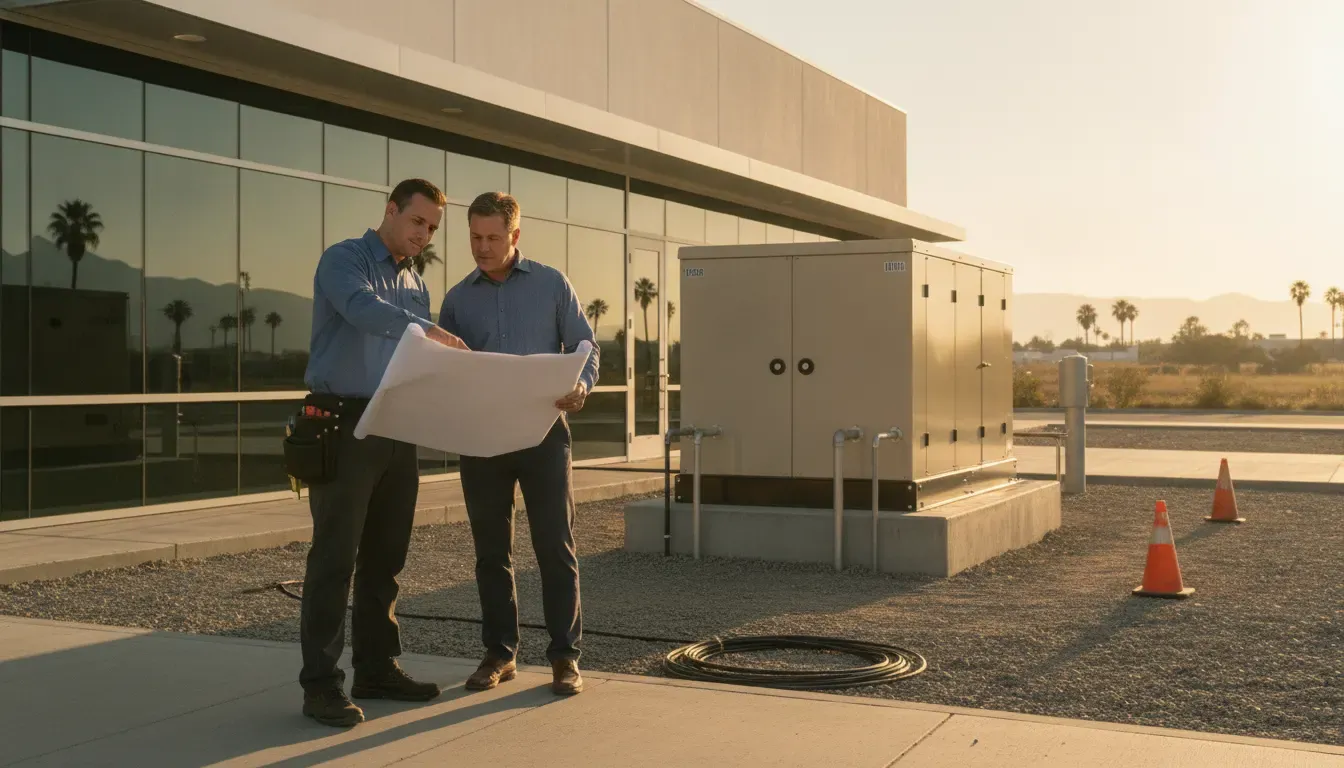
A power outage can interrupt point-of-sale systems, refrigeration, communications, access control, production, and safety equipment at a Pasadena business. Commercial generator installation Pasadena projects should start with the facility’s actual loads, operating priorities, fuel plan, transfer equipment, permits, and commissioning requirements. Call Expert Electric Group at (747) 999-6090 to discuss your property and backup-power goals.
Call Expert Electric Group at (747) 999-6090 to plan your commercial generator installation.
What Does Commercial Generator Installation in Pasadena Involve?
Commercial generator installation in Pasadena is a coordinated electrical, mechanical, fuel, permitting, and commissioning project. It typically includes a load assessment, equipment selection, transfer-switch design, site and fuel review, permit coordination, installation, inspection, startup, and owner training. The exact scope depends on the building, critical loads, generator type, and local authority requirements.
A commercial standby system is more than a generator enclosure placed outside a building. The generator must work with the facility’s electrical distribution, emergency operating plan, fuel supply, ventilation, clearances, controls, and maintenance program. The project should also identify who can approve shutdowns, access the equipment, respond to alarms, and document testing after installation.
Expert Electric Group provides commercial electrical services for businesses that need backup power integrated with existing systems. A planning conversation can also identify whether the property needs load-specific backup setup, broader distribution work, or a dedicated approach for life-safety and business-critical circuits.
How Should a Pasadena Business Assess Its Electrical Load?
Start by separating critical, important, and optional loads instead of sizing a generator from the building’s service rating alone. Review running watts, motor-starting demand, three-phase equipment, voltage requirements, future expansion, and the order in which loads should transfer. A licensed electrician should verify the calculation against field conditions and equipment data.
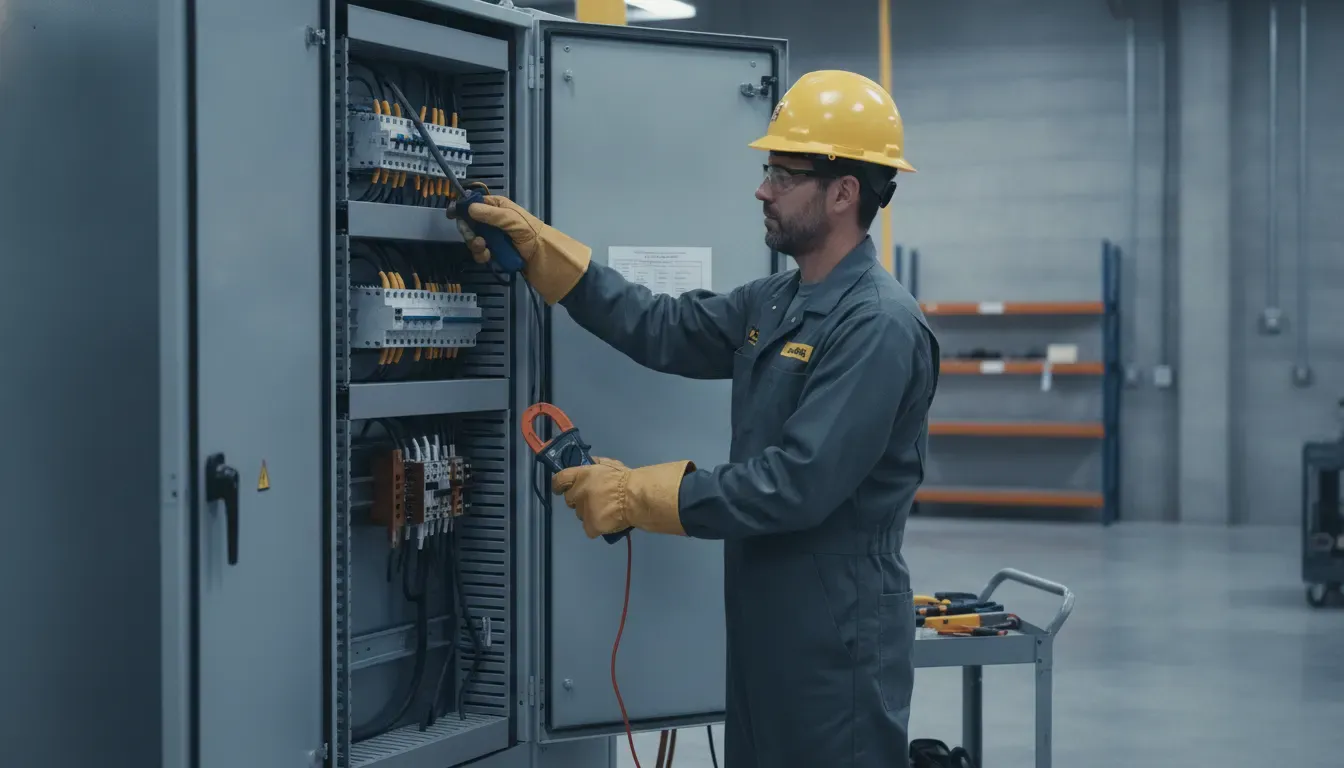
Useful load categories for a Pasadena commercial property may include:
- Life-safety and required systems: fire alarm support, emergency lighting, smoke control equipment, egress systems, and other code-designated loads.
- Continuity-critical systems: servers, network equipment, security, access control, refrigeration, pumps, medical equipment, or process controls.
- Operational loads: HVAC, elevators, production equipment, kitchen equipment, lighting, and selected receptacles.
- Noncritical loads: comfort or convenience equipment that can remain off during an outage to preserve capacity.
Motors and compressors can draw substantially more current while starting than they use during normal operation. A design that considers only steady-state demand may cause nuisance trips or fail to start essential equipment. The assessment should also review voltage, phase configuration, breaker coordination, available fault current, and whether the existing distribution equipment can accept the proposed backup source.
When a facility has several tenants, mixed-use spaces, or changing equipment, load balancing for multi-unit installations may be part of the broader electrical plan. The goal is a reliable sequence of operation that matches how the business actually functions during an outage.
Which Generator and Transfer Equipment Fit the Facility?
Generator selection should match the facility’s required capacity, fuel availability, transfer time, environmental constraints, noise and placement limits, maintenance access, and expected operating profile. Automatic transfer equipment separates the normal and standby sources and moves designated loads safely. The right equipment is determined by the load study and code requirements, not by a generic building-size rule.
A commercial generator may be natural-gas, diesel, or another approved configuration, depending on site conditions, fuel availability, emissions requirements, runtime goals, and local approvals. Equipment must be listed and installed for its intended use. The generator, distribution equipment, overcurrent protection, disconnects, and controls should be treated as one engineered system.
The transfer strategy matters as much as the generator rating. An automatic transfer switch can detect a utility failure, start the generator, and transfer selected loads according to the system sequence. A manual arrangement may require trained staff to respond, which can be unsuitable for a business that needs unattended continuity. Review the options with a professional who can coordinate transfer switch installation with the existing service and critical-circuit layout.
| Planning decision | Questions for the project team |
|---|---|
| Capacity | Which loads must run together, and what are their starting demands? |
| Fuel | Is the proposed fuel available, permitted, protected, and sufficient for the intended runtime? |
| Transfer | Which circuits transfer automatically, and what sequence prevents overloads? |
| Placement | Can the site provide required clearances, access, ventilation, security, and noise control? |
| Future use | Will planned equipment, tenants, EV charging, or expansion change the load profile? |
What Pasadena Permit and Code Issues Should Owners Plan For?
Most permanent commercial generator projects require coordination with the applicable building, electrical, fire, and air-quality authorities. California Building Code Chapter 27 addresses emergency and standby power systems, while Pasadena requirements depend on the site and scope. Permit drawings, equipment details, fuel information, and inspection steps should be confirmed before equipment is purchased.
California’s Chapter 27 electrical provisions address emergency and standby power systems, including installation, transfer, and related requirements. The exact code path depends on occupancy, life-safety systems, equipment, and the adopted requirements enforced by the authority having jurisdiction. A commercial project may also require structural review, fire-department coordination, and documentation prepared by qualified design professionals.
Pasadena Water and Power has a separate process for certain self-generation systems that operate in parallel with the utility distribution system. Its self-generation requirements describe application materials, single-line diagrams, utility review, building permits, inspections, and permission to operate. A typical standby generator isolated from the utility by transfer equipment may follow a different path, so the installer should confirm whether PWP interconnection applies instead of assuming it does.
Owners should ask the project team to identify:
- The building and electrical permits required for the generator, transfer equipment, feeders, disconnects, and site work.
- Whether a fire inspection, fuel-system review, structural support, bollards, or equipment enclosure is needed.
- Whether the property is in the South Coast Air Quality Management District and whether the engine requires an air permit before installation.
- Which drawings, cut sheets, load calculations, and single-line diagrams must accompany the applications.
- Who will schedule inspections and provide corrections if the authority requests changes.
Expert Electric Group’s permit and utility coordination service can help organize the electrical scope and communication points. Permit requirements are site-specific, so a responsible quote should identify assumptions rather than promise that every project follows the same checklist.
When Do Air-District Rules Affect a Commercial Generator?
Air-district review can affect a commercial generator before purchase or installation. California Air Resources Board guidance says facility owners should contact their local air district before purchasing, renting, or using a generator larger than 50 brake horsepower. In Pasadena, South Coast AQMD states that emergency internal-combustion engines over 50 brake horsepower require a permit to construct before installation.
The California Air Resources Board advises owners to check local requirements for large backup generators. For Pasadena projects, the South Coast AQMD emergency-generator guidance says internal-combustion engines greater than 50 brake horsepower require a permit to construct before installation. The agency also describes an emergency backup generator as equipment used for emergency power failure or routine testing and maintenance within the applicable operating limits.
Do not treat an emissions question as a final paperwork detail. The air district may need equipment specifications, fuel information, site details, operating assumptions, and application forms. Permit timing can affect the construction schedule, and an equipment choice made before review may create avoidable redesign or delay.
The electrical contractor, equipment supplier, property owner, and air-quality consultant should agree on who owns each submission. Keep copies of permits, conditions, testing records, and operating-hour logs with the facility’s maintenance records. If the generator’s planned use changes from emergency standby to broader peak-shaving or prime power, the approval path may also change.
How Does Commercial Generator Commissioning Work?
Commissioning confirms that the installed generator starts, transfers, carries the intended loads, returns to normal utility service, and reports alarms correctly. It should include a documented test sequence, inspection closeout, control settings review, owner orientation, and maintenance handoff. The final procedure should follow the approved design, equipment instructions, and authority requirements.
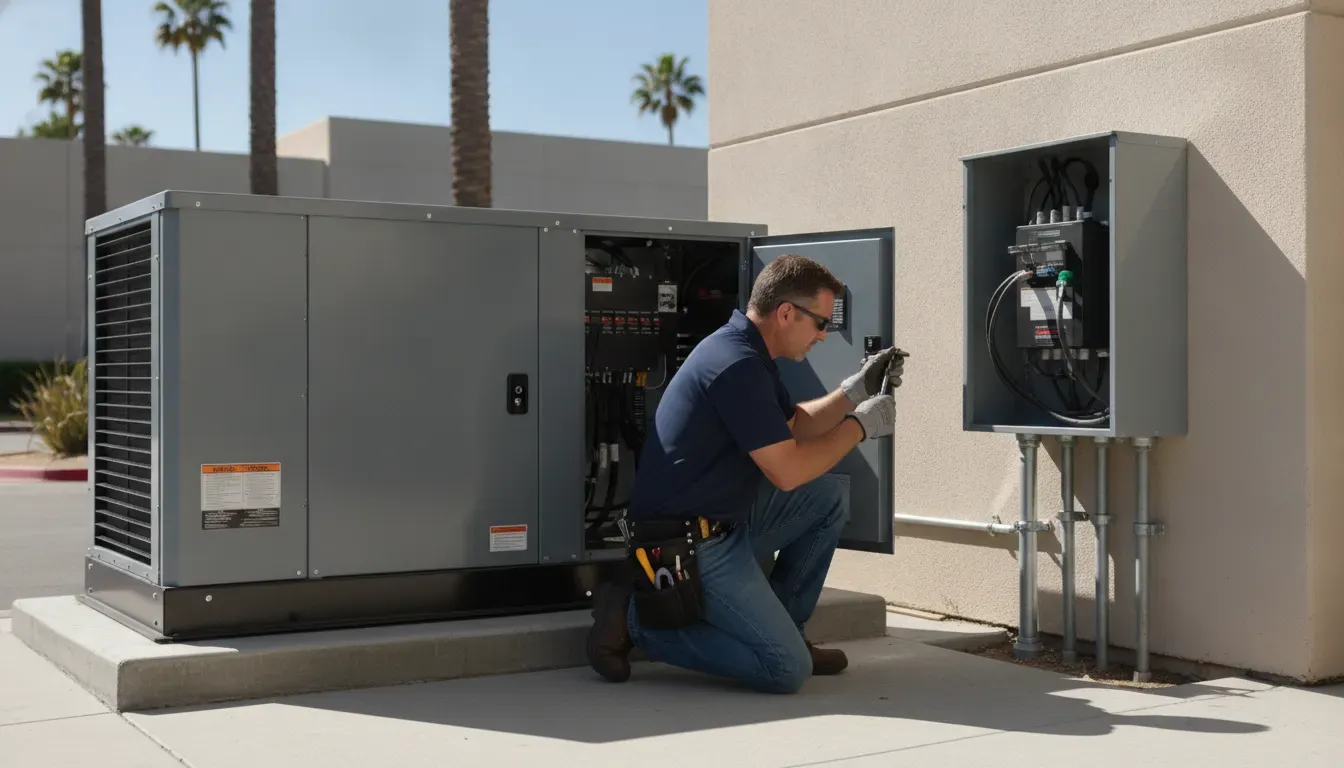
A practical commissioning checklist may include:
- Verify equipment placement, anchorage, clearances, conduits, grounding, bonding, fuel connections, ventilation, and labels.
- Confirm the generator controller, battery system, fuel system, alarms, remote monitoring, and emergency stop functions.
- Simulate a utility failure using the approved procedure and observe generator start, transfer, voltage, frequency, and load response.
- Confirm that noncritical circuits remain isolated and that critical loads operate in the intended sequence.
- Restore normal power, verify retransfer and cooldown, and document any alarm or corrective action.
- Close out required inspections and give the owner operating, safety, and maintenance instructions.
Routine care protects the investment after startup. Ask about a generator maintenance plan, exercise schedules, battery checks, fuel-system inspections, and service records. Facilities that need remote status visibility can also review generator monitoring and remote access options.
Frequently Asked Questions About Commercial Generator Installation Pasadena
Businesses usually need to resolve four questions before a commercial generator project moves forward: what must stay powered, what equipment can transfer safely, which permits and air-district approvals apply, and how the finished system will be tested. A site assessment turns those questions into a documented installation plan.
Does a commercial generator installation always need an air permit?
Not always. Requirements depend on the engine type, size, fuel, location, and planned operation. South Coast AQMD states that internal-combustion engines greater than 50 brake horsepower require a permit to construct before installation. Confirm the threshold and application path before purchasing equipment.
Can a standby generator operate in parallel with Pasadena Water and Power?
Do not assume it can. Systems designed to operate in parallel with the utility may need PWP review, application materials, inspections, and permission to operate. A transfer-isolated standby system may follow different requirements. The installer should confirm the design with PWP and the authority having jurisdiction.
Should a business power the entire building?
Not necessarily. Many facilities prioritize life-safety, security, communications, refrigeration, pumps, servers, and critical production loads instead of backing up every circuit. A load assessment can compare full-facility and priority-load strategies without committing the owner to an oversized system.
How early should a Pasadena business begin planning?
Begin before selecting the generator. Load calculations, equipment lead times, air-district review, utility coordination, permit drawings, site work, inspections, and commissioning can all affect the schedule. Starting with a site assessment gives the project team time to identify constraints before procurement.
Schedule a commercial generator installation consultation in Pasadena by calling (747) 999-6090.
