
Commercial power quality testing Los Angeles businesses consider can help investigate recurring voltage changes, equipment resets, nuisance trips, or unexplained operating issues. If your facility has persistent electrical symptoms, call Expert Electric Group at (747) 999-6090 to discuss what you are seeing and arrange an appropriate evaluation.
Call (747) 999-6090 to discuss your facility
What does commercial power quality testing examine?
Short answer: Testing checks how electrical supply behaves over time and under operating conditions. The test plan should connect measurements to a specific symptom, equipment concern, or operational question.
An assessment may start with a conversation about when the problem occurs, which equipment is affected, and whether the issue coincides with a shift change, motor start, or another known event. The electrician may review panel information and determine where measurements can safely be taken. A business seeking broader electrical support can review the company’s electrical services.
Depending on the concern, a power quality analyzer may record voltage and current on selected circuits. An assessment might examine voltage variations, phase imbalance, harmonics, frequency, or short-duration events. Not every project needs every measurement. For example, a recurring reset during a particular machine cycle points toward recording conditions during that cycle, while a general complaint without a time pattern may require a different observation plan.
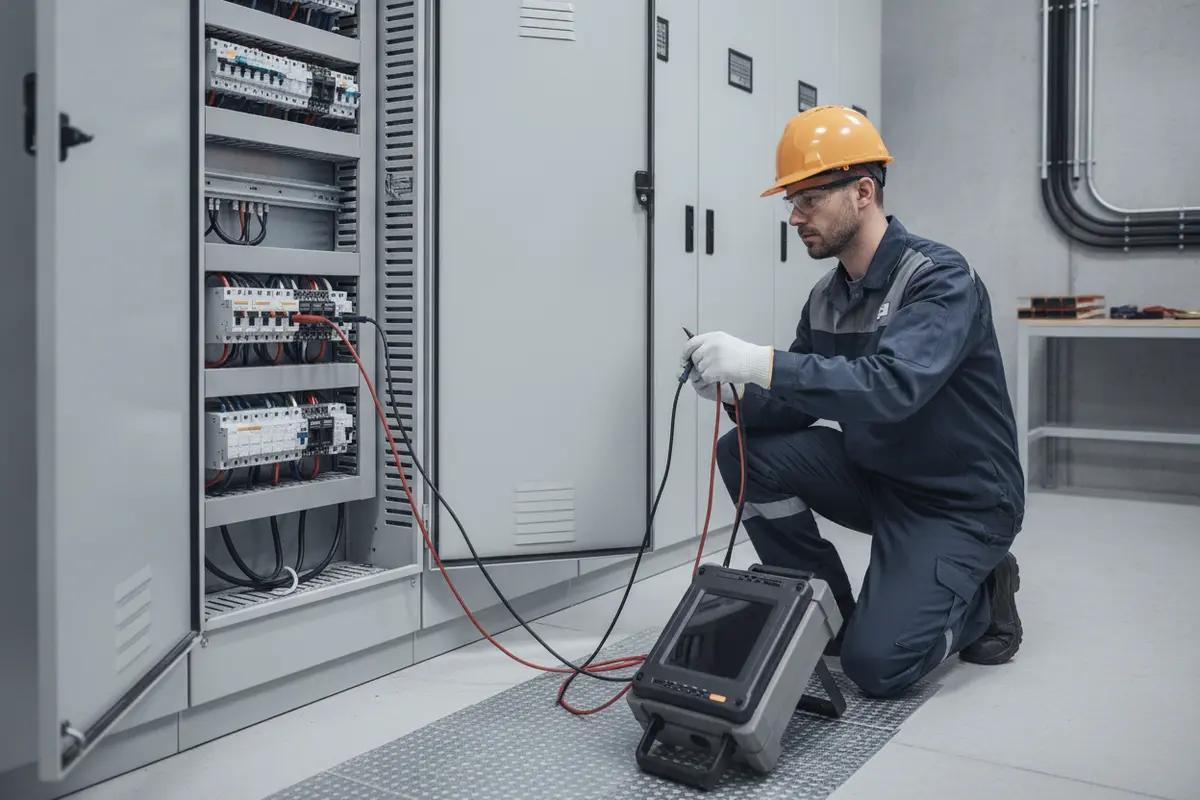
A single meter reading is only a snapshot. Some issues appear only when equipment is running or a building reaches a particular load. Measurement location and monitoring duration therefore depend on the symptom. Data can help distinguish a condition at one piece of equipment from a pattern affecting several circuits, but it does not automatically prove a single cause. Equipment condition, wiring, connected loads, utility supply, and operating practices may all need consideration.
Testing also has limits. If the reported event does not occur during monitoring, the captured record may not include the conditions that caused the interruption. A useful report states what was observed, what operating conditions were present, and what remains uncertain. It should help determine a next investigation rather than overstate what one test can establish.
When should a business consider testing?
Short answer: Consider an electrical evaluation when symptoms recur, affect important equipment, or remain unexplained after basic troubleshooting.
- Motors, controls, computers, or process equipment reset or stop unexpectedly.
- Lights flicker when equipment starts or building loads change.
- Breakers trip repeatedly without an obvious overload or fault.
- Several devices show similar symptoms at roughly the same time.
- New equipment has been added and system behavior has changed.
- Maintenance staff need measured information before planning corrective work.
These signs do not prove a power quality problem. A loose connection, failing device, overloaded circuit, control fault, or other condition can cause similar symptoms. Avoid repeatedly resetting equipment or opening electrical enclosures to investigate. If there is smoke, a burning odor, arcing, or a hot electrical component, keep people clear and seek urgent qualified help.
For a persistent fault, an electrical diagnostic test can help establish a troubleshooting path. Businesses with recurring equipment concerns can also discuss whether an infrared inspection is appropriate; that method answers a different question and should not be treated as a substitute for electrical measurements.
Use the timing of the symptoms to decide whether to request a focused diagnostic visit or discuss longer monitoring. A fault that appears each time a specific machine starts may allow a targeted observation. A problem reported once every few weeks may need a longer collection period or a careful plan for capturing the next event. Share these patterns with the electrician rather than attempting to recreate a hazardous condition.
What happens during an assessment?
Short answer: The electrician defines the concern, selects safe measurement points, observes the system under relevant conditions, then explains findings and possible next steps.
- Describe the issue. Identify affected equipment, dates and times, operating conditions, and recent changes. Explain whether symptoms happen together or separately.
- Review system context. Provide available panel schedules, equipment details, operating schedules, and prior service notes. The technician can identify what matters to the planned work.
- Set a measurement plan. Discuss which circuits or equipment may be monitored, what the test is intended to clarify, and how long measurements may be useful. Access and duration depend on the facility and suspected event.
- Collect data safely. A qualified electrical professional handles electrical access and instrument connections. Keep staff away from restricted equipment; do not attach test devices yourself.
- Interpret and report. Ask what the measurements show, what they cannot establish, and whether further testing or corrective work is recommended.
The electrician should explain any access or operating constraints before work begins. A production schedule, restricted room, or equipment that cannot be interrupted can affect where and when measurements are practical. If a test needs the facility to operate normally, coordinate with the staff member who understands the relevant process and can confirm when the symptom occurs.
Where troubleshooting reveals a separate installation or equipment issue, the next step may be repair or additional investigation rather than assuming one cause. For a larger project that involves a new space or system changes, review commercial wiring and buildout services.
How do symptoms guide the test plan?
Short answer: Symptoms help narrow where and when to measure, but they are clues, not a diagnosis.
| Observed concern | Useful context to record | Possible assessment focus |
|---|---|---|
| Equipment resets | Which devices, timing, and operating state | Supply behavior near affected equipment during the event |
| Lights flicker during starts | Which loads start and whether other circuits respond | Voltage behavior during the equipment transition |
| Repeated trips | Breaker or circuit, load, and trip timing | Load and electrical conditions alongside circuit troubleshooting |
| Multiple devices affected | Shared location, circuits, and time pattern | Whether symptoms share an upstream electrical condition |
| New equipment concern | Equipment ratings, installation date, operating schedule | System behavior under the changed operating load |
Use this table to organize observations before a call, not to select instruments or diagnose the problem yourself. A useful log includes the date, approximate time, affected equipment, what the facility was doing, and whether staff noticed other changes. If several devices fail together, note whether they share a location or operating schedule. Those details can help the electrician decide whether to focus on a local circuit, a shared distribution point, or a broader pattern.
For commercial electrical needs beyond testing, see commercial wiring and buildouts and the company’s service overview. The appropriate scope depends on site conditions and the concern being evaluated.
California’s Public Utilities Commission publishes proceedings and documents on utility matters, but a general document should not be mistaken for a diagnosis of a particular facility. The available CPUC document on utility-related matters illustrates why utility issues are addressed through specific evidence and context; it does not establish the cause of symptoms at your site.
What should you prepare before calling?
Short answer: A concise symptom log and basic equipment details help an electrician understand the concern and discuss an appropriate first step.
- List affected equipment and the areas where symptoms occur.
- Record dates, times, and what the facility was doing when the issue appeared.
- Note recent equipment additions, electrical work, or operational changes.
- Gather panel schedules, equipment documentation, and prior service reports if available.
- Identify facility access rules and a staff contact familiar with the issue.
- Describe any temporary steps already taken and whether they changed the symptoms.
Do not delay urgent safety action to assemble records. For scheduled work, a clear log can distinguish a frequent event from one that occurs only under a particular load. You do not need to interpret the technical data or decide which test should be run; share observations and let the professional determine what is relevant.
Before the appointment, consider whether the electrician can access the relevant panel and equipment, whether an escort is required, and whether a normal production cycle can take place during observation. If work might affect business operations, ask in advance about coordination. Do not change schedules or operate equipment in an unsafe way merely to reproduce a symptom.
To confirm the company’s service area, review its Southern California service areas and company information. Expert Electric Group serves residential and commercial customers across Los Angeles, Ventura, Orange, Riverside, and San Bernardino counties.
How should you review results and next steps?
Short answer: Ask for plain-language findings, measurement limits, and a prioritized explanation of recommended work.
A useful discussion separates what was measured from what is inferred. Ask which conditions were recorded, when they occurred, and whether the record aligns with the reported symptom. If no relevant event happened during monitoring, ask whether a longer or differently timed assessment could help. If a reading was outside the expected range, ask what comparison or operating condition gives that result meaning.
Request clarity on proposed corrective work: what concern it addresses, which equipment or circuits are involved, what approvals or shutdowns may be needed, and what follow-up would help verify the result. Ask which recommendation is urgent, which can be planned, and whether additional testing is needed before work is selected. The aim is a clear connection between observed evidence and the proposed action.
If a utility-side issue is suspected, ask what evidence supports that possibility and what the appropriate next contact should be. Do not assume the utility or building equipment is at fault before evidence supports it. Different parties may need to investigate different portions of the electrical path, so the report should be clear about where measurements were taken and what was outside the test scope.
For urgent electrical trouble, the company offers 24-hour emergency electrician services. For a non-urgent discussion, use the contact page to describe the facility and symptoms.
Frequently asked questions
Does power quality testing always find the cause?
No. The result depends on whether the event occurs during measurement and on the scope of the assessment. Findings may point to further investigation rather than a definitive cause.
How long does monitoring take?
There is no single duration for every site. The useful period depends on how often symptoms occur, the equipment involved, and the test objective. Ask what event the plan is designed to capture.
Can staff connect an analyzer themselves?
Electrical measurements may require access to energized equipment. Leave instrument connections and electrical-panel access to qualified professionals following safe work practices.
What should I do if equipment is overheating or arcing?
Keep people away from the affected equipment and seek urgent qualified assistance. Do not touch, open, or repeatedly reset equipment showing signs of a serious electrical hazard.
Call (747) 999-6090 to discuss your facility
Commercial power quality testing is most useful when it starts with a clear operational concern and ends with findings tied to practical next steps. Call Expert Electric Group at (747) 999-6090 to discuss your facility’s symptoms and service needs.
