
The cost to install generator Calabasas homeowners may encounter depends on the equipment, the home’s electrical system, fuel access, permitting, and the installation site. A useful estimate begins with the loads you want to protect and a site review—not a one-size-fits-all price. Below are the main factors to understand before comparing proposals.
Request a generator installation quote
What is a typical generator installation cost range in Calabasas?
There is no responsible single price that applies to every Calabasas property. A standby generator project may include the generator itself, transfer equipment, electrical modifications, fuel work, permits, a prepared mounting location, startup, and testing. A smaller or simpler scope can differ substantially from a larger system serving more of the home or requiring upgrades and extensive site work.
Online figures may combine different equipment sizes and scopes. Check whether an advertised amount includes the generator, transfer switch, labor, fuel connection, permits, concrete or other base, inspection, and commissioning. A quote that omits one of these items may not be comparable with a complete installation proposal.
For context on how electrical upgrades can affect a project, the California Energy Commission docket candidate discusses added costs associated with electric appliances and higher-capacity panels, but it is not a current Calabasas generator price guide: California Energy Commission docket document. Treat it only as context for why panel-related work is a separate cost factor, not as a quote or current price.
Which factors shape the final project range?
Generator capacity and equipment
Capacity is driven by the loads you need during an outage. Supporting selected essentials—such as refrigeration, lighting, or chosen circuits—can call for a different design than supporting a broader set of household systems. The unit’s capabilities and the transfer equipment must suit that plan.
Ask the installer to identify the intended loads and explain the sizing basis. If you are comparing options, request the model and capacity in writing, and clarify which equipment is included. Expert Electric Group is a Generac Authorized Dealer and Certified Installer; its generator sales and electrical services page is a starting point for understanding the available work. Also review the 22 kW Generac installation information to see how a stated unit size provides a useful comparison point, not a guaranteed fit or price for your home.
Electrical panel, transfer equipment, and wiring
The generator must connect safely to the home through suitable transfer equipment. The existing panel, service capacity, circuit layout, and distance between the equipment can affect labor and materials. Some homes may need panel or circuit changes; others may be ready for a more direct installation.
Ask whether the proposal includes the transfer switch or other transfer equipment, any panel work, wiring and conduit, labeling, and testing. If an upgrade is anticipated, request a clear description of why it is needed and whether it is included or separately priced. Related reading on generator sizing with 400-amp service and electrical service capacity considerations can help frame questions about your existing system. A panel’s amperage alone does not show which circuits you want backed up or whether a particular design is appropriate; an assessment should connect the service configuration with the planned loads.
Fuel supply and connection
Fuel choice and availability influence both equipment selection and installation scope. The proposal should say what fuel arrangement is planned and whether connecting or modifying the supply is part of the work. The run length, routing, access, and any coordination with other trades can change the effort required.
Do not assume the generator price includes fuel-side work. Ask who handles that work, what is covered, and whether any separate review or approval is expected. The installer can assess the site and explain the scope rather than relying on a rough estimate from a photograph. If the proposed unit location is far from the available fuel source, ask the contractor to describe the anticipated route and any assumptions about access before you compare totals.
Permits and inspections
Permit and inspection requirements depend on the project and local review. A proposal should identify which permits or applications are included, who coordinates them, and whether fees are included or listed separately. Confirm what inspections and final checks are part of the planned process.
Ask about placement requirements early, since a location decision can affect both the design and the review process. For a broader discussion of local placement and safety considerations, see this guide to generator placement and regulations in Malibu; use it as general planning context, not as a substitute for Calabasas requirements. For permit preparation and installation planning, review whole-home generator installation requirements. Confirm which authority reviews the actual project and rely on its requirements for the property rather than applying guidance for another city without checking.
Site access and preparation
Installation conditions can make a significant difference. Consider the proposed unit location, access for delivery and workers, the route for wiring and fuel, the surface or base, drainage, landscaping, and the amount of excavation or restoration needed. A site that is easy to reach and already suited to the equipment may need less preparation than a constrained or complex location.
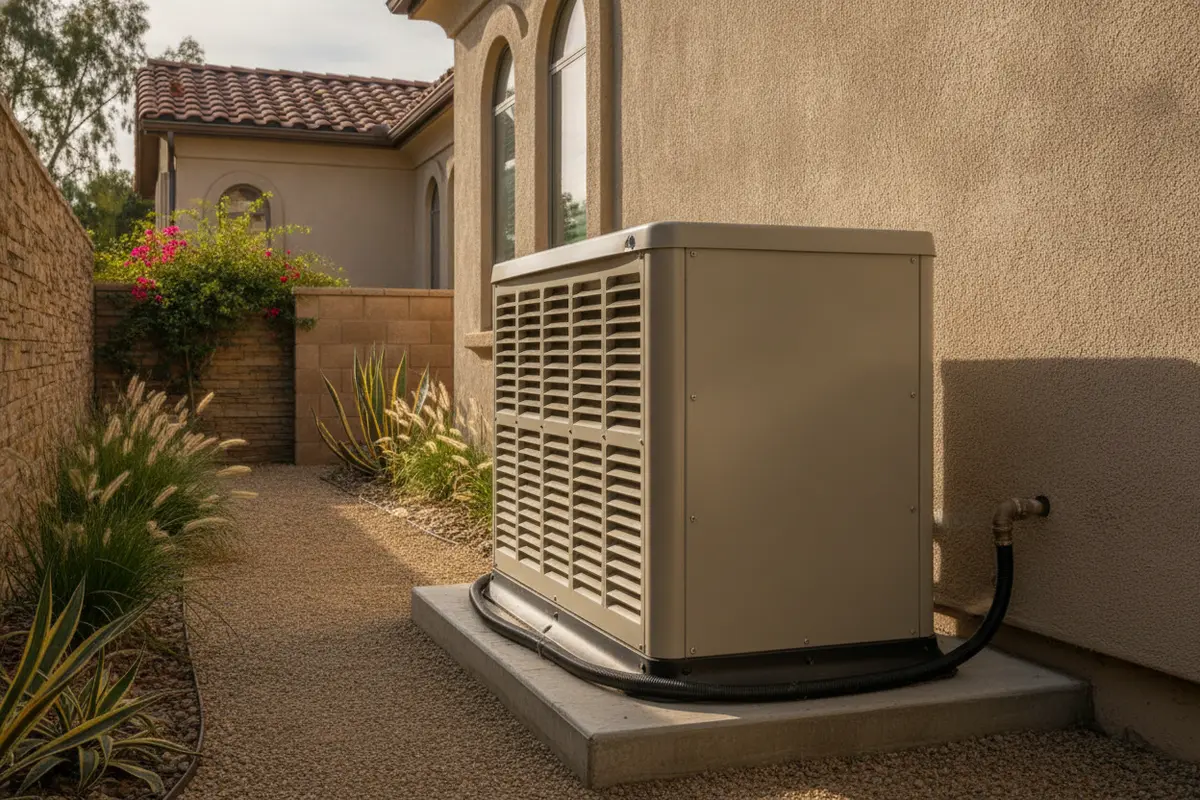
Ask the contractor to identify site assumptions in the estimate. If access, surface preparation, trenching, or restoration is excluded, make sure you understand who will handle it and how it could affect the project. For example, a narrow side yard may affect how equipment and materials reach the installation area, while an obstructed route may require additional planning. These are reasons to document site conditions, not a basis for guessing a surcharge in advance.
Optional load management
Load management may help a system serve selected priorities without treating every home circuit as an always-on load. Whether it is useful depends on the generator design and which appliances or systems you want to operate together. It can add equipment and setup, so ask what it controls, which loads receive priority, and what happens when several large loads call for power at once.
Compare the cost and operating tradeoffs against choosing a different generator capacity or limiting the backed-up circuits. A proposal should describe the intended behavior plainly, rather than listing a device without explaining how it fits your household’s priorities. A useful example is to ask the installer to explain what happens if two high-demand appliances are requested at the same time: which takes priority, whether another load is paused, and how the system returns to normal operation. That answer helps you decide whether the additional controls solve a real need.
How do the cost factors compare?
| Project factor | What to confirm | Why it changes the range |
|---|---|---|
| Equipment and capacity | Model, capacity, and loads served | Different coverage plans call for different equipment and design. |
| Electrical work | Transfer equipment, wiring, panel changes, and testing | Existing service and layout affect materials and labor. |
| Fuel connection | Fuel type, route, connection scope, and exclusions | Distance and coordination can change the work required. |
| Permits and inspections | Application coordination, fees, and inspection scope | Local review and project details affect process and cost. |
| Site preparation | Access, base, trenching, landscaping, and restoration | Site constraints can add preparation and labor. |
| Load management | Controlled circuits, equipment, and operating plan | Optional controls add components and design decisions. |
How can you compare generator proposals?
Compare scope before comparing totals. Ask each contractor to address the same intended loads and list included and excluded work. A lower quote may reflect a smaller unit, fewer circuits, or missing site and fuel work rather than a better price for the same result.
- Confirm the generator model, capacity, and selected loads.
- Check transfer equipment, panel work, wiring, and testing.
- Clarify fuel connection responsibilities and any excluded work.
- Identify permits, fees, inspection coordination, startup, and commissioning.
- Review the proposed location and site preparation assumptions.
- Ask whether load management is included, optional, or not needed.
Request a written explanation for any allowance or variable item. Confirm how changes discovered during site review will be handled, and whether the estimate assumes a specific access route or existing electrical condition. Ask whether the quote is a fixed scope or whether particular items are provisional. If there are separate trades, identify who coordinates their work and at what point that work must be complete. These details do not make every proposal identical, but they make differences visible.
Use a like-for-like comparison
Before reviewing prices, make a small comparison sheet. Put the same questions in each column: selected loads, generator model, transfer equipment, fuel work, electrical modifications, permit handling, site work, startup, and exclusions. Mark any item as “not stated” rather than assuming it is included. Then ask the contractor to clarify it in writing.
Consider two hypothetical proposals. Proposal A lists a generator and transfer equipment but excludes fuel work and surface preparation. Proposal B includes those items but assumes a different set of backed-up circuits. The totals cannot be compared fairly until you know whether the equipment plan and scope match. You are not just comparing a machine; you are comparing the complete installation needed to achieve the same outage plan.
What should you prepare before requesting a quote?
Make a short list of what matters during an outage. Note essential appliances, heating or cooling needs, medical or work-related considerations, and whether you want broad household coverage or selected circuits. You do not need to calculate generator capacity yourself; a qualified installer can evaluate the loads and system.
Be specific about priorities. For instance, one household may care most about refrigeration, lighting, communications, and a few outlets, while another may want a wider range of circuits available. Listing “whole house” without discussing simultaneous use can leave important assumptions unclear. Mention appliances that may run at the same time so the installer can consider the desired operating pattern rather than treating every device as an isolated load.
Gather a few useful details: the location of the electrical panel, any known service upgrades, likely generator locations, and whether fuel is already available near the proposed site. Photos can help start the discussion, but they do not replace an on-site assessment when one is needed. Note gates, steps, landscaping, hardscape, or other access constraints that could affect equipment delivery or the route to the installation area.
Explore the company’s home generator installation and maintenance page for related planning topics. These pages do not establish a guaranteed price for your specific property; the relevant figure depends on a defined design and documented scope.
How do design choices affect what is included?
A generator quote is easier to understand when it states the outcome the system is designed to provide. Ask whether the plan is for selected circuits or broader coverage, which equipment transfers power, and how the proposed controls support that plan. The objective is not automatically to maximize capacity; it is to match the system to the way you expect to use power during an outage.
For selected-circuit coverage, identify the specific circuits and ask whether they can support the appliances you intend to use together. For broader coverage, ask what assumptions apply to simultaneous demand and whether load management is part of the design. The installer should explain limitations in practical terms, so you understand what may need to be turned off or sequenced during an outage.
Also distinguish equipment choices from site and service work. A different model may change the equipment portion of the proposal, while a long wire route, panel modification, or difficult access may affect installation labor. This distinction is useful when you ask whether a cost difference comes from a design choice or from property conditions. Ask for those elements to be shown separately whenever possible.
What details should a complete written estimate show?
A clear written estimate should let you understand the planned installation without guessing what “complete” means. Look for the proposed equipment identification, stated loads or coverage plan, transfer equipment, electrical tasks, fuel connection responsibilities, placement assumptions, permit coordination, and testing or startup. It should also say what is excluded, what remains subject to site verification, and how changes to the scope will be handled.
- Equipment: model, capacity, included accessories, and any options.
- Electrical scope: transfer equipment, panel or circuit work, wiring, labeling, and tests.
- Fuel scope: planned source, connection responsibility, route assumptions, and exclusions.
- Site work: base or mounting preparation, access, trenching, landscaping, and restoration.
- Review process: who handles permit applications, fees, inspections, and coordination.
- Closeout: startup, operating explanation, and any documentation stated in the proposal.
Not every proposal uses the same format. The important point is that the work and responsibilities are specific enough for you to spot gaps. If one contractor includes permit coordination and another does not mention it, ask for clarification before treating their totals as comparable. Save the written answers with the proposal so later scope changes can be discussed against the same baseline.
What questions help resolve a surprising price difference?
When two estimates differ, avoid assuming the lower or higher number is automatically better. First check whether each contractor priced the same generator capacity and backed-up loads. Then compare transfer equipment, panel changes, fuel scope, site preparation, permit handling, and startup. A difference can reflect a more complete scope, a different design, or an assumption that has not yet been verified.
Ask direct questions: “Which circuits are included?” “Is the fuel connection part of this total?” “What site work is excluded?” “Are permit fees included or only application coordination?” “What could change after the site review?” Ask for answers in writing, especially when an item is described as an allowance or left open pending inspection. This creates a practical record of what each total covers.
If a proposal proposes a panel upgrade, ask what condition or design requirement drives it and what work is included. If load controls appear in one proposal but not another, ask what operational difference the controls create. Focus on the difference in result and scope, not solely on the number at the bottom of the page.
For general information about electrical service capacity, see the guide to 400-amp panels for homeowners. The article is background reading; it does not determine whether a specific generator installation needs a service upgrade.
Discuss your generator project and request a quote
Frequently asked questions
Can I get an accurate price without a site review?
A preliminary estimate may be possible from project details, but final scope can depend on panel condition, routing, access, fuel connection, and placement. Ask what information the estimate assumes and whether an on-site review is required before the scope is confirmed.
Does a larger generator always cost more to install?
Equipment capacity is one factor, but not the only one. Electrical changes, fuel routing, permits, site preparation, and controls also affect the project. Compare proposals that serve the same loads and include the same work.
Are permits included in a generator quote?
Not automatically. Ask whether permit coordination and fees are included, who submits the application, and which inspections are expected. The written proposal should make these responsibilities clear.
Is load management required?
It is not appropriate for every system. It can be considered when the chosen generator and desired loads need a defined operating plan. Ask the installer to explain the benefit, the controlled loads, and the added equipment or setup.
For a meaningful Calabasas estimate, define the loads you want supported and compare complete written scopes that account for equipment, electrical work, fuel, permits, and the actual site.
