
Replacing a fuse box is not always a simple equipment swap. In a Southern California home, the project may involve checking the existing wiring, service capacity, grounding, panel location, circuit count, permits, inspections, and code corrections. That is why the cost to upgrade fuse box to breaker panel depends on the home’s condition and the work required, not one universal price.
Request a project review from Expert Electric Group
The cost to upgrade fuse box to breaker panel is project-specific. A qualified electrician must assess the existing equipment and determine whether wiring or grounding work is needed. The assessment should also confirm panel capacity and account for permits and inspections before providing a reliable estimate.
For older properties, especially homes built before 1980, that assessment helps separate a straightforward conversion from a larger electrical improvement. Understanding what the estimate includes makes it easier to compare proposals and plan the work safely.
What Does It Cost to Upgrade a Fuse Box to a Breaker Panel?
There is no responsible one-size-fits-all price for the cost to upgrade fuse box to breaker panel. The final estimate depends on what the conversion requires in your home. The electrician reviews service capacity, wiring condition, grounding and bonding, panel location, circuit count, permits, inspections, and code corrections. A straightforward equipment change is a different project from a conversion that also requires wiring repairs, relocation, or a service-capacity upgrade.
The first step is an evaluation of the existing electrical system. An electrician needs to identify the fuse box and service rating, trace the circuits, and check whether the conductors are suitable for breaker protection. The electrician also looks for conditions that could affect safe installation. The estimate should then separate the new panel and installation from related work needed to make the system compliant and dependable.
This conversion-specific question is narrower than a general guide to replacing a main panel. If your home only needs a properly scoped fuse-box replacement, the work may be limited to the panel, circuit reconnection, grounding checks, and required project administration. If the assessment finds outdated wiring or insufficient capacity, the project can become broader. In that case, review the differences between a panel upgrade versus rewiring before comparing proposals.
What should a project-specific estimate include?
A useful estimate should describe the equipment being installed, the work included, the circuits affected, and whether permits and inspection coordination are part of the scope. It should also identify exclusions, such as concealed wiring repairs or additional code corrections that cannot be confirmed until the system is opened or tested. This makes it easier to compare equivalent proposals instead of choosing a number that leaves necessary work out.
For a clearer starting point, see the service overview for main panel upgrades and power distribution. A qualified evaluation can determine whether your Southern California home needs a direct conversion or a larger electrical improvement.
What Is Included in a Fuse-Box-to-Breaker-Panel Upgrade?
A professional conversion is more than taking out an old fuse box and mounting a new enclosure. The electrician first evaluates the existing service, wiring, grounding, panel location, and the number and type of circuits. That assessment helps determine whether the home needs a straightforward replacement, a capacity change such as a 200A or 400A configuration, or additional corrective work before the new panel can be connected.
The work commonly proceeds through these stages.
Assessment and safe power shutoff
The electrician identifies the service equipment, documents the existing circuits, and checks for visible damage, overloaded conductors, outdated components, or other conditions that affect the conversion. Power is then shut off through the appropriate utility or service disconnect process. Because the home may be without electricity during the work, the timing and expected disruption should be discussed before installation begins. For older homes, planning an upgrade for an older panel can help clarify the likely scope.
Fuse-box removal and breaker-panel installation
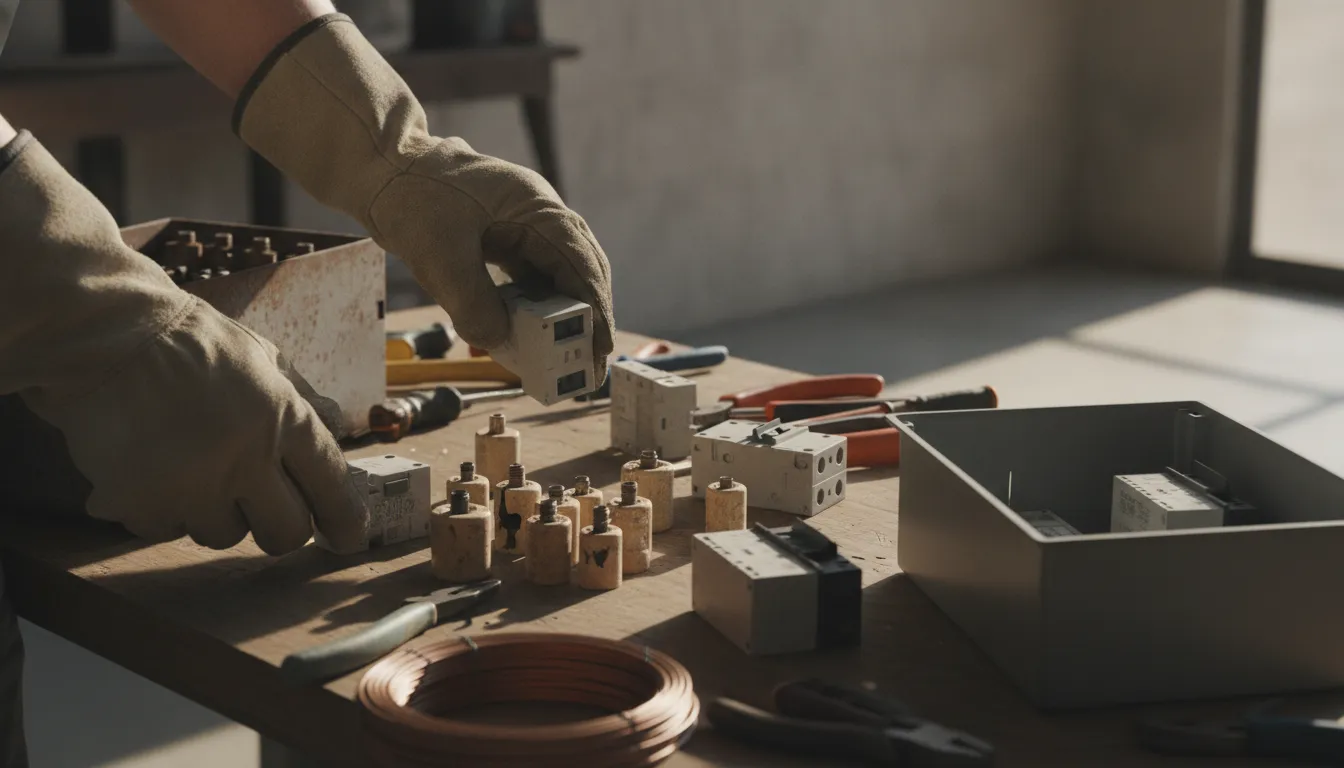
The existing fuse equipment is removed, and the new breaker panel is secured in a suitable location. The installation may include service conductors, bus capacity, breakers, labeling, and enclosure work selected for the home’s electrical demand. The goal is not simply to install modern-looking equipment. The new system must be appropriately sized and installed for the property’s needs.
Circuit reconnection and grounding review
Each usable circuit is connected to the new breakers and labeled so future maintenance is easier. The electrician also reviews grounding and bonding, checks terminations, and identifies wiring or code issues that could prevent a safe connection. If the evaluation shows that the panel problem is part of a larger wiring condition, compare a panel upgrade versus rewiring before approving a limited scope.
Permits, inspection, and final checks
Depending on the jurisdiction and project scope, permitting and inspection coordination may be part of the job. The electrician completes operational checks, confirms circuit identification, and addresses inspection requirements. Homeowners can review related home electrical inspection findings to understand the types of panel, wiring, grounding, and circuit concerns an inspection may surface. A typical installation may be described as taking several hours followed by inspection, but actual timing depends on the home’s condition and the work required.
Which Project Factors Change the Final Cost?
A fuse-box-to-breaker-panel conversion is shaped by the condition and layout of the existing electrical system, not just the replacement panel. A site assessment helps separate a straightforward equipment change from a larger project involving service capacity, wiring, grounding, or corrections required for approval.
| Project factor. | What the electrician evaluates. | Why it can change the work. |
|---|---|---|
| Service capacity | Available utility service and the home’s present and planned electrical load | The conversion may require a capacity decision rather than a simple box replacement. |
| Existing wiring | Conductor condition, compatibility, insulation, and routing | Damaged, outdated, or incompatible wiring can expand the project beyond the panel. |
| Grounding and bonding | Grounding electrode system, bonding paths, and connections at the service equipment | Corrections may be needed for a safe, compliant installation. |
| Panel location and access | Working clearance, wall condition, conduit path, and distance from the service point | A difficult location can require additional routing, repairs, or relocation work. |
| Circuit count | Number of branch circuits, their identification, and available breaker spaces | More circuits or limited space can affect panel selection and reconnection work. |
| Permits and inspection | Local permit requirements, utility coordination when applicable, and inspection steps | The jurisdiction and project scope determine the administrative and compliance work. |
Capacity and wiring are separate questions
A new breaker panel does not automatically create more electrical capacity. The electrician must evaluate the service rating and the combined demand of existing and planned loads. This matters if you are adding an EV charger, HVAC equipment, or another high-demand appliance. Homes with limited electrical panel capacity may need load-management planning or a different service approach.
The wiring also deserves its own review. Some projects reconnect usable branch circuits, while others uncover conductor damage, older wiring methods, or work that no longer matches the intended circuit protection. If the panel conversion overlaps with broad wiring replacement, compare the scope with these whole-house rewiring cost factors instead of treating every issue as a panel expense.
Location, circuits, and compliance add practical scope
A panel in a crowded closet, finished wall, or hard-to-reach area may require more preparation than equipment mounted in an accessible service area. The number and condition of circuits can also affect labeling, conductor routing, breaker selection, and reconnection. If the home needs added distribution rather than a larger main service, residential subpanel installation costs may be relevant to the planning discussion.
Finally, permit, inspection, grounding, and code-correction requirements should be treated as part of the project scope. Confirming those items early produces a more useful estimate and helps prevent a low initial quote from omitting necessary work.
Can an Older Fuse Box Be Converted Safely?
Yes, some older fuse-box systems can be replaced with a breaker panel, but safe conversion depends on the condition of the service equipment, wiring, grounding, and connected circuits. An electrician should evaluate the complete system before deciding whether a straightforward panel replacement is appropriate. A panel that appears outdated is not, by itself, proof that every part of the electrical system needs the same treatment.
This assessment is especially important in homes built before 1980. Older properties may have wiring, grounding, circuit capacity, or previous alterations that do not support the planned upgrade. The inspection should identify unsafe components, overloaded circuits, damaged conductors, and any code corrections that may need to be addressed as part of the work.
When can broader rewiring become part of the project?
In some homes, the fuse box is only one part of a larger problem. If the existing wiring is deteriorated, incompatible with the new equipment, or unable to support the home’s intended loads, replacing the panel alone may not provide the right solution. The recommended scope may include targeted circuit repairs or more extensive rewiring. Homeowners comparing a panel upgrade versus rewiring should ask which findings support each recommendation. For related planning, review the site’s whole-house rewiring cost factors without assuming that a full rewire is necessary.
Safety also includes completing the work through the proper permitting and inspection process. Requirements can vary by jurisdiction and project scope, so homeowners should confirm local expectations and review Los Angeles electrical code guidance when the property is in that area.
How should you choose the contractor?
Use a properly licensed contractor who can explain the condition of the existing system, the proposed equipment, grounding and bonding work, circuit reconnection, permits, and inspection. The California Contractors State License Board provides consumer guidance for hiring a contractor. A clear written scope should distinguish necessary safety corrections from optional improvements, so the decision is based on the home’s actual condition rather than a one-size-fits-all conversion.
How Do Permits, Utility Coordination, and Inspection Affect the Project?
Permits and inspections are part of a safe fuse-box-to-breaker-panel conversion, not paperwork added after the work is finished. Requirements vary by the city or county, the scope of the upgrade, and whether the project changes service capacity, wiring, or the panel location. Before work begins, the electrician or homeowner should confirm the requirements with the local building department. A permit may be needed for the panel replacement itself, related wiring, or other changes discovered during the assessment.
Southern California jurisdictions do not all use identical application steps. Local requirements may reference the California Electrical Code and utility standards, and an inspector may request additional documentation when the project adds electrical load. For homeowners in the Los Angeles area, this Los Angeles electrical code guidance provides useful planning context. It should supplement, not replace, confirmation with the authority having jurisdiction for the property.
When is utility coordination necessary?
A panel conversion requires the electrical system to be de-energized while the existing equipment is disconnected and the new panel is installed. Depending on the service arrangement and scope, the electrician may need to coordinate a utility shutoff, meter work, or service-related approval. That timing is not always controlled by the electrician alone. Ask who is arranging the shutoff, how long power may be unavailable, and whether any utility visit must occur before the inspection.
What happens during inspection?
After installation, the authority having jurisdiction reviews the completed work for compliance with the approved scope and applicable requirements. The inspection may consider panel and breaker compatibility, grounding and bonding, circuit connections, working access, and any related corrections. If the inspector identifies an issue, the electrician may need to make a correction and schedule a follow-up inspection before the project is closed.
Expert Electric Group describes a typical installation example as taking 6-8 hours followed by inspection, but that is not a promise for every home. Older wiring, difficult access, service coordination, code corrections, or added capacity can extend the disruption. Plan for a scope-dependent outage and protect sensitive equipment before work begins. For a direct next step, review the company’s professional electrical panel upgrade service information.
How Should You Prepare for a Fuse Box Upgrade Estimate?
A useful estimate starts with useful information. Before the electrician arrives, gather clear photos of the fuse box, the surrounding wall, the meter area if accessible, and any labels or service markings. Do not remove the cover or handle fuses to get a better view. Photos help the electrician understand the existing equipment and identify questions that need an in-person inspection.
Make a short list of what you have noticed. Include fuses that blow repeatedly, lights that flicker, warm or discolored components, buzzing, burning smells, or circuits that cannot support everyday appliances. If there is an immediate sign of overheating or damage, stop using the affected equipment and request prompt professional guidance rather than waiting for a routine estimate.
- List planned electrical loads. Tell the electrician about an EV charger, air-conditioning equipment, heat-pump, electric range, hot tub, workshop tools, or other major loads you may add. Future demand can affect the panel capacity and load planning.
- Ask what the home can support. Ask whether the proposed panel capacity matches the existing service, how many circuits can be accommodated, and whether a load calculation or service adjustment may be needed. If capacity is limited, review options for limited electrical panel capacity.
- Clarify the wiring and grounding scope. Ask whether the existing branch-circuit wiring, grounding, bonding, service conductors, and panel location are suitable for the conversion. A fuse-box replacement is not automatically the same project as a full rewiring; this guide to panel upgrade versus rewiring can help explain the distinction.
- Confirm permits, inspection, and access. Ask who handles the permit, what inspection is expected, how the utility shutoff will be coordinated if needed, and how long the home may be without power. Keep the panel area clear so the electrician can inspect it safely.
An estimate is a project-specific assessment, not a guaranteed fixed price before the equipment, wiring, grounding, capacity, access, and permit requirements are confirmed. Ask for the proposed scope in writing, including what is included, what could require a change, and whether restoration or related code corrections are separate. A home electrical inspection findings checklist can also help you organize questions before the visit.
Request a project-specific review from Expert Electric Group
Frequently Asked Questions
How much does it cost to upgrade a fuse panel to a breaker panel?
There is no responsible one-size-fits-all price. The estimate depends on the panel capacity, circuit count, wiring condition, grounding, panel location, access, code corrections, permits, and inspection requirements. A site assessment is the best way to separate a straightforward panel replacement from a project that also needs wiring or service work.
Can you convert a fuse box to a breaker box?
In some homes, yes, but the existing enclosure, service equipment, wiring, grounding, and available capacity must be evaluated first. An older fuse box may reveal broader electrical issues, especially in homes built before 1980 or systems that are 25 or more years old. The safest approach is to have a qualified electrician define the full scope before work begins.
Should I replace my fuse box with a circuit breaker panel?
Replacement may make sense when the equipment is aging, capacity is limited, circuits are being added, or the system needs code-related corrections. It is not automatically the right solution for every home. An electrician should compare a panel upgrade with targeted repairs, a subpanel, or broader rewiring based on the home’s condition and planned loads.
Is a permit required to upgrade an electrical panel?
Permit requirements vary by Southern California jurisdiction and project scope, so confirm them with the local building department and your electrical contractor. Panel upgrades commonly involve permitting and inspection, particularly when service capacity, wiring, or equipment changes are part of the work.
How long does it take to replace a fuse box?
A straightforward installation may take several hours, but the actual schedule depends on access, utility coordination, wiring conditions, and inspection timing. Expert Electric Group describes a typical panel installation as taking 6 to 8 hours followed by inspection, while noting that the home and project scope determine the actual duration. Review the panel upgrade service information for a direct next step.
Contact us to plan your panel upgrade
A project-specific review can help clarify the existing equipment, wiring, permitting needs, and scope involved in replacing a fuse box with a breaker panel. That information gives you a practical starting point for planning work safely in your Southern California home. To discuss your situation and request a review, contact Expert Electric Group through the project inquiry page.
