
Old fuse boxes can still work, but age, damage, improper repairs, or a growing electrical load can make them unsafe. If you are concerned about the dangers of old fuse boxes in your Southern California home, call (747) 999-6090 to discuss an inspection.
Call (747) 999-6090 to discuss your fuse box
What are the dangers of old fuse boxes?
Short answer: The main concerns are overheating, overloaded circuits, damaged components, incorrect fuse replacements, and an electrical system that no longer fits the home’s needs. A fuse box’s age alone does not prove it is unsafe, so have warning signs and the installation assessed rather than guessing.
A fuse is designed to interrupt power when too much current flows through a circuit. That protective action can help limit damage, but it does not make an old or altered system automatically safe. Fuses and their connections can wear or deteriorate, and older equipment may have been modified in ways that compromise its protection. The National Library of Medicine notes that fuses can degrade over time and eventually fail (source on checking and replacing fuses).
Another concern is that household electrical demand changes. A home may have been built with fewer appliances and devices than it uses today. Adding equipment without evaluating the circuits can lead to repeated fuse failures or unsafe attempts to keep a circuit energized. A properly selected fuse is part of a coordinated protection system; replacing it with a higher-rated fuse to stop it from blowing can leave wiring exposed to more current than it was designed to carry.
Some older panels also lack the convenience and capacity homeowners expect from modern electrical service. That does not mean every fuse box must be replaced on sight. An electrician should inspect the equipment, wiring, signs of heat or moisture, how circuits are used, and whether the home has had additions or electrical changes.
It helps to separate three issues that are sometimes treated as one. First, there is the physical condition of the fuse box: its enclosure, holders, connections, and nearby wiring. Second, there is circuit protection: whether the fuse type and rating match the circuit and whether it interrupts current as intended. Third, there is capacity and suitability: whether the service and circuits can support the way the household uses electricity today. A panel can be old yet show no immediate visible damage, while still deserving a closer assessment because of repeated faults or planned new loads. Conversely, replacing equipment does not automatically correct deteriorated wiring elsewhere in the home.
Which warning signs should you take seriously?
Short answer: Treat burning odors, visible scorching, a hot panel, buzzing or crackling, repeated blown fuses, and shocks or sparks as reasons to stop using the affected circuit and seek professional help. If there is smoke or an active fire, leave the area and contact emergency services.
Notice what happens before a fuse blows. Does it occur when several appliances run at once? Does the same fuse fail even when the load seems modest? Is there a new odor, discoloration, or sound near the panel? These details help an electrician understand the pattern, but they are not a reason to open the box or experiment with its contents.
- Repeated blown fuses: This may point to a circuit overload, a faulty appliance, damaged wiring, or another fault. Do not keep replacing fuses without finding the cause.
- Heat, smoke, or a burning smell: Do not touch the panel or try to remove a fuse. Move away and get urgent help. If there is smoke or fire, evacuate and call emergency services.
- Buzzing, crackling, or visible arcing: Electrical noise or flashes are not normal operating signs. Keep clear and contact a qualified electrician.
- Loose, missing, or mismatched parts: An open position, improvised cover, damaged fuse holder, or signs of past DIY changes warrants an inspection.
- Shocks, tingling, or hot outlets: Stop using the affected outlet or appliance. An electrician can check the circuit and connections; see guidance on why an electrical outlet may feel hot.
One symptom can have several causes. For example, flickering lights may come from a loose connection, a circuit issue, or another electrical problem. Read more about when flickering lights may be dangerous, but do not treat an online checklist as a substitute for an inspection.
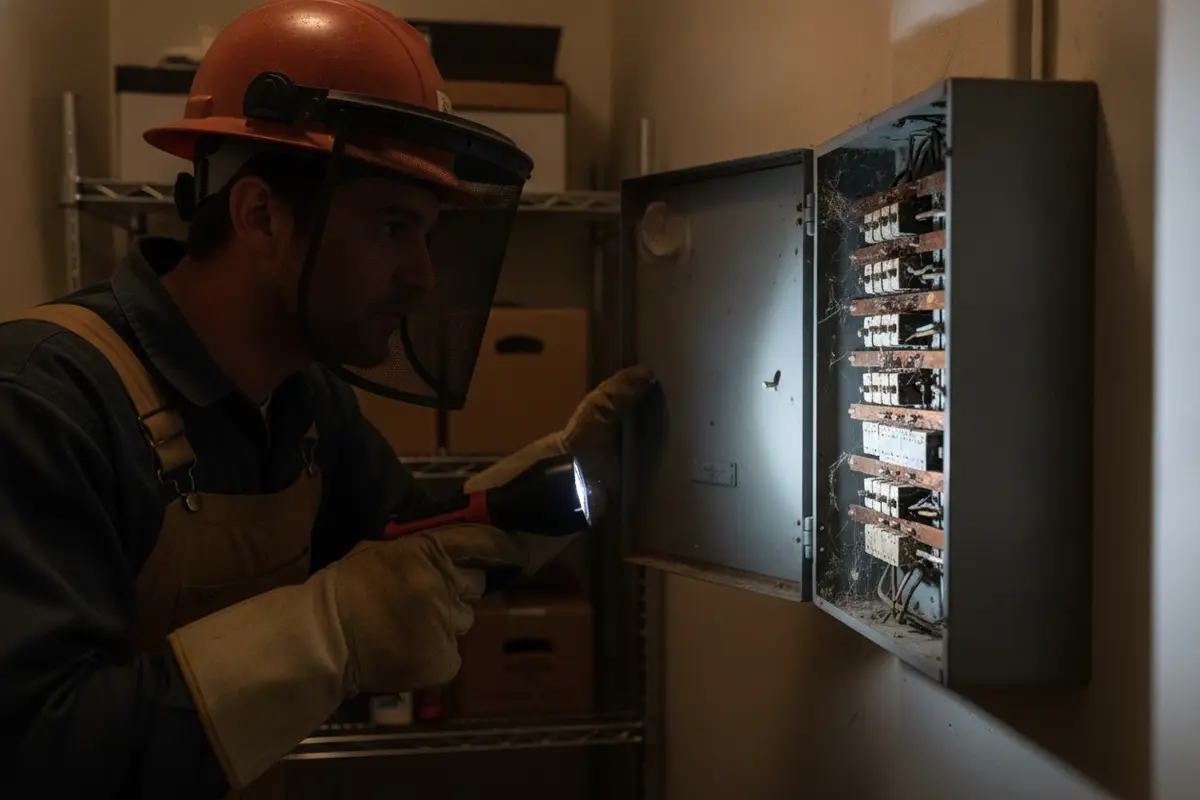
When you call for help, describe what you observed rather than trying to diagnose the cause. Note which room or appliance was involved, whether the same fuse has failed before, and whether the issue began after a new appliance or other electrical change. If you can do so without approaching a hot, smoking, sparking, or noisy panel, you may also note the time and circumstances. Do not remove the panel cover, touch wiring, or take photographs from a position that puts you near a hazard. Accurate observations can help the electrician prepare, while staying clear protects you from turning a symptom into an injury.
Can an old fuse box cause an electrical fire?
Short answer: A fuse box does not cause a fire simply because it is old. Fire risk can increase when a circuit is overloaded, wiring or connections are damaged, a fuse is the wrong type or rating, or heat-producing faults go unaddressed.
A fuse that opens repeatedly is signaling that something needs attention. Do not install a larger fuse to make the problem go away, use a coin or other object as a substitute, or bypass the fuse. Those actions can defeat the protection intended to interrupt an unsafe current. OSHA describes electrical hazards that can result in serious injury or death, underscoring why panel work and suspected electrical faults should be handled with care (OSHA electrical hazard guidance).
Never remove a fuse or touch exposed electrical parts to investigate a problem. Even when a switch or circuit appears off, equipment may still contain energized parts. Keep children away from the panel, do not store items against it, and do not cover warning signs with paint or household materials. If the panel is warm, smells burnt, makes unusual sounds, or shows smoke, do not approach it to take a closer look.
For a pattern such as losing power in just one room, follow safe, non-invasive checks and learn what to do when power is out in one room. If there are signs of heat, burning, sparking, or repeated failures, skip troubleshooting and contact an electrician. For an urgent electrical problem, Expert Electric Group provides 24-hour emergency electrician service.
How does an electrician assess an older fuse box?
Short answer: An electrician checks the panel’s condition, fuse types and ratings, circuit wiring, signs of damage, and the home’s electrical demands. The findings determine whether repair, further evaluation, or a planned upgrade is appropriate.
An inspection is more than a quick look at the panel door. The electrician may ask when the problem started, which appliances were in use, whether fuses fail repeatedly, and whether the home has added air conditioning, kitchen equipment, an EV charger, or other substantial loads. Mention any recent remodeling, water exposure, unusual odors, or prior repairs you know about.
The electrician can then examine accessible equipment and connections, identify visible damage or signs of overheating, and consider whether the existing service and circuits suit the home’s use. Depending on what is found, further testing or access may be needed. The next step should be based on the actual condition and project scope, not on the assumption that every old panel has the same defect.
Before the visit, make a short list of the home’s recent electrical changes and known symptoms. Include additions such as a new air conditioner, kitchen appliance, workshop equipment, or charging equipment, even if the installation was completed years ago. If a fuse has blown, describe which circuit lost power and what was running at the time. Do not remove or replace a failed fuse just to demonstrate the problem. If you have remodeling records or prior inspection notes, keep them available, but do not delay urgent help to locate paperwork. This preparation gives the electrician context without asking you to perform a hazardous inspection.
If the panel is damaged, undersized for planned use, or unsuitable for safe ongoing operation, ask what work is recommended and why. An electrical panel upgrade may be one option. The electrician can also explain the scope of the work, whether permits or utility coordination apply, and what to expect during the project. For homes with aging or altered wiring, ask whether a broader whole-home rewiring assessment is warranted; a panel replacement and a rewiring project are not automatically the same job.
Homeowners planning new equipment should raise that need during the assessment. For example, a panel evaluation before adding an EV charger can help determine whether the existing electrical service and circuits can support the proposed load. A whole-home surge protection discussion may also be relevant when reviewing the home’s electrical protection. These are separate decisions from whether a fuse box needs immediate attention.
What are the options for an older fuse box?
Short answer: The right path depends on the inspection. A sound system may need no immediate replacement; a specific fault may call for repair; and damaged, unsuitable, or capacity-limited equipment may need a planned upgrade.
| Situation found | Possible next step | What the homeowner should do |
|---|---|---|
| Panel appears intact, with no concerning symptoms | Document condition and discuss future electrical needs | Do not assume age alone requires replacement; ask what the inspection did and did not establish. |
| One circuit or appliance has a recurring problem | Diagnose the circuit, wiring, appliance, and fuse selection | Stop repeatedly replacing fuses and report when the fault occurs. |
| Heat damage, unsafe alterations, or damaged components | Prompt repair or replacement planning based on the electrician’s findings | Keep clear of the panel and seek professional help; treat smoke or fire as an emergency. |
| Home needs exceed the existing system’s suitability | Evaluate an upgrade and any related wiring or service work | Explain planned additions, such as an EV charger, before approving the scope. |
This comparison is a guide to conversations, not a diagnosis. A qualified electrician must inspect the actual installation before recommending work. For a useful overview of residential electrical services, explore the service options and describe the specific concern when you request help.
When reviewing a recommendation, ask what evidence supports it and what portions of the home it covers. For example, a repair to one damaged fuse holder may not address worn wiring in another circuit, while replacing a fuse box may not resolve an appliance fault. Ask whether the plan includes testing affected circuits, correcting improper alterations, and confirming that the selected protective devices suit the wiring. If replacement is suggested, request a clear explanation of whether the work includes only the panel or also service conductors, grounding, branch circuits, or other related items. A written scope helps you compare proposals based on the same work rather than on a panel label alone.
What should Southern California homeowners consider?
Short answer: In Southern California, start with the home’s actual electrical condition, planned loads, and local project requirements. A licensed electrical contractor can explain the appropriate scope for a home in Los Angeles, Ventura, Orange, Riverside, or San Bernardino County.
Homes across the region vary in age, layout, previous renovations, and electrical use. A homeowner in Woodland Hills adding an EV charger may have different planning needs from a household in Ventura addressing repeated fuse failures. The same panel age can also mean different things depending on its condition and history. Avoid deciding solely from a neighbor’s experience or a generic replacement checklist.
Ask the electrician to explain the findings in plain language. Which items are immediate safety concerns? What can wait? Is the proposed work limited to a panel or does it include circuits, wiring, grounding, or other equipment? What approvals or utility steps are relevant to this specific project? Clear answers make it easier to compare recommendations and avoid paying for work that has not been explained.
For a planned project, discuss timing and household needs as well as equipment. If an upgrade will interrupt power, ask which areas may be affected and whether any appliances or sensitive equipment need special handling. If you are renovating, coordinating the assessment before walls are closed can make it easier to identify whether wiring work is also needed. For a new high-demand appliance, share its specifications or installation plans so the electrician can evaluate the actual proposed load. These details do not determine the answer by themselves, but they help the assessment reflect the home you have and the changes you expect.
Expert Electric Group is a licensed and insured electrical contractor serving the Greater Los Angeles metropolitan area and surrounding Southern California counties. Its residential electrical work includes panel upgrades, rewiring, lighting, outlets, and safety systems. If you want to understand service availability in your area, review the Southern California service areas. Homeowners considering a panel project can also read about what a main breaker panel replacement may include—while keeping in mind that a fuse box assessment must be specific to the equipment at your home.
Request an electrical assessment: call (747) 999-6090
Frequently asked questions
Are all old fuse boxes unsafe?
No. Age alone does not confirm that a fuse box is unsafe or that it needs immediate replacement. Its condition, the correct use of fuses, wiring, modifications, symptoms, and the home’s electrical needs all matter. An electrician can assess the installation and explain any concerns.
Should I replace a blown fuse myself?
If you are unsure how to identify the correct fuse or why it failed, do not attempt a replacement. Never use a larger fuse or bypass a fuse. A fuse that blows again, or any sign of burning, heat, sparks, or unusual noise, calls for professional evaluation. Do not touch exposed electrical parts.
Does a blown fuse mean the fuse box must be replaced?
Not necessarily. A blown fuse can result from an overloaded circuit, an appliance problem, a fault, or a fuse that has failed. The cause should be identified before deciding what repair or replacement is appropriate. Repeated failures deserve particular attention.
When should I call an electrician urgently?
Call for urgent help if you notice smoke, a burning smell, scorching, unusual heat, buzzing or crackling, sparks, or repeated fuse failures. Keep away from the panel and do not try to investigate it yourself. If there is a fire or immediate danger, leave and contact emergency services.
What is the next step?
An older fuse box deserves a careful, specific evaluation—not guesswork or a one-size-fits-all replacement decision. If warning signs are present or you are planning new electrical equipment, contact a licensed electrician to discuss the safest next step for your home.
Call (747) 999-6090 to discuss an inspection
Expert Electric Group can help Southern California homeowners understand their electrical options and determine what the next step should be.
