
If you are asking, “do I need a dedicated circuit for a refrigerator?” the practical answer is: it depends on the refrigerator, the existing circuit, applicable electrical rules, and what else is plugged into that circuit. If the breaker trips, lights dim, or you are planning a kitchen remodel, do not guess. Call Expert Electric Group at (747) 999-6090 for help in Southern California.
Call (747) 999-6090 to discuss your refrigerator circuit
Do I need a dedicated circuit for a refrigerator in every kitchen?
Short answer: Not every refrigerator installation has the same answer. A dedicated circuit serves one appliance or load rather than sharing its branch circuit with other receptacles or equipment. Whether it is required in your kitchen depends on the locally adopted electrical code, the appliance instructions, and the details of the installation.
Homeowners often hear that a refrigerator must always have its own breaker. That is too broad as a universal rule. Some installations have a separate refrigerator circuit; others may be permitted to share, depending on the applicable rules and the circuit arrangement. The refrigerator’s manual and local requirements matter. An online discussion from InterNACHI’s home-inspector forum also notes an exception in the context of dedicated appliance circuits, but a forum post is not a substitute for the code adopted by your local authority or a site-specific assessment (InterNACHI forum discussion of refrigerator circuits).
So the useful question is not only “Does a refrigerator need its own circuit?” Ask whether the circuit is suitable for this appliance and whether the way it is shared complies with the rules for your home. In Southern California, your home’s existing wiring, local jurisdiction, and any remodel plans can all affect what an electrician recommends.
What does a dedicated circuit for a refrigerator do?
Short answer: It gives the refrigerator a branch circuit that is not shared with other loads, reducing the chance that another device on that circuit contributes to an overload or interruption. It does not repair a faulty refrigerator, worn receptacle, or damaged wiring by itself.
A refrigerator cycles on and off, and its electrical demand changes as it operates. If other appliances or devices share a circuit, their combined demand may be relevant. A separate circuit can make the arrangement clearer and may be appropriate when adding a refrigerator, changing kitchen equipment, or correcting a recurring circuit problem. But installing one is not automatically the answer to every nuisance trip.
A breaker that trips may be responding to an overload, a wiring or device problem, or an issue with the appliance. Repeatedly resetting it without finding the cause can leave the underlying problem unresolved. If you notice a hot or discolored receptacle, a burning smell, buzzing, sparks, or a breaker that will not stay reset, stop using the affected outlet if it is safe to do so and get qualified help. Do not remove the panel cover or handle exposed wiring.
How can you tell whether the existing circuit is shared?
Short answer: A breaker map and a cautious check of which outlets lose power can offer clues, but they do not confirm circuit capacity, wiring condition, or code compliance. An electrician can trace and evaluate the circuit safely.
You can make a basic observation without opening the panel. If it is safe and convenient, note which breaker appears to control the refrigerator outlet. With the refrigerator left plugged in, check whether other ordinary receptacles or lights in nearby areas also lose power when that breaker is switched off. Avoid turning off a breaker if doing so could affect medical equipment, security equipment, or other essential loads. Labeling a breaker based on this check is only a starting point, not a professional circuit assessment.
Keep the refrigerator connected during normal operation. Do not use an extension cord or power strip as a workaround, and do not unplug the refrigerator repeatedly to test a suspected problem. A home can have outlets in different rooms on the same circuit, and outlets that look close together may be fed by different circuits. A visual check cannot establish wire size, breaker compatibility, grounding, or the permitted uses of a circuit.
If an entire room or part of the kitchen loses power, our guide to what to do when power is out in one room can help you recognize when to stop troubleshooting. For a breaker that hums or buzzes, see what electrical panel buzzing can mean. These symptoms call for a different assessment than simply deciding whether to add a dedicated circuit.
When should you consider a separate circuit?
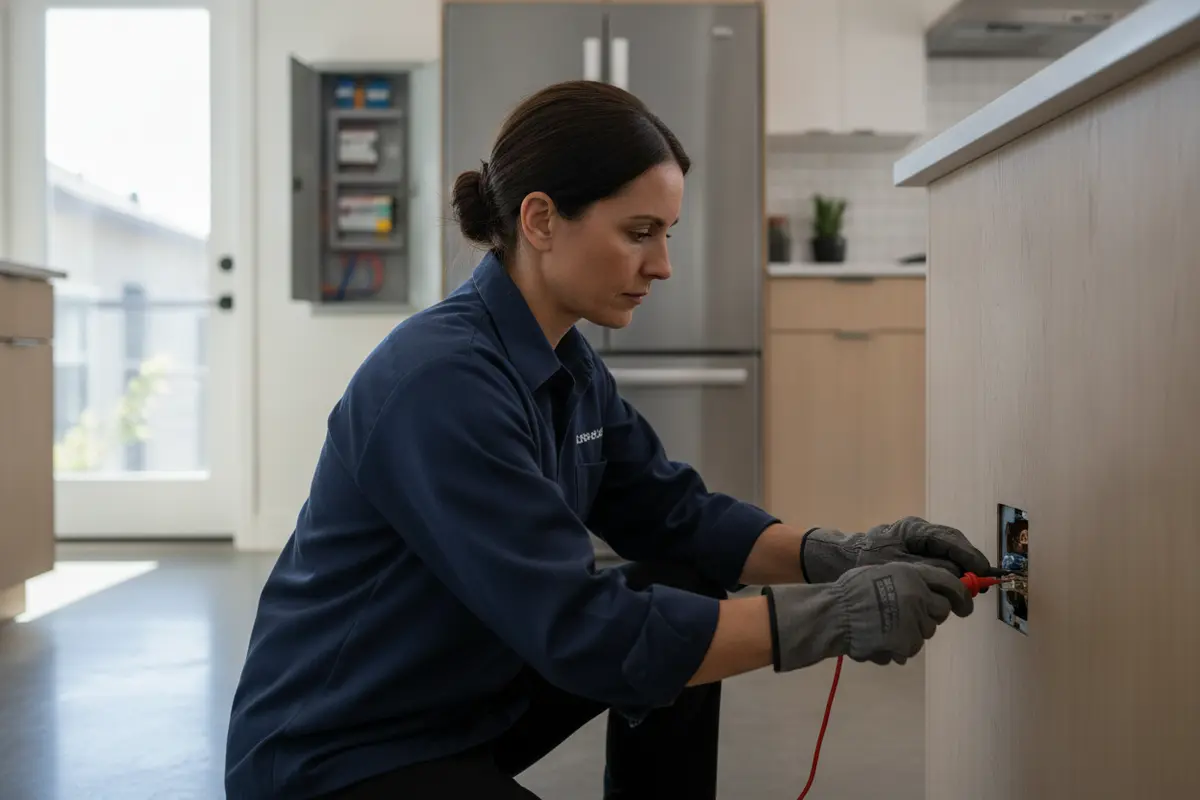
Short answer: Consider an electrician’s assessment if the refrigerator shares a circuit with substantial loads, trips the breaker, or is part of a new kitchen layout or electrical upgrade. The right fix depends on what the inspection finds.
- The breaker trips repeatedly. A refrigerator starting up while another device is operating may expose a circuit issue, but the cause could also be the appliance or a defective electrical component. Repeated trips are a reason to investigate, not a reason to install a larger breaker.
- Several kitchen appliances share the circuit. A microwave, countertop appliance, or other load can change the total demand. The electrician can identify what is actually connected and determine whether the layout is appropriate.
- You are adding or relocating a refrigerator. A new location may need a receptacle, circuit extension, or a new branch circuit. Check the appliance requirements and plan the electrical work before cabinets or walls are closed.
- You are remodeling the kitchen. It is easier to plan circuits, outlets, and appliance locations together than to discover a limitation after installation. Coordinate the electrical layout with the contractor and appliance specifications.
- The home has older or altered wiring. Prior additions and repairs can make the circuit layout hard to predict. A qualified electrician can inspect the accessible equipment and recommend next steps.
A separate circuit is not a substitute for diagnosing a failing breaker, loose connection, damaged cable, or appliance fault. Likewise, a refrigerator that works today does not prove the circuit arrangement is suitable for a planned remodel. If the panel itself may be undersized or crowded, an electrician can assess whether an electrical panel upgrade is relevant; that is a separate decision from adding a branch circuit.
What should an electrician check before recommending work?
Short answer: The electrician should identify the circuit, inspect the relevant receptacle and accessible wiring, review the refrigerator’s electrical information, and consider local requirements and the home’s panel capacity before proposing a fix.
A useful evaluation starts with the symptom and the appliance details. Tell the electrician whether the breaker trips at startup or after the refrigerator has been running, whether other devices lose power, and whether there is heat, odor, noise, or visible damage. Share the refrigerator’s make and model if available. These details help distinguish a circuit-layout question from a possible equipment or connection fault.
The electrician can then trace what the breaker supplies and check the breaker, receptacle, and accessible wiring for visible concerns. They can compare the installation with the appliance instructions and the rules enforced by the local jurisdiction. If a new circuit is proposed, the route from panel to kitchen, panel space, existing loads, wall access, and any permit or inspection requirements may affect the work. The answer should come from the actual home, not from a general assumption based on the refrigerator alone.
Ask what issue the proposed work solves, whether the refrigerator will have its own circuit, and whether any other repairs or panel changes are needed. Also ask whether the recommendation is to correct a safety concern, improve circuit separation, or prepare for a remodel. Clear scope helps you compare options without assuming that the largest possible upgrade is necessary.
Before approving work, clarify the practical details that affect your kitchen and schedule. A contractor can explain whether the proposed route is accessible, whether any finished surfaces may need to be opened, and what restoration is outside the electrical scope. If the project is part of a remodel, share cabinet plans and appliance specifications before the electrical layout is finalized. If you are replacing an existing refrigerator, confirm the new model’s requirements rather than assuming the old appliance information still applies.
These questions can help you understand the recommendation:
- Which outlets or equipment are currently on the refrigerator’s breaker?
- Did you find a fault, or is the change being recommended to separate loads?
- Will the proposed work require a new breaker, wiring route, or receptacle location?
- Does the local jurisdiction require a permit or inspection for this scope?
- What symptoms should prompt me to stop using the refrigerator outlet and call for service?
Ask for the answers in plain language and make sure the written scope matches what you discussed. The goal is to understand the condition of the existing circuit and the reason for each recommended change. If the issue is a recurring trip, the diagnosis should address the cause rather than only describe a new circuit as a general improvement.
How do the common circuit situations compare?
Short answer: A stable, properly evaluated shared circuit may not call for the same work as a repeatedly tripping circuit or a new appliance location. Use this comparison to frame questions, not as a do-it-yourself code determination.
| Situation | What it may indicate | Practical next step |
|---|---|---|
| Refrigerator operates normally; no known issue | The circuit may be suitable, but its wiring and permitted use have not been confirmed by this observation alone. | Check the appliance instructions and ask an electrician if you are remodeling or uncertain about the circuit. |
| Other devices share the breaker | Combined loads may matter, depending on the devices and circuit design. | Have the circuit traced and evaluated before adding more equipment. |
| Breaker trips more than once | Possible overload, appliance issue, or electrical fault. | Stop resetting it repeatedly and arrange a diagnosis. |
| Warm outlet, burning odor, sparking, or visible damage | A potential electrical hazard that needs prompt attention. | Do not use the outlet; contact a qualified electrician. If there is smoke or fire, call emergency services. |
| New refrigerator location or kitchen remodel | The existing circuit may not reach or suit the planned layout. | Coordinate appliance specifications, circuit planning, and local permit requirements before finishing the work. |
Call (747) 999-6090 to discuss a dedicated circuit for your home
What should Southern California homeowners keep in mind?
Short answer: Electrical requirements and permitting are applied by the authority responsible for your address. Do not assume a rule or permit process is identical across every Southern California city.
Expert Electric Group serves residential and commercial customers across Los Angeles, Ventura, Orange, Riverside, and San Bernardino counties. Local requirements can vary by jurisdiction, and an electrical installation may need coordination with the local building department. For work that changes a circuit, ask who will confirm the requirements for your property and whether inspection is part of the planned scope.
When the refrigerator question is part of broader electrical work, it may be helpful to review the options for whole-home rewiring, learn when a panel replacement may be worth evaluating, or explore the company’s electrical services. Those pages cover separate scopes; a refrigerator circuit concern does not, by itself, mean your home needs a full rewire or panel replacement.
For broader work in an older home, a licensed electrician can explain whether targeted repairs or a more comprehensive evaluation makes sense. Read about when rewiring an older house may be worthwhile or review the company’s Southern California service areas before requesting help.
Frequently Asked Questions
Can I plug a refrigerator into a shared outlet?
Possibly, but the answer depends on the circuit, other loads, appliance instructions, and local requirements. Do not add a refrigerator to a circuit that is already tripping or showing signs of heat or damage. Have the circuit checked if you are unsure.
Will a dedicated circuit stop my refrigerator breaker from tripping?
It might help if the cause is an unsuitable shared load, but it will not fix every cause. A faulty appliance, breaker, receptacle, or wiring connection can also lead to a trip. Diagnose the cause before deciding what work to do.
Can I install the circuit myself?
Adding a branch circuit involves work at the electrical panel and wiring through the home. Do not work inside a live panel or improvise an extension. Use a qualified electrician who can confirm the installation requirements and handle any necessary permitting.
Should I use a power strip or extension cord if the refrigerator outlet is inconvenient?
Do not use a power strip or extension cord as a permanent substitute for a suitable receptacle. Ask an electrician about a properly located outlet and circuit arrangement for the appliance.
When is the issue an emergency?
Smoke, fire, sparking, a burning smell, or an outlet that is hot or visibly damaged needs prompt attention. Stay away from damaged electrical equipment and call emergency services if there is a fire. For urgent electrical troubleshooting, Expert Electric Group offers 24/7 emergency service; call (747) 999-6090.
Call (747) 999-6090 to schedule an electrical assessment
A dedicated refrigerator circuit may be the right solution, but confirming the appliance requirements and actual wiring is the safest way to decide what your home needs.
