
An electrical diagnostic test helps identify why a circuit, outlet, light, or breaker is not working as expected. It can separate a simple device problem from a wiring, load, or protective-device issue. If you are in Southern California and need help tracing a problem, call (747) 999-6090 to discuss service with an electrician.
Call (747) 999-6090 to request electrical service
What is an electrical diagnostic test?
Short answer: It is a focused, methodical evaluation of an electrical problem to locate its likely cause and determine what repair or further inspection is needed.
A diagnostic visit starts with the symptom, not a guess about the repair. A homeowner may report a breaker that trips, an outlet that stopped working, lights that dim, or a burning odor near a device. A business may describe a recurring circuit outage or equipment that loses power. The electrician gathers those details, checks the affected area, and tests components as appropriate.
This is different from a general walkthrough of a property’s electrical condition. A diagnostic test investigates a specific concern. The scope depends on what the symptom suggests, what is safely accessible, and whether the problem can be reproduced. It may involve a visual check, measurements with electrical test equipment, and an examination of relevant breakers, outlets, connections, or loads.
A test does not automatically mean replacing a panel or rewiring a room. Its purpose is to narrow down the cause before recommending work. If the issue calls for broader electrical troubleshooting, an electrician can explain what the next inspection should cover. Expert Electric Group provides residential and commercial electrical services across the Greater Los Angeles area; see the electrical services overview for the types of work available.
When should you request an electrical diagnostic test?
Short answer: Request an evaluation when an electrical symptom recurs, affects multiple devices, or raises a safety concern instead of repeatedly resetting or working around it.
One isolated issue may have a simple explanation, such as a lamp that has failed. But recurring or unexplained symptoms deserve attention. Make a note of when the issue happens, what was being used at the time, and which areas are affected. Those details help the electrician reproduce the conditions and focus the test.
- A breaker trips more than once. A breaker may open because of an overloaded circuit, a fault, or a problem with equipment. Repeatedly resetting it without finding the cause does not resolve the underlying condition.
- Lights flicker or dim. Note whether one fixture, one room, or several areas are affected, and whether the change coincides with an appliance starting. For related warning signs, see when flickering lights may need attention.
- An outlet or switch is warm, discolored, buzzing, or has an unusual odor. Stop using the affected device. If there is smoke, sparking, or an active fire risk, move away and contact emergency services. Do not open the outlet or panel yourself.
- Part of a home loses power. If only one room or section is affected, note what still works and whether any breaker has moved. A room with no power can have more than one possible cause.
- A protective device trips repeatedly. A GFCI or AFCI that trips can be responding to a condition it is designed to detect, or it may need closer evaluation. The trip itself is useful information, not a reason to bypass the device.
- Electrical problems began after a project or new equipment. A new appliance, charger, generator connection, or remodel can change circuit demands or expose an existing weakness.
For urgent electrical issues, use a qualified professional rather than attempting an improvised repair. Expert Electric Group lists 24-hour emergency electrician service information for situations that need prompt attention. If there is immediate danger, leave the area and call emergency services first.
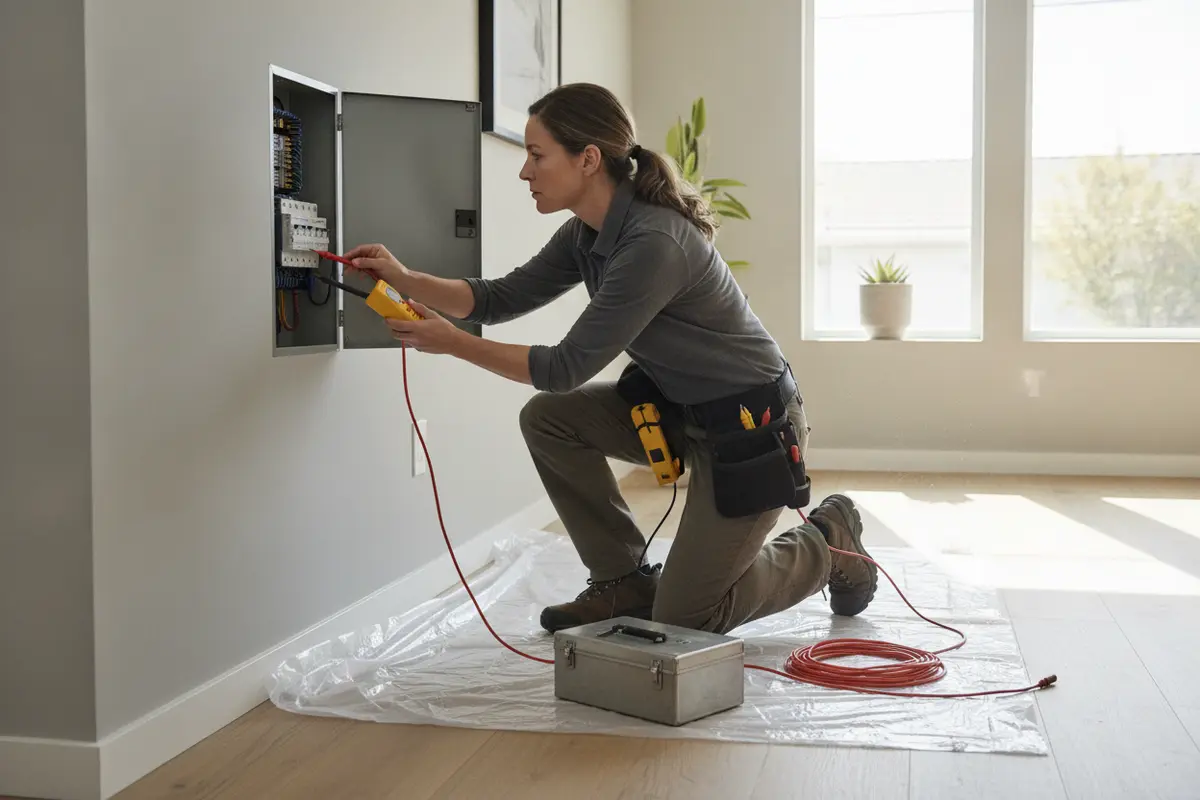
What does an electrician check during the test?
Short answer: The electrician follows the symptom through the affected circuit, checking relevant devices, connections, protective equipment, and electrical readings without assuming one cause in advance.
The test plan changes with the complaint. A dead outlet calls for a different set of checks than a breaker that trips only when a particular appliance runs. The electrician may first ask what changed, which devices were operating, and whether the issue affects other parts of the property.
Visual condition and reported symptoms
The electrician may look for visible damage, heat effects, loose or worn devices, signs of moisture, and changes around the panel or affected area. They will also ask when the problem began and whether it happens consistently. A visual review is useful, but it cannot by itself confirm that wiring is operating correctly under load.
Voltage, continuity, and circuit behavior
Depending on the problem and safe access, a qualified electrician may use meters or other test equipment to check voltage, continuity, or whether a circuit behaves as expected. The right measurement depends on the question being investigated. A single reading in isolation may not explain a symptom that appears only when a circuit is loaded or when a device is switched on.
Breakers and protective devices
A breaker, GFCI, or AFCI may be part of the investigation. GFCI protection is designed to reduce shock risk from ground-fault current, while AFCI protection is intended to reduce fire risk from certain arcing faults. These devices detect different conditions, so one is not a substitute for the other. The GFCI and AFCI overview explains the difference between their protective purposes.
If a device trips, the electrician may investigate the circuit and connected equipment rather than treating the reset as a repair. A breaker that trips when several appliances operate may call for an assessment of circuit demand. A trip tied to one device may point toward that device or its circuit, but testing is needed before drawing a conclusion.
Connections and electrical load
Where the symptom suggests it, the electrician may inspect accessible connections and evaluate how the circuit responds to its normal use. For a home planning new equipment, an assessment can help establish whether the existing electrical system needs changes. For example, homeowners considering a charger can review the information on panel capacity and an EV charger, then have their specific installation evaluated.
How does an electrical diagnostic test differ from GFCI and AFCI protection?
Short answer: A diagnostic test is an electrician’s process for finding a problem; GFCI and AFCI devices are safety protections that monitor for particular electrical conditions.
The terms can sound similar because all involve electrical safety, but they describe different things. A diagnostic test is an investigation performed in response to a symptom or question. A GFCI or AFCI is a protective device installed to respond to specific types of electrical hazards. An electrician may test or inspect a protective device during diagnosis, but the device itself is not a complete diagnostic service.
| Item | Main purpose | What it can tell you | What it does not do |
|---|---|---|---|
| Electrical diagnostic test | Investigate a reported electrical problem | Measurements and observations can help identify the likely source and next step | It is not a permanent safety device and may not assess every circuit in a property |
| GFCI protection | Reduce risk from certain ground-fault conditions | A trip indicates that the device responded to a detected condition or needs evaluation | It does not detect every wiring fault or replace AFCI protection |
| AFCI protection | Reduce risk from certain arcing faults | A trip can be a clue for an electrician to investigate the circuit and connected equipment | It does not diagnose every electrical symptom or replace GFCI protection |
The exact device requirements depend on the location, installation, and applicable code. Do not defeat, bypass, or remove protective equipment to stop a trip. If the device will not reset or repeatedly trips, document what was operating and request an evaluation.
What happens from the first call to the next step?
Short answer: Describe the symptom, arrange an appropriate service visit, let the electrician investigate safely, and review the findings before authorizing any recommended repair.
- Explain what you are seeing. Share which area is affected, when it began, how often it happens, and what was running at the time. Mention recent work or newly connected equipment if relevant.
- Prioritize immediate hazards. Tell the service provider about smoke, sparks, burning smells, heat, or repeated breaker trips. If there is an active emergency, keep people away and contact emergency services.
- Make the area accessible. Clear stored items from around the electrical panel or affected equipment if it is safe to do so. Do not remove panel covers, touch exposed wiring, or try to recreate a hazardous condition.
- Allow the electrician to assess the issue. The electrician will decide what can be safely tested and whether the reported symptom can be reproduced. Some intermittent problems may need more information or a broader inspection.
- Review the findings and options. Ask what was tested, what was found, what work is recommended, and whether any additional evaluation is needed. A clear explanation should distinguish confirmed observations from possible causes.
- Plan the repair or follow-up. The recommended work may be a device repair, circuit work, panel-related service, or a different next step. The scope depends on the findings and the property’s conditions.
For homes with older or altered wiring, a localized test may reveal that a wider review is appropriate. An electrician can explain whether whole-home rewiring services are relevant, or whether the issue is limited to a particular circuit. A panel concern may require a separate evaluation; see the guide to electrical panel buzzing for examples of symptoms that should not be ignored.
What affects the scope and cost of testing?
Short answer: The scope depends on where the fault may be, how easy it is to access, whether the symptom can be reproduced, and whether testing uncovers related work.
There is no single test that fits every complaint. A straightforward issue at one accessible outlet may require a different amount of investigation than an intermittent problem spanning multiple rooms or equipment. The electrician may need to evaluate connected loads, trace a circuit, or investigate a panel or wiring condition before being able to recommend a repair.
Before work begins, ask what the service visit includes and how any additional diagnostic or repair work will be discussed. A quote or estimate should explain the expected scope and note that the final work can depend on what testing finds and the materials needed. Avoid relying on a promised repair or fixed price before the source of the problem is understood.
Tell the electrician if the property has planned changes, such as an EV charger, new appliances, generator equipment, or a remodel. Those details may affect the evaluation. Expert Electric Group serves several Southern California counties; check the service area information when arranging a visit. For broader electrical needs, the company’s panel upgrade service page gives an overview of one possible project type, though a diagnostic visit is needed to determine whether that work applies to your situation.
What should you avoid doing before an electrician arrives?
Short answer: Do not repeatedly reset a tripping breaker, bypass a safety device, open electrical equipment, or touch damaged wiring to try to find the fault yourself.
Switching a breaker or protective device back on repeatedly can expose you to risk without identifying the cause. Do not tape a switch in place, install a larger breaker to prevent trips, or remove a GFCI or AFCI. These actions can defeat protection or create a more serious hazard.
If an outlet or switch is hot, discolored, sparking, or associated with smoke or a burning odor, stop using it and keep people away. Do not touch exposed conductors or water near electrical equipment. If there is fire, smoke, or immediate danger, leave and call emergency services. Otherwise, describe what happened to the electrician and wait for qualified help.
You can safely help with diagnosis by recording observations from a distance: the time, affected rooms, which devices were on, and whether a protective device appeared to trip. Do not deliberately recreate a dangerous condition. This history can help an electrician choose appropriate tests and avoid unnecessary guesswork.
Call (747) 999-6090 to arrange an electrical evaluation
Frequently asked questions
Does a diagnostic test mean my electrical panel needs replacement?
No. Testing is intended to investigate a symptom. The findings may indicate a repair to one device or circuit, a need for additional testing, or a larger project. An electrician should explain the evidence and options before recommending panel work.
Can I diagnose a tripping breaker by resetting it?
A reset does not identify the cause. If a breaker trips repeatedly, do not keep resetting it or replace it with a larger one. Note what was operating and arrange an evaluation by a qualified electrician.
Will an electrical diagnostic test find every problem in my home?
Not necessarily. A focused diagnostic visit addresses the reported concern and related areas that the electrician determines are relevant. It is not automatically a complete inspection of every circuit, device, and system in the property. Ask about the exact scope if you want a broader assessment.
Can GFCI and AFCI devices replace professional troubleshooting?
No. They provide protection against different types of electrical hazards, but they do not locate every fault or explain every symptom. A recurring trip, failed device, or ongoing electrical issue should be evaluated rather than bypassed.
What information should I have ready when I call?
Describe the symptom, its location, when it occurs, what was operating, and whether it has happened before. Mention recent electrical work or new equipment. If you notice heat, smoke, sparks, or an unusual odor, say so immediately and keep clear of the affected area.
Call (747) 999-6090 to get help with an electrical problem
What is the next step?
Short answer: A recurring electrical problem deserves a clear diagnosis before you decide on a repair.
Write down what you observed, avoid unsafe troubleshooting, and arrange service if the issue persists or creates a safety concern. Expert Electric Group provides electrical service to residential and commercial customers across the Greater Los Angeles area. Call (747) 999-6090 or use the contact page to discuss the problem and determine the appropriate next step.
