
An electrical thermal imaging inspection report can help you understand where a scan found unusual heat patterns and what should happen next. The report is a guide to follow-up, not a diagnosis of every electrical condition. If you need help interpreting a finding, call Expert Electric Group at (747) 999-6090 to discuss an appropriate next step.
Call (747) 999-6090 to discuss your inspection
What does an electrical thermal imaging inspection report tell you?
Short answer: It records conditions observed during an infrared scan, identifies areas that may need attention, and provides context for further evaluation. It does not, by itself, prove the cause of a warm area or confirm that every part of an electrical system is safe.
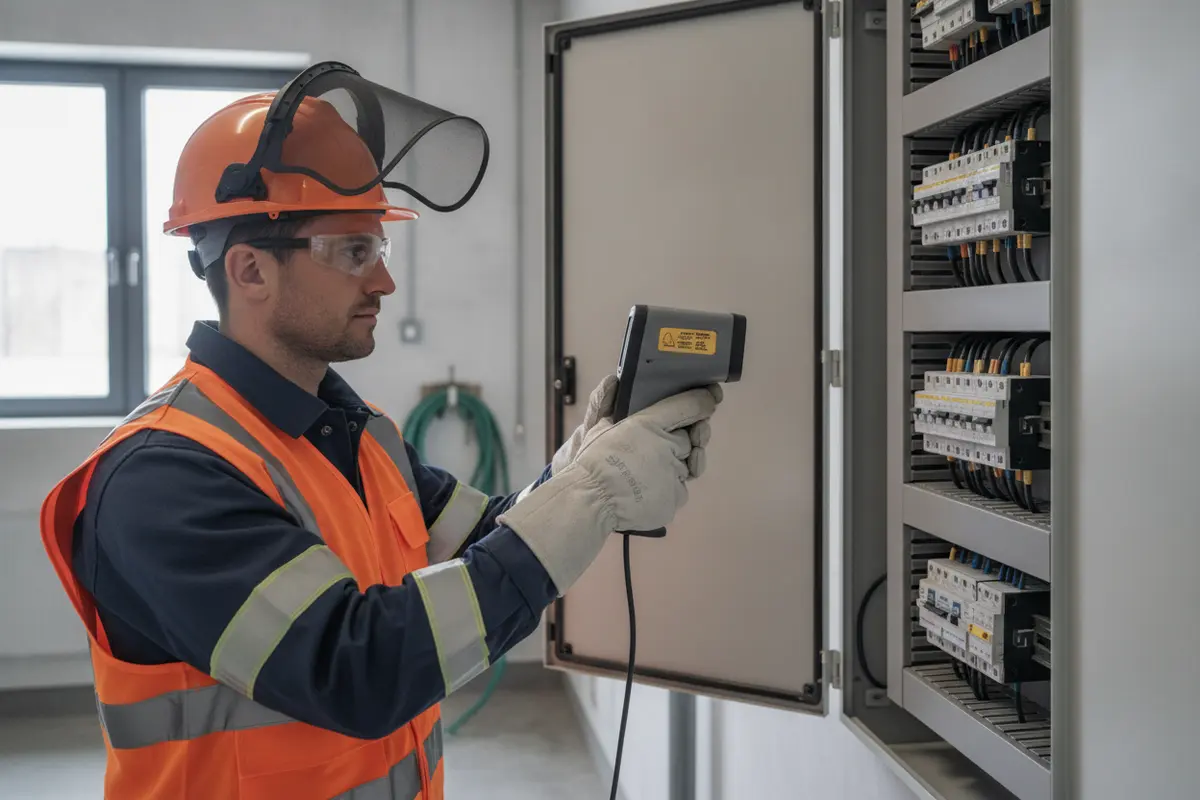
A thermal camera detects infrared energy and displays surface temperature patterns. During an electrical inspection, the operator may scan accessible equipment while it is operating under the conditions present at that time. The resulting images can help identify a component or connection that appears warmer than comparable areas. The report should make clear what was inspected and what was not.
This article focuses on how to assess the usefulness and limits of a report. It is not a substitute for a room-by-room home safety checklist, a sample report, or instructions for repairing electrical equipment. For general safety reminders, the U.S. Consumer Product Safety Commission provides a Home Electrical Safety Checklist. For residential and commercial report-writing context, the InterNACHI guidance on thermal imaging reports describes what inspectors need to consider when documenting an infrared inspection.
A report is most useful when you read it as a record of a particular inspection at a particular time. It may help you decide what to ask next, but it is not a guarantee about future performance. The difference matters whether you own a home, manage a rental property, or oversee a commercial site.
Which details should a useful report include?
Short answer: Look for the inspection scope, operating context, clear images, location-specific observations, limitations, and recommended follow-up. These details help you understand what the inspector actually saw instead of relying on a color patch alone.
Start with the scope. The report should identify the equipment or areas scanned, such as an electrical panel or accessible connections, and note exclusions or access limits. A scan of one panel is not equivalent to an evaluation of every circuit, outlet, hidden splice, or wall cavity in a building. Ask what was included if the scope is unclear.
Check whether the report distinguishes equipment that was inspected from equipment that was unavailable or inaccessible. For example, a note that a cover remained in place or that an area could not be reached tells you where the observation ends. Do not assume an unmentioned room, panel, or circuit was included; ask the inspector to confirm the boundaries.
Next, check for operating context. Electrical loads and ambient conditions affect the thermal image. A report is more informative when it explains whether equipment was energized, what conditions were present, and whether the scan was limited by access, load, or other circumstances. If the system was not operating in a representative way, ask how that may affect the observations.
Look for labeled images tied to specific locations. A useful image caption tells you what component is shown and where it is located. The report should connect the image to a written observation, rather than asking you to infer meaning from a bright spot or color scale. Images should be readable enough to compare the area of interest with nearby components.
Temperature values can add context, but only when their meaning is explained. Ask what was measured, whether the value is an estimate of the surface temperature, and what comparison is being used. A number without an identified component, conditions, and interpretation does not tell you by itself whether a repair is needed.
Finally, look for a clear distinction between observation and conclusion. “This connection appears warmer than nearby comparable connections under the conditions observed” describes an observation. A definitive cause may require additional inspection by a qualified electrician. The report should state its limitations and explain whether follow-up is recommended.
How should you interpret a thermal image or finding?
Short answer: Treat the image as a pointer to an area for review, not as a stand-alone verdict. The colors are a visual display of relative or measured temperature information; they do not identify a fault without context.
Read the caption and narrative before drawing a conclusion from the image. Find the equipment label, component location, and any stated temperature information or comparison. Then check what the inspector says about the conditions and limitations. A single image without a clear reference point can be difficult to interpret, especially if you do not know what was scanned or how the equipment was operating.
When a report marks an area, ask the inspector or electrician to explain:
- Which exact component or area is marked for attention?
- What comparable components or nearby areas were used for context?
- Were the equipment and load conditions suitable for the observation?
- Is the recommendation to monitor, investigate further, or arrange a repair assessment?
- Does the report recommend any immediate safety step?
Request a plain-language explanation that connects the image to a specific next action. For instance, “have this connection assessed” is more actionable than a color image with no written note. If the report recommends monitoring, ask what should be observed, for how long, and what change should prompt a follow-up. Do not infer a deadline or urgency that the report does not state.
Do not open a panel, remove a cover, touch a hot component, or attempt to tighten or repair electrical connections based on a report. Electrical equipment can present shock, arc, and fire hazards. If you notice smoke, a burning odor, sparking, or other immediate signs of danger, keep away from the equipment and contact emergency services when warranted. For urgent electrical concerns, review the company’s 24-hour emergency electrician information.
Infrared inspection also has practical limits. A camera sees surface patterns from accessible viewpoints; it does not see through walls or establish the condition of concealed wiring. A normal-looking image cannot be treated as proof that every part of a system is problem-free. If the report points to a concern, a licensed electrician can determine what additional inspection or testing is appropriate.
What should you do after receiving the report?
Short answer: Match each observation to its location, clarify any unclear finding, and arrange qualified follow-up when the report recommends it. Keep the report and any repair documentation together for future reference.
- Read the scope and limitations first. Confirm which equipment was inspected and note anything inaccessible or excluded. That sets the boundary for what the report can tell you.
- Make a list of findings. Record the page or image number, equipment location, and the report’s recommended action. Keep the wording factual; do not turn a flagged image into a diagnosis.
- Ask focused questions. If the report uses vague language, ask what component is involved, what makes it noteworthy, and whether the recommendation is time-sensitive. Request clarification in writing if you need to share the report with a property manager or another contractor.
- Arrange an electrician’s evaluation when indicated. A professional can inspect the relevant equipment and determine what action, if any, is needed. This may involve visual checks, measurements, or other procedures selected for the situation.
- Keep records. Save the original report, follow-up notes, invoices, and any inspection documentation. Record which items were addressed and which remain open.
When you speak with an electrician, share the complete report rather than one cropped image. Include the date of the scan, what prompted it, whether equipment was operating normally, and any symptoms you have noticed. If you are coordinating work for a tenant or business, identify the affected area and any access or scheduling requirements. Clear information can help the electrician understand the issue and discuss the scope of a follow-up visit. For a professional assessment of heat patterns, see our infrared electrical inspections service.
If the finding relates to an aging or crowded panel, an electrician can assess whether a panel upgrade or another repair is appropriate. If observations or other symptoms suggest a wiring concern, ask about a qualified evaluation for whole-home electrical rewiring. These are possible paths for further assessment, not automatic recommendations based on an image alone.
For related context, you can also review the company’s guides to infrared inspections and NFPA 70B and thermal imaging inspection cost factors. The cost of an inspection depends on the scope and site conditions; a report itself should not be read as a promise that any repair will be needed.
How do findings differ from a routine electrical safety check?
Short answer: Thermal imaging is one way to observe surface heat patterns. It does not replace a broader electrical evaluation, and a general safety checklist does not provide the same kind of thermal image documentation.
Different tools answer different questions. A visual review can identify visible damage or other observable concerns. Thermal imaging may help flag unusual heat patterns under the conditions of the scan. Further testing or direct examination may be needed to understand a specific issue. The right approach depends on the equipment, reported symptoms, and reason for the inspection.
| Inspection or document | What it can help show | Important limitation | Useful next step |
|---|---|---|---|
| Thermal imaging report | Recorded thermal patterns and locations identified during the scan | Does not establish a cause or assess concealed areas by itself | Ask for context and electrician follow-up on flagged items |
| General safety checklist | Visible conditions or safety questions to review around a property | Does not replace an inspection by a qualified professional | Use it to note concerns and seek help when needed |
| Electrician’s follow-up evaluation | Further assessment of a particular electrical concern | Scope depends on the issue and access to equipment | Discuss findings and agree on the evaluation scope |
These steps can complement one another, but none should be described as covering more than it does. If your concern involves a panel, you may find the guide to electrical panel buzzing useful for recognizing why unusual sounds merit attention. For repeated light changes, see the explanation of whether flickering lights may indicate a problem. Those symptoms still need to be assessed in context rather than diagnosed from an article or thermal image.
A checklist is intended to help you notice and follow up on safety concerns around the home. A thermal report, by contrast, records observations from a particular scan. Neither should be treated as a replacement for an electrician’s assessment when equipment shows a concerning condition. The CPSC checklist is a practical starting point for common household electrical safety questions, while the report’s scope and findings guide questions about the specific scanned equipment.
When should you ask for professional follow-up?
Short answer: Ask for a qualified evaluation when the report recommends one, when a finding is unclear, or when you have a separate symptom that concerns you. Do not wait for another scan to address an urgent hazard.
A follow-up is especially important when the report identifies a specific component for further review, describes an observation as unusual, or states that the inspection was limited. Share the full report, not only a cropped image. Tell the electrician what prompted the scan and whether you have noticed related symptoms, such as tripping breakers, a hot outlet, a burning smell, or intermittent power.
Do not use a report to decide that a concerning symptom can safely wait. Smoke, sparking, a burning odor, or a visibly damaged component calls for a cautious response. Keep people away from the area and seek appropriate emergency help when there may be immediate danger. Do not touch the equipment or attempt to investigate inside it.
For planned work in Southern California, a contractor can explain the next inspection steps and whether a repair is appropriate. Expert Electric Group serves residential and commercial customers across the Greater Los Angeles area and surrounding counties. You can review the company’s electrical services and service areas before requesting help. If symptoms include a hot outlet, the guide to why an electrical outlet may feel hot explains why you should take the condition seriously and avoid using an outlet that appears unsafe.
If a finding points to a specific electrical system, discuss that concern with a qualified professional rather than assuming a particular replacement is needed. Expert Electric Group also provides information about available electrical services; the right scope depends on the equipment and on what a follow-up evaluation finds.
Call (747) 999-6090 to review your report with our team
Frequently asked questions
Does a thermal imaging report confirm that my electrical system is safe?
No. It documents observations from a scan under specific conditions and within a stated scope. It cannot establish the condition of every circuit or concealed component. Ask a qualified electrician about any concern or limitation described in the report.
Can a thermal camera identify the cause of a warm connection?
Not on its own. A warm pattern can indicate an area that deserves attention, but the camera image does not prove why it appears that way. Further evaluation may be needed to identify a cause.
Should I wait for an inspection report if I smell burning?
No. A burning odor, smoke, sparking, or other immediate hazard should be treated as urgent. Keep away from the affected equipment and seek appropriate emergency assistance rather than waiting for a scheduled report or trying to investigate it yourself.
What information should I give an electrician?
Share the complete report, the equipment location, the scan date, and any symptoms you have noticed. Point out the exact image or written finding that concerns you, and ask what additional evaluation is recommended.
A clear report helps you ask better questions, but a qualified electrician must assess the equipment before deciding whether corrective work is needed. Keep the findings in context and do not attempt electrical repairs yourself.
