

A standby generator should be ready before the power goes out, not discovered to be unreliable during an outage. If you own a home or small property in Malibu, emergency generator service Malibu support can help identify a failed start, transfer-switch problem, fuel concern, or unsafe operating condition before the next interruption.
Call Expert Electric Group at (747) 999-6090 for emergency generator service in Malibu.
This guide explains what to notice, what not to touch, and when a qualified electrician should inspect the system. It is not a substitute for opening an electrical enclosure, testing live equipment, bypassing a transfer switch, or attempting a fuel-system repair.
When should a Malibu homeowner call for emergency generator service?
Short answer: Call for generator service when the unit fails to start, starts and stops, does not transfer the home to backup power, shows a fault, smells of fuel or burning, produces smoke, or triggers a carbon monoxide alarm. A professional should diagnose the cause before the next outage, not after the home loses power.
A generator problem is urgent when it affects the system’s ability to start, carry its intended loads, or operate safely. A quiet generator that has not been tested recently may deserve planned maintenance. A generator that fails a supervised test, displays a fault, or cannot transfer power needs faster attention.
Malibu property owners should not wait for an outage to reveal a problem. The right service response depends on the symptom, generator type, fuel source, transfer equipment, and electrical configuration. Expert Electric Group provides electrical troubleshooting and generator support across Southern California, including generator installation, maintenance, monitoring, and emergency electrical work.
- Failed start: The unit does not crank, cranks without starting, or stops shortly after starting.
- Failed transfer: The generator runs, but the home or selected circuits remain without backup power.
- Fuel concern: The unit reports low fuel, the fuel supply appears interrupted, or you notice a gas or fuel odor.
- Unsafe symptom: You see smoke, arcing, overheating, burning odor, unusual vibration, or a carbon monoxide alarm.
- Repeated fault: The same warning returns after a normal reset described in the manufacturer’s instructions.
What should you do if the generator will not start?
Short answer: Keep people away from a failed generator, note any displayed fault without opening the enclosure, and check only the basic owner controls described in the manual. Do not repeatedly reset the unit or alter wiring. If it still will not start, call Expert Electric Group for generator troubleshooting.
Start with observation rather than repair. Is the generator completely quiet? Does it click or crank? Does a control panel show a fault, low-oil notice, low-fuel warning, or maintenance reminder? Write down the message and the time. A photo of the display can help a technician, as long as you do not expose yourself to a hazardous area.
Do not remove covers, reach into the generator, disconnect sensors, or work inside a transfer enclosure. A standby system combines fuel, engine controls, line-voltage conductors, and automatic switching equipment. A homeowner reset that is clearly described in the owner’s manual may be reasonable, but repeated resets can hide a developing fault and do not replace diagnosis.
Common causes can include a discharged starting battery, an overdue service item, a control fault, an interrupted fuel supply, or a problem with the starting or ignition system. The correct repair cannot be selected from the symptom alone. A qualified technician can test the generator under safe conditions and determine whether the issue is mechanical, fuel-related, control-related, or electrical.
For recurring readiness concerns, review Expert Electric Group’s generator maintenance plans. Preventive service is different from emergency troubleshooting, but a scheduled inspection can catch battery, oil, filter, exercise-cycle, and control issues before an outage.
Could the transfer switch be the reason the house has no backup power?
Short answer: Yes. A generator can start normally while the transfer switch fails to move power to the home or selected circuits. Because transfer equipment can contain dangerous voltage and can create backfeed hazards, do not bypass, force, rewire, or open it. Have a qualified electrician diagnose the transfer path.
The transfer switch is the link between the utility supply, generator, and backed-up circuits. Depending on the system, an automatic transfer switch senses a utility interruption, signals the generator to start, disconnects the utility source, and transfers selected loads to generator power. If any step fails, the generator may run while the property remains dark.
Safe observations include whether the generator started, whether only some circuits are out, whether the transfer switch shows an external status indicator, and whether the system returns to normal when utility power is restored. Do not treat a manual handle, cover, breaker, or indicator as an invitation to experiment.
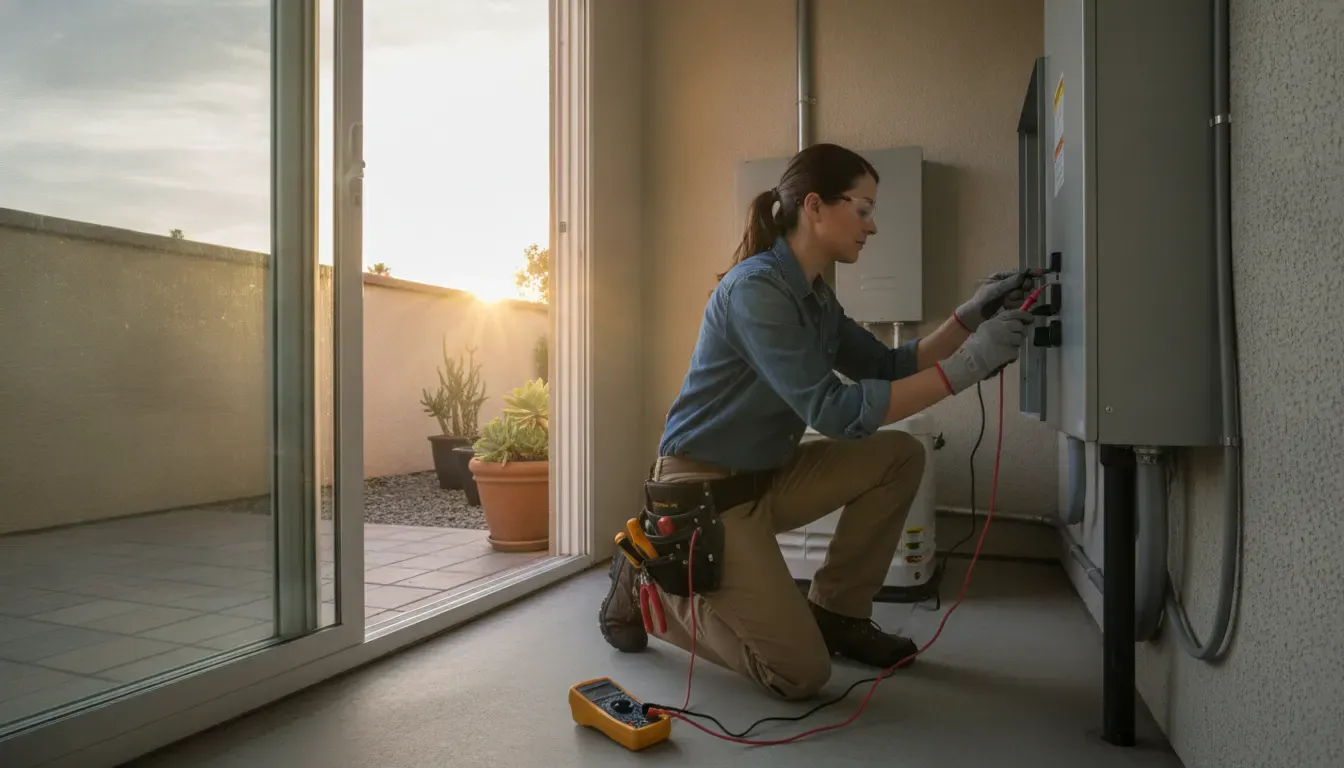
Transfer issues may involve a failed control signal, incorrect configuration, a damaged contactor, a breaker or disconnect issue, or a wiring problem. The remedy depends on the exact equipment and the system design. Expert Electric Group’s transfer switch installation service covers sizing and integration work, while emergency troubleshooting addresses a system that is not transferring as expected.
Never connect a portable generator directly to a household outlet or attempt to energize wiring through an improvised cord. The Ready.gov power outage guidance recommends using generators outdoors and away from windows, and it warns about surges and unsafe appliance use. Proper transfer equipment helps prevent dangerous backfeed and separates the generator from the utility source.
What fuel and engine symptoms require a professional?
Short answer: A fuel odor, gas odor, visible leak, unusual exhaust, repeated stalling, heavy vibration, smoke, or a generator that runs but cannot carry its expected load calls for professional evaluation. Shut down and move away from unsafe conditions. Do not repair fuel lines, change wiring, or refuel hot equipment yourself.
Expert Electric Group works with residential Generac systems that may use natural gas or propane, along with electrical controls and transfer equipment. The fuel arrangement, shutoff location, ventilation, and local installation details vary by property. A generator that cranks but will not start may have a fuel-delivery issue, but it may also have an unrelated control or engine fault.
Use your senses only from a safe distance. A strong gas smell, liquid fuel, smoke, flames, or a burning electrical odor is not a troubleshooting invitation. Leave the area, keep ignition sources away, and contact the appropriate emergency resource. If a carbon monoxide alarm sounds, get people and pets outside immediately and call emergency services. Do not re-enter until the area is declared safe.
The U.S. Consumer Product Safety Commission generator safety guidance states that portable generators must be used outdoors and away from doors, windows, and vents. The CDC carbon monoxide guidance also explains that carbon monoxide is colorless and odorless and recommends keeping generators more than 20 feet from openings. Follow the generator manufacturer’s instructions and local requirements as well.
Fuel concerns also include a low-fuel warning, an empty propane tank, an interrupted natural-gas supply, or a system that starts and then stalls. Record the warning and call for service rather than changing a regulator, opening a gas connection, or attempting an adjustment. Fuel and combustion work must be handled by appropriately qualified professionals.
Which generator symptoms are unsafe to ignore?
Short answer: Treat smoke, flames, arcing, a burning smell, a gas odor, a carbon monoxide alarm, exposed conductors, severe vibration, or water around electrical equipment as unsafe conditions. Leave the area when necessary, call 911 for immediate danger, and request professional electrical service after people are safe.
A generator does not need to be completely dead to be dangerous. Stop treating it as a normal maintenance issue if you notice any of the following:
| Symptom | Why it matters | Safe next step |
|---|---|---|
| Carbon monoxide alarm or illness symptoms | Possible poisonous exhaust exposure | Go outside immediately and call 911; do not re-enter until cleared |
| Gas or fuel odor | Possible fuel leak or combustion concern | Move away, avoid ignition sources, and contact the appropriate emergency resource |
| Smoke, sparks, or burning odor | Possible overheating, arcing, or electrical failure | Stay clear and request emergency electrical service |
| Water near generator or transfer equipment | Shock and equipment-damage risk | Do not touch the equipment; keep people away and call a professional |
| Heavy vibration or loud mechanical change | Possible engine or mounting problem | Shut down only if it is safe and instructed by the manual, then request service |
The goal is not to diagnose every symptom from a checklist. The goal is to recognize when a generator is no longer a safe homeowner observation task. Expert Electric Group’s electrical troubleshooting and diagnostics service can help identify whether the issue belongs to the generator, transfer equipment, fuel supply, or property wiring.
How can you prepare a Malibu generator before the next outage?
Short answer: Schedule service before outage season, keep the owner’s manual and equipment details accessible, confirm that required maintenance is current, test the system only as directed, and make sure household members know the emergency shutdown and evacuation plan. Never use a test as permission to open or modify electrical equipment.
A practical readiness plan separates homeowner observations from professional work. Before an outage, review the generator’s service history, note the fuel type, identify the equipment location, and confirm which circuits are intended to receive backup power. Keep the model information available for the technician and make sure access to the generator and transfer equipment is not blocked.
- Arrange a professional inspection if the generator has missed maintenance, failed an exercise cycle, or displayed a fault.
- Ask whether the starting battery, oil, filters, controls, and transfer operation are due for service.
- Confirm that the generator’s ventilation and clearance areas remain open and that stored materials are not blocking equipment.
- Review the owner’s instructions for the normal exercise cycle and emergency shutdown procedure.
- Keep working carbon monoxide alarms with battery backup near sleeping areas, following manufacturer placement instructions.
- Tell household members never to operate a portable generator indoors, in a garage, or near openings.
- Know who to call if the system fails, and do not wait until an outage to find the number.
For homes that need more visibility between service visits, Expert Electric Group also offers generator monitoring and remote access setup. Monitoring does not replace physical maintenance, but alerts can help a property owner learn about a fault, low-fuel condition, or maintenance need sooner.
When a system is aging, repeatedly failing, or no longer matches the home’s electrical needs, a professional can explain whether repair, maintenance, transfer-equipment work, or a broader backup-power upgrade makes sense. The right next step depends on the equipment and the condition found during diagnosis, not on a generic online checklist.
Frequently Asked Questions About Emergency Generator Service in Malibu
Short answer: Emergency generator service is appropriate when a generator fails to start, does not transfer power, shows a fault, has a fuel or exhaust concern, or exhibits unsafe electrical or mechanical symptoms. Malibu homeowners should prioritize personal safety, avoid DIY wiring or fuel repairs, and call a qualified professional for diagnosis.
Can a generator run while the house still has no power?
Yes. The engine can start while the automatic transfer switch, controls, disconnects, or selected-circuit configuration fail to deliver backup power. Do not bypass the transfer equipment. Note the status and call for professional diagnosis.
Should I keep resetting a generator that shows a fault?
No. Follow only the limited reset procedure in the owner’s manual. If the fault returns, stop resetting and request service. Repeated resets can hide a continuing problem and do not confirm that the generator is safe or ready.
Is a gas smell around a standby generator an emergency?
It can be. Leave the area, avoid flames and electrical switches, and contact the appropriate emergency resource. If anyone feels ill or a carbon monoxide alarm sounds, get outside and call 911. Do not inspect or repair fuel connections yourself.
How often should a home generator be serviced?
The correct interval depends on the generator model, operating hours, environment, and manufacturer requirements. A professional can recommend a maintenance schedule after reviewing the equipment and service history. Do not assume an exercise cycle replaces maintenance.
Can Expert Electric Group help with a generator that was installed by another company?
Contact Expert Electric Group to discuss the symptoms, generator model, and property location. The available diagnostic and repair path depends on the equipment and the condition found during inspection. Service can include generator, transfer, and related electrical troubleshooting.
