
Flickering lights are not all the same. A single lamp may have a loose bulb, while a recurring pattern across several rooms can point to a circuit, panel, or wiring concern. The practical question is not only why the light flickers. It is what a safe repair visit should determine, what you can document without opening anything, and when to stop using the circuit. If you notice heat, sparks, a burning odor, buzzing, smoke, or a breaker that will not stay on, leave the area and call Expert Electric Group at (747) 999-6090.
Short answer: Flickering lights repair should begin with a pattern-based diagnosis. A licensed electrician identifies the affected fixture or circuit, checks accessible connections and load conditions, isolates the fault, and recommends the smallest safe repair that addresses the cause. Persistent, widespread, or hazardous flickering should not be treated as a do-it-yourself wiring project.
In Southern California homes, lighting problems may appear after a remodel, during heavy air-conditioning use, or in older properties with electrical systems that need closer evaluation. This guide focuses on the repair decision and professional workflow. It does not replace an on-site diagnosis, and it does not advise homeowners to remove covers, open a panel, or handle exposed conductors.
Call (747) 999-6090 to schedule flickering lights repair
What Does Flickering Lights Repair Include?
Quick answer: A professional repair visit usually includes symptom review, visual inspection, controlled electrical testing, fault isolation, and a repair recommendation. The work may stay at one fixture or expand to the switch, circuit, panel, service connection, or aging wiring when the evidence points beyond the light itself.
The starting point is the pattern. An electrician may ask whether the flicker affects one fixture, several fixtures on one switch, multiple rooms, or the whole home. Timing matters too. A light that changes when an air conditioner, microwave, pump, or other large load starts presents a different diagnostic question from a fixture that flickers continuously. Recording those details helps the technician work efficiently without encouraging unsafe testing.
The visit should also separate a symptom from a repair scope. A flickering light does not automatically mean a homeowner needs a panel replacement or whole-home rewiring. Conversely, replacing a bulb cannot correct a loose connection or an overloaded circuit. A sound diagnosis connects the observed behavior to a specific component, connection, load condition, or wiring issue.
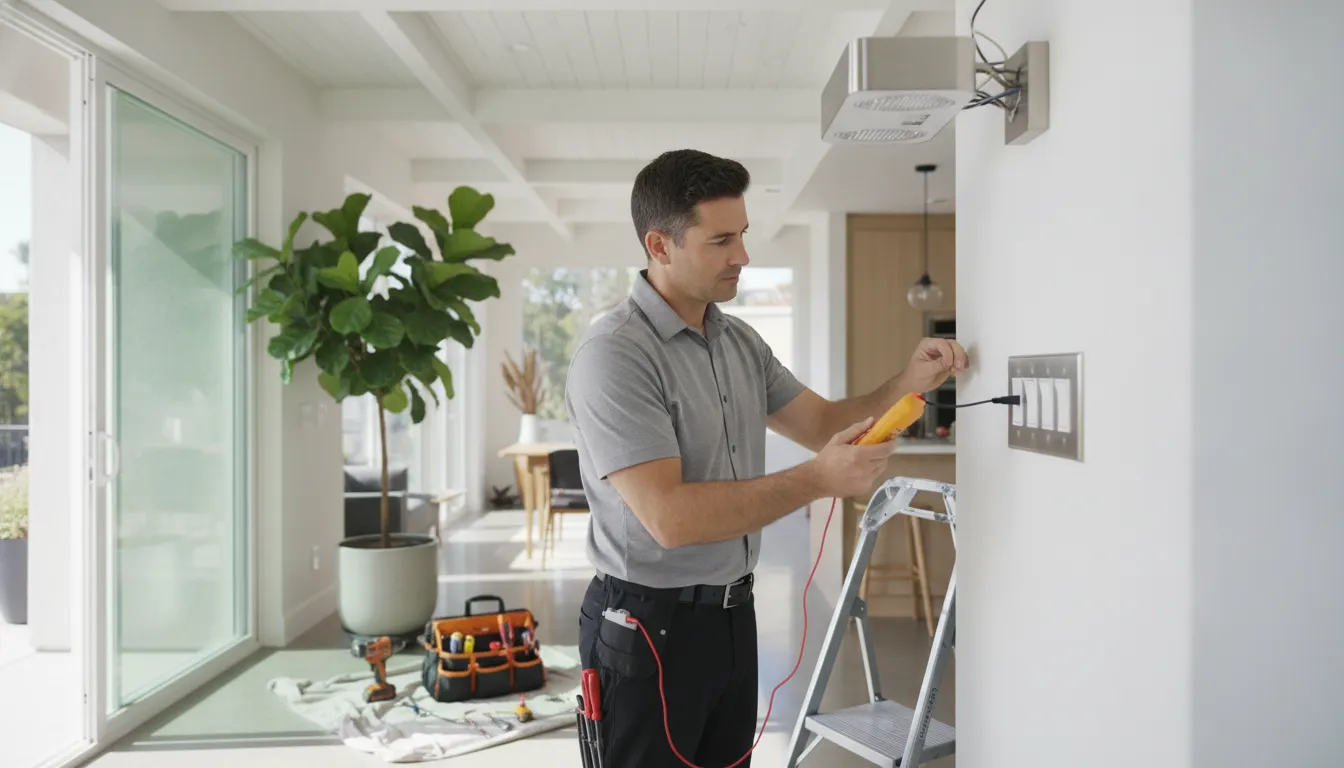
Fixture and control checks
For a single fixture, the inspection may focus on the bulb, socket, fixture wiring, integrated LED driver, switch, or dimmer. A homeowner can turn the light off and, only when it is cool and accessible, make sure a replaceable bulb is seated correctly. Do not remove the fixture, switch plate, or trim to investigate. If the light continues to flicker after a safe bulb check, professional lighting installation and fixture service can address the repair or replacement without guessing.
Circuit and distribution checks
When more than one light is involved, testing may move to the circuit and electrical distribution system. The electrician may assess circuit loading, breaker behavior, accessible connections, voltage behavior, and whether a large appliance is associated with the symptom. If the concern is a switch, dimmer, or outlet serving the light, outlet, switch, and dimmer service may be the appropriate scope.
Repair, correction, or referral
After the cause is isolated, the next step could be a fixture or control correction, a connection repair, a circuit correction, or a larger electrical project. An electrician may recommend Electrical Troubleshooting and Diagnostics when the source is not obvious or the symptom crosses several parts of the system. That diagnostic-first approach protects the homeowner from paying for a guessed-at repair that leaves the flicker unresolved.
How Should You Document a Flickering-Light Problem?
Short answer: Note the location, timing, affected fixtures, related appliances, recent electrical work, and any warning signs. This information gives the electrician a useful starting point while keeping the homeowner away from exposed wiring and energized equipment.
Before requesting service, use a simple observation log. You can write down the room and fixture, whether the light dims or pulses, how long the event lasts, and whether it repeats. If the problem is intermittent, a short video taken from a safe distance may help show the pattern. Do not move close to a hot panel, sparking outlet, or damaged fixture to capture footage.
- Scope: Is one light affected, or do fixtures in multiple rooms change at the same time?
- Timing: Does the flicker happen continuously, at startup, when a large appliance runs, or during a particular time of day?
- Controls: Is the light connected to a dimmer, smart control, motion sensor, or recently replaced switch?
- Recent changes: Did the symptom begin after a remodel, new appliance, EV charger installation, generator work, or fixture replacement?
- Warning signs: Is there heat, buzzing, odor, discoloration, smoke, sparking, or repeated breaker activity?
Do not test by opening the electrical panel, tightening internal connections, removing a switch cover, or bypassing a breaker. Even if the light appears to be off, another part of the equipment may remain energized. If a breaker trips once, do not repeatedly reset it to see whether the light stabilizes. Repeated trips are information for the electrician, not an invitation to keep experimenting.
Homeowners in Woodland Hills, Los Angeles, Ventura, Orange, Riverside, and San Bernardino counties should also mention whether the property is older or has had previous electrical modifications. Older wiring, added loads, and undocumented changes can affect the diagnostic path. When the system needs a broader review, an electrical safety inspection can identify related conditions that a single fixture visit might not fully address.
When Is Flickering a Same-Day Electrical Concern?
Quick answer: Flickering deserves urgent attention when it comes with heat, a burning smell, smoke, sparks, buzzing. Visible damage, repeated breaker trips, or a loss of power in part of the home. Stop using the affected equipment and seek professional guidance instead of attempting a repair.
A light that flickers without other symptoms may still need service, especially when it persists or affects more than one room. The risk changes when the symptom is accompanied by evidence of overheating or arcing. A hot switch plate, scorched outlet, crackling sound, or odor from a fixture should be treated as a warning. Keep people away from the area, avoid touching the equipment, and call for help.
If you see smoke or an active electrical fire, leave the building and call 911 from a safe location. Do not use water on an electrical fire. If the situation is not an active fire but the electrical symptom is urgent, Expert Electric Group offers Emergency Electrical Services for urgent electrical concerns. The safest action is determined by the condition on site, not by how quickly the light can be made to turn on.
Patterns that should not be ignored
- Flickering begins in several rooms at once.
- Lights dim sharply when a major appliance starts.
- A breaker trips repeatedly or will not reset.
- An outlet, switch, fixture, or panel area feels hot.
- You hear buzzing, crackling, or popping near electrical equipment.
- You smell burning insulation or see discoloration, smoke, or sparks.
These signs do not identify the exact fault by themselves. They do establish that continued trial-and-error is a poor choice. A professional can isolate the circuit, evaluate the condition, and explain whether the immediate repair is separate from a longer-term upgrade.
Which Repairs Can Resolve Persistent Flickering?
Short answer: The repair depends on the failed or unsuitable part. Possible scopes include a fixture, bulb-and-dimmer compatibility correction, switch replacement, circuit repair, load correction, breaker work, panel evaluation, or rewiring. The correct scope cannot be selected from the symptom alone.
| Observed pattern | Professional assessment | Safe homeowner response |
|---|---|---|
| One cool fixture flickers | Bulb, socket, fixture, switch, dimmer, or LED driver | Turn it off. Check only a cool accessible bulb, then request service if it continues. |
| Several lights on one circuit flicker | Connections, breaker, circuit loading, and distribution | Stop repeated resets. Record which fixtures are affected. |
| Lights dim when a major appliance starts | Load behavior, circuit capacity, panel, and service connections | Note the appliance and timing without opening the panel. |
| Flicker with heat, odor, sparks, or smoke | Urgent safety condition requiring immediate isolation and professional response | Leave the area. Call 911 for an active fire, or request emergency electrical help. |
Fixture, socket, or LED-driver repair
A single ceiling light may need a fixture connection, socket, driver, or complete fixture addressed. Integrated LED fixtures can have different failure points from replaceable-bulb fixtures. The repair should account for the fixture type, its installation, and the condition of the box and conductors. Replacing only the visible lamp does not solve a loose or damaged connection elsewhere in the assembly.
Dimmer and switch correction
Some flicker begins after an LED bulb is installed on an older or incompatible dimmer. A compatible control may resolve that situation, but the device still needs to be installed safely. If the switch is warm, loose, discolored, or making noise, stop using it and request service rather than replacing it without understanding the circuit.
Circuit or load correction
When the symptom follows an appliance or affects several fixtures on one circuit, the remedy may involve circuit organization, a dedicated circuit, load assessment, or a panel-related repair. An electrician can determine whether the system is carrying an appropriate load and whether a new circuit or distribution correction is warranted. Main panel upgrades and power distribution are possible project paths, but they should be recommended by the findings, not by the existence of one flickering light.
Wiring repair or rewiring
Older, damaged, or modified wiring may require a more extensive correction. Signs such as recurring faults, heat at connections, brittle insulation, or multiple unrelated symptoms can justify a closer look. When the existing system cannot safely support the needed repair, residential wiring and rewiring may be discussed. A licensed electrician should define that scope after inspection.
What Happens During a Professional Diagnostic Visit?
Quick answer: The electrician reviews the history, confirms the symptom, inspects accessible equipment, performs controlled tests, isolates the likely fault, and explains repair options. The visit should produce a clear next step rather than a list of unrelated replacements.
- Review the pattern. The technician asks what flickers, when it happens, and what changed before the problem began.
- Make the area safe. The technician identifies urgent warning signs and determines whether equipment should remain out of service.
- Inspect accessible components. The inspection may include the fixture, switch, dimmer, outlet, breaker, panel condition, and visible wiring, depending on the symptom.
- Test methodically. Controlled testing helps distinguish a fixture issue from a circuit, load, distribution, or supply concern.
- Explain the scope. The electrician separates an immediate repair from optional improvements or future upgrades.
- Complete or schedule the correction. The next step may be a repair, a replacement, additional diagnostics, permitting coordination, or a defined rewiring or panel project.
This sequence is valuable because flickering is a symptom shared by several kinds of electrical problems. A diagnosis that identifies the affected path is more useful than a generic list of possible causes. It also helps a homeowner decide whether a small repair is appropriate or whether a broader safety inspection should be scheduled.
For Expert Electric Group, the service conversation can cover residential and commercial electrical troubleshooting throughout Southern California. The company is licensed and insured, and its broader service portfolio includes lighting, wiring, panels, generators, EV charging, and emergency electrical support. The exact recommendation depends on the property and the conditions found during the visit.
Request a flickering lights repair appointment at (747) 999-6090
Frequently Asked Questions About Flickering Lights Repair
Can I replace the bulb before calling an electrician?
For a cool, accessible fixture, you can turn the light off and replace a visibly failed bulb with the correct type. Do not remove covers or touch wiring. If the flicker continues, involves more than one light, or comes with heat, odor, buzzing, sparks, or breaker activity, stop using the fixture and schedule professional service.
Why are multiple lights flickering at the same time?
Several lights changing together can indicate a circuit, load, panel, connection, or supply issue, although the symptom alone does not identify the cause. Note which rooms are affected and whether an appliance starts at the same time. A licensed electrician should perform the diagnosis rather than having a homeowner open the panel.
Is flickering from an LED light always dangerous?
No. An LED bulb and dimmer may be incompatible, or the bulb may be failing. However, heat, buzzing, burning odor, discoloration, sparks, smoke, or a persistent pattern changes the safety decision. Turn the light off and request an inspection when those signs appear.
How quickly should I arrange flickering lights repair?
Arrange service promptly for persistent or unexplained flickering, even when there are no other warning signs. Seek urgent help for heat, smoke, sparks, burning odor, buzzing, visible damage, or repeated breaker trips. If there is an active fire, leave the property and call 911.
Call (747) 999-6090 to talk with Expert Electric Group about your next safe step
