
Planning a standby system means checking more than the generator itself. Generator permits Pasadena homeowners and businesses may need depend on the address, equipment, fuel, and work scope. Call (747) 999-6090 to discuss project guidance and permit coordination before you settle on an installation plan.
Call (747) 999-6090 to discuss your generator project
Which generator permits may apply in Pasadena?
Short answer: Electrical and building review may apply, while fuel, fire, utility, and air-quality requirements can depend on the specific design and site. Confirm each approval with the authority responsible for that part of the project.
A permanently installed standby generator connects to a building’s electrical system and uses a fuel source. The work may involve an automatic transfer switch, wiring, a mounting pad, gas piping or a propane tank, and changes to existing electrical equipment. One approval should not be assumed to cover every part of that scope.
| Review area | What it may address | What to confirm |
|---|---|---|
| Electrical | Generator connection, transfer equipment, circuits, grounding, and panel changes | Permit, plan documents, inspection stages, and approved equipment |
| Building or placement | Pad, mounting, construction, and the proposed location | Applicable site, zoning, clearance, and construction requirements |
| Fuel | Gas piping, tank, regulators, connections, and fuel supply | Separate permit, inspection, utility, or supplier coordination |
| Fire | Fuel storage, access, separation, and site safety | Whether fire review or specific operating conditions apply |
| Air quality | Engine emissions, registration, or operating conditions | Whether this model and intended use need review or an exemption |
This table is a planning aid, not a Pasadena permit determination. Rules can vary by property type, equipment, and project scope. Start by confirming which offices have jurisdiction over the project address and which plans or forms each one expects.
For a broader overview of electrical services and possible panel upgrade work, review the linked service information. These pages help frame an electrical conversation; the local authority determines permit requirements.
What electrical approval should you check first?
Short answer: Ask the responsible building department what electrical permit, plan review, and inspection process applies to the generator connection and transfer equipment at your address.
A standby system needs a transfer arrangement that supplies the intended loads without creating an unsafe connection to the utility system. Depending on the design, the installation may also include dedicated circuits, a feeder, grounding and bonding work, a panel modification, or a subpanel. The permit scope should match the work actually proposed.
Before making an inquiry, collect the generator make and model, electrical ratings, transfer-switch information, a proposed wiring diagram or one-line drawing if available, and the existing service and panel details. Have the property address ready. Ask the office which documents are needed before an application can be reviewed, rather than relying on a checklist written for another city or a different system.
Existing panel capacity and condition can affect the design. If a service change is under consideration, use the guides to 400-amp panels, service upgrades, and main breaker panel replacement to prepare questions. They are background reading, not a substitute for a site evaluation or code review.
How do fuel and utility requirements change the plan?
Short answer: Fuel type and the proposed connection can create separate permitting or inspection steps. Ask who is responsible for each step and whether the serving utility or fuel supplier must be involved.
For a natural-gas unit, the equipment’s fuel demand, existing pipe capacity, meter, regulator, and route can all matter. A qualified professional can assess whether the existing arrangement is suitable and identify proposed changes for review. Do not assume the current gas service can support a generator just because it supplies other appliances.
With propane, tank capacity and placement, access for delivery, connection details, and separation from nearby features may need review. The authority and fuel supplier can clarify their roles. Ask whether any tank, line, regulator, or trenching work has its own application or inspection, and who will arrange it.
Include coordination questions in the project scope: Is a meter change anticipated? Is a new regulator or fuel line included? Who contacts the utility? Who schedules inspections for the fuel work? Are trenching and restoration included? Written answers help distinguish an electrical-only quote from a complete installation plan.
For project background, see the guides to home generator connections and whole-house generator installation requirements. Both are useful for preparing questions about the combined electrical and fuel scope, but neither replaces approval for a particular property.
How do building, placement, and fire reviews fit in?
Short answer: The location can affect building, zoning, and fire review. Ask whether a site plan, clearance information, or a separate review is needed before choosing the final pad location.
Make a simple sketch that shows the building, property boundaries, proposed generator, fuel equipment, doors, windows, air intakes, walkways, and access routes. Note nearby structures and any narrow passages. The reviewing office can tell you which distances and site details it needs; do not treat a neighbor’s arrangement or a manufacturer illustration as a local approval.
Placement decisions also affect practical operation. Consider where exhaust is directed, whether service technicians can reach the unit, and whether routine testing could affect nearby occupants. Ask the authority which of these considerations are addressed by local rules and which belong in the installation plan. For a commercial property or a multi-unit building, identify shared systems, occupancy needs, and access arrangements before a plan is submitted.
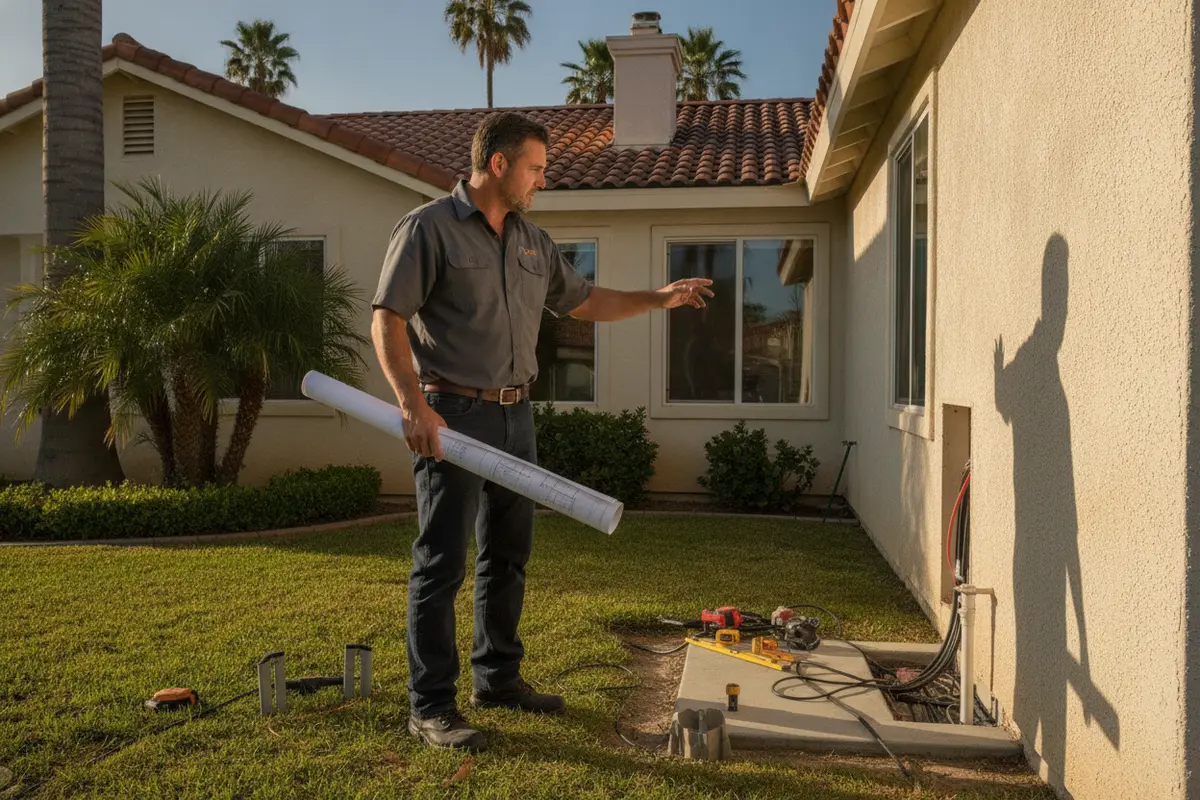
A guide to generator placement and safety planning discusses Malibu-specific considerations. Use it only as general planning context; it does not establish Pasadena requirements. Confirm the proposed location for the actual address with the applicable local reviewers.
Could an air-district review apply to a standby generator?
Short answer: Some stationary engines may be subject to air-quality requirements. Ask the relevant air-quality authority whether the exact generator model, fuel, output, and intended use need a permit, registration, or exemption.
Do not assume that every standby engine is treated alike. The answer can depend on engine type, emissions documentation, rated output, operating purpose, and expected use. Emergency backup operation and routine testing may be treated differently under applicable rules, so describe both when asking for a determination. Keep the manufacturer’s specifications and emissions paperwork with the project file.
The only supplied government research reference concerns thermoelectric materials and energy harvesting, not local stationary-generator permitting. It does not establish whether a Pasadena installation needs approval; that decision must come from the relevant authority. The NASA Technical Reports Server reference is therefore background on a different generator technology, not a permitting source.
What steps help organize the permit process?
Short answer: Confirm jurisdiction, prepare a complete equipment and site packet, ask each authority its requirements, and assign responsibility for applications and inspections before work starts.
- Verify the address and property type. Confirm that the project falls within the expected jurisdiction and identify whether it is a home, multi-unit building, or commercial site.
- Define the preliminary system. Record fuel type, model, electrical rating, transfer method, and the loads the generator is intended to serve. Mark items that are not decided yet.
- Document existing conditions. Gather panel and service information, available utility records, fuel-system details, and clear site photos. A sketch can show the possible equipment location and routes.
- Contact reviewers separately. Ask about electrical, building, fuel, fire, utility, and air-quality steps. Record the office contacted, the date, documents requested, and any follow-up needed.
- Assign each task. Agree who prepares drawings, submits applications, responds to corrections, provides equipment documents, and books inspections.
- Keep the record together. Save permit numbers, approved plans, inspection results, correspondence, and any conditions for testing or operation with the generator records.
For example, a homeowner proposing a natural-gas unit may first discover that the panel needs evaluation and the gas route has not been settled. A business may have a defined critical-load list but need to clarify whether equipment location and access require added review. In either case, identify the open questions early and seek written direction before treating the design as final.
Useful questions include: Which permits apply to this address and scope? What plan format and equipment data should be submitted? Is a separate fuel or fire review needed? Who schedules each inspection? Are testing or operating conditions imposed? What must be approved before equipment is installed? Keeping a dated answer log makes it easier to spot gaps when several people are coordinating the project.
Expert Electric Group provides generator installation and maintenance and is a Generac Authorized Dealer and Certified Installer. Review its electrical services and service area information, then confirm project availability for the specific address. Permit requirements still come from the authorities responsible for the site.
How can you compare generator installation proposals?
Short answer: Compare what each proposal includes, what remains subject to authority review, and who owns each coordination task. A clear scope makes meaningful comparison possible even when equipment or site conditions differ.
Start by checking that each proposal describes the same basic project: generator model or selection process, intended backup loads, transfer equipment, electrical changes, fuel work, and proposed location. If one document assumes an existing gas line is adequate and another includes a new line, the totals do not represent the same scope. Ask the contractor to identify each assumption rather than leaving it implicit.
Next, look for permit and inspection responsibilities. Does the written scope say who prepares and submits plans, who pays agency fees if those are not included, who responds to corrections, and who schedules each inspection? Ask how changes requested during review will be handled. Do not treat a promise that a project is “permit ready” as an answer to which approvals are required or who will obtain them.
- Equipment: Is the make, model, fuel, and transfer method stated, or is selection still pending?
- Site work: Are the pad, access, trenching, fuel routing, and restoration included or excluded?
- Electrical scope: Are panel work, feeders, transfer equipment, and intended circuits identified?
- Review and closeout: Are plan preparation, permit coordination, inspections, and documentation assigned?
- Open conditions: Which details still depend on utility input, authority review, or a site assessment?
For example, Proposal A may describe the generator and electrical connection but leave fuel piping and permits to the owner. Proposal B may include coordination of electrical and fuel work but state that final placement depends on review. Neither is automatically better; compare the scope, exclusions, and responsibilities in writing, then ask for any unresolved items to be clarified. This avoids confusing a lower initial figure with a complete project plan.
What should homeowners and businesses prepare?
Short answer: Bring the address, site details, equipment information, backup priorities, and available electrical or fuel-system records to the first project discussion.
Homeowners can list the circuits or appliances they want to keep operating, such as refrigeration, selected lighting, or heating and cooling equipment. A business should identify essential loads, operational needs, and equipment that cannot tolerate an interruption. This list helps a qualified professional understand priorities; final equipment sizing and configuration require assessment of the actual loads and site.
Gather these items where available:
- Property address, building use, and a brief description of the proposed project
- Photos of the electrical panel, meter, possible generator locations, and access routes
- Panel or service details and prior electrical plans or permit records
- Generator make and model, fuel preference, and manufacturer documents, if selected
- Desired backup circuits or business-critical loads
- Information about existing gas service, propane equipment, or utility coordination
Request a written scope that identifies the equipment, electrical work, fuel work, permit responsibilities, planned inspections, exclusions, and assumptions. Project cost and schedule depend on scope, site conditions, equipment, and materials. Compare proposals by the work included and the coordination assigned, not equipment price alone.
For related planning, read about generator sizing for 400-amp service, minimum generator load, and checking generator load. These guides can help organize load questions, while a site-specific assessment determines the appropriate design.
Call (747) 999-6090 to discuss generator installation and permit coordination
Frequently asked questions
Does every standby generator need a permit in Pasadena?
Do not assume either way. Requirements depend on the address, equipment, and scope. Ask the responsible local departments and other applicable authorities to confirm what is required before work begins.
Does an electrical permit cover gas piping?
Not necessarily. Electrical and fuel-system work may have separate permits or inspections. Confirm who has jurisdiction over each part and who will obtain the approvals.
Can I place a generator wherever it fits?
No. Local placement, building, zoning, fire, access, and equipment requirements may affect the location. Have the proposed site reviewed before installation.
Could a commercial project need different reviews?
It may. Building use, occupancy, shared systems, equipment, and access can change the review steps. Businesses should describe their site and operating needs when asking each authority what applies.
Who confirms the final permit requirements?
The authorities responsible for the address and the systems involved determine the governing requirements. An electrical contractor can help organize project information, but the applicable agencies provide the final direction.
Call (747) 999-6090 to discuss your generator project
Confirm the approvals for the actual property and equipment before installation so the project plan reflects the requirements that apply to your site.
