
A generator can sound normal while the house stays dark, because a running engine does not confirm that electrical power is being produced or reaching your circuits. If you are in Southern California and need help, call Expert Electric Group at (747) 999-6090 for electrical troubleshooting.
Contact Expert Electric Group for electrical troubleshooting
Engine noise alone cannot show whether the generator is making usable power. The important distinction is whether electricity is being produced and whether the system is delivering it to your home.
If your generator runs but has no electrical power, the engine may be operating without usable electrical output, or the power may not be transferring to the home. Check only visible status indicators and which areas have lost power, follow the unit’s manual, and leave electrical diagnosis to a qualified professional.
Do not open the generator or electrical panel, handle wiring, or bypass transfer equipment. A safe first step is to understand which part of the power path may be affected, without assuming a specific fault.
What Does It Mean When a Generator Runs but Has No Electrical Power?
Short answer: A running engine does not prove that the generator is producing usable electricity, or that the electricity is reaching the home’s circuits. The problem may be at the generator’s electrical output, in the transfer equipment, or farther along the distribution path. The symptom alone does not identify the fault.
A generator has an engine and electrical-generating components. The engine can sound as though it is operating normally while the separate electrical side is not supplying usable output. OSHA describes portable generators as internal-combustion engines used to generate electricity, but hearing the engine run is not the same as confirming electrical output at the unit. That distinction is useful for both portable and standby systems, even though the equipment and connections differ.
There are therefore two different questions: Is the generator producing electrical output, and is that output being delivered to the circuits that need it? An electrician or generator technician can determine which part of the system is affected. A homeowner should not try to answer those questions by opening an enclosure or panel or testing live wiring.
For a permanently installed standby system, power also has to travel through the transfer and distribution equipment before it reaches household circuits. An automatic transfer switch (ATS) is the intermediary that switches the home’s connection between utility power and generator power. OSHA warns against connecting a generator directly to building wiring without a transfer switch installed by a qualified electrician, because doing so can energize wiring beyond the home and create electrocution risks.
The engine can run while the home remains dark for different reasons. Usable output may not be available, or it may not reach the affected circuits through transfer and distribution equipment. Neither possibility can be confirmed from engine sound alone. It is also possible for a backup system to serve selected circuits rather than every circuit in the house, so the pattern of what has power can help describe the symptom without proving its cause.
To understand the intended path from the generator to household circuits, see how a whole-house generator supplies power. For the switching point between utility and backup power, read how an automatic transfer switch works. Those explainers provide system context; they are not instructions to test or alter the equipment.
If the engine runs but power is missing, note whether the outage affects the whole home or only certain areas. Share that and any visible status message with a qualified technician. Do not bypass the transfer switch or connect a generator to a wall outlet. OSHA’s portable generator safety guidance explains the risks of improper connections. Leave diagnosis and repairs to a qualified professional.
What Safe Checks Can You Make Before Calling a Technician?
Short answer: Note which household loads have power, record any visible generator status light or error code, and consult the owner manual for user-level guidance. Keep every check external; these observations can help a technician, but they cannot confirm the electrical fault.
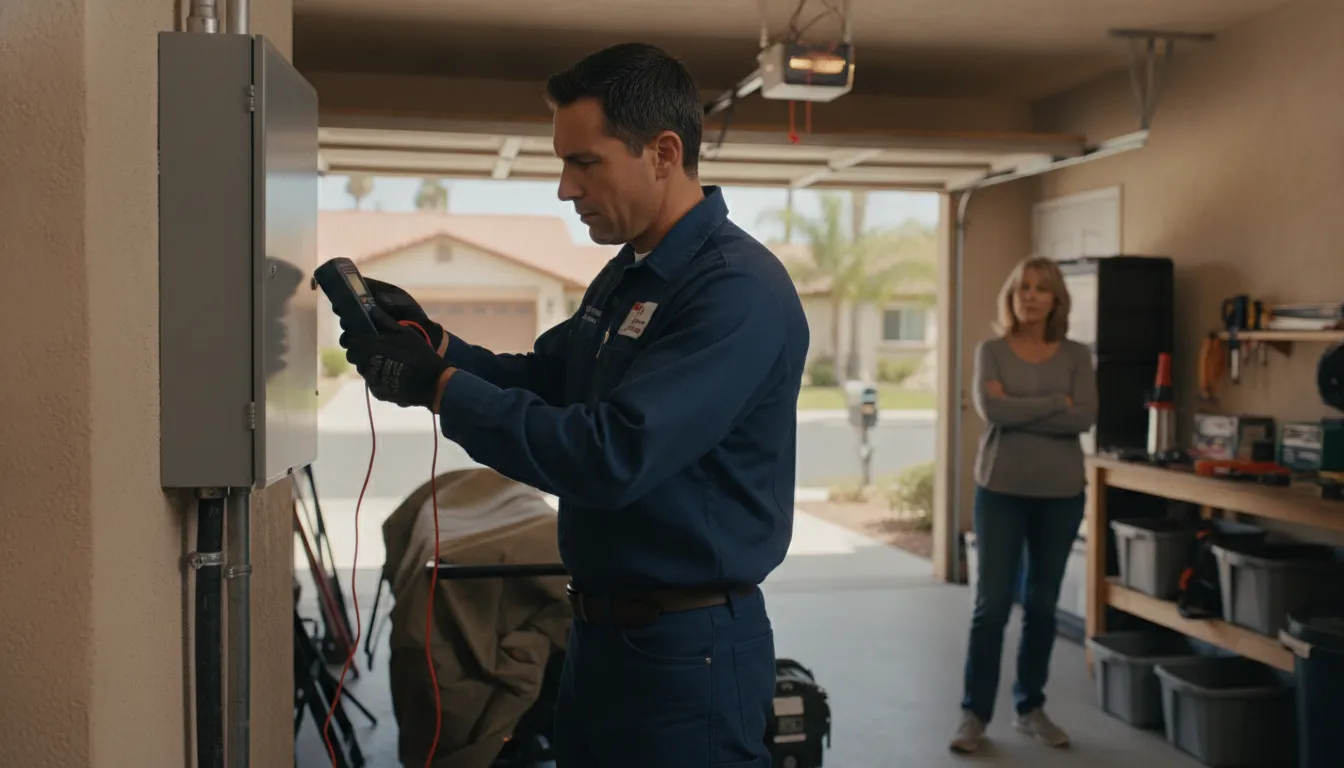
Before you call, gather information from a safe distance and from normal, accessible user displays. Do not remove covers or open a generator enclosure or electrical panel. Never touch wiring, test live conductors, or bypass transfer equipment. A generator engine running is not proof that electricity is being produced or reaching the home, and visual checks cannot establish which component needs repair.
- Record which loads are affected. Note whether all household power is out or only certain lights, outlets, or appliances lack power. Write down examples and whether the affected items are part of the backup loads you expect to have. Do not open a panel or move breakers to investigate.
- Observe the generator’s user-facing indicators. From outside the equipment, note any status lights, display messages, or error codes that are visible without removing a cover. Record the exact wording and when it appeared. Do not try to interpret a code beyond what the manual says, and do not repeatedly reset or restart the system.
- Check the owner’s manual for your exact model. Look for the manufacturer’s explanation of visible indicators and any user controls identified for routine operation. Follow only instructions clearly intended for the homeowner. If the guidance is unclear, requires access behind a cover, or calls for electrical work, stop and leave the next step to a qualified technician. Standby and portable models can have different procedures.
- If it is a portable generator, make only a visual cord and condition check. Without handling a cord or electrical component, look for obvious cuts, fraying, or abrasion and notice whether the equipment or area is wet. Do not use visibly damaged or wet equipment. OSHA’s portable generator safety guidance advises against damaged cords and manipulating electrical components when wet. This guidance is for portable generators; any operating recommendations depend on the exact model’s manual.
Keep notes or a photo of the display to share with the technician, but do not approach equipment that is wet, visibly damaged, unusually hot, or otherwise unsafe. Avoid any attempt to connect a generator to home wiring yourself. OSHA warns that a generator should connect to a building electrical system only when a qualified electrician has installed it with a transfer switch.
For diagnosis beyond these observations, contact a qualified professional for electrical troubleshooting and diagnostics. Sharing which loads are affected and the exact status message can help focus the service visit without putting you near energized components.
Why Can the Generator Engine Run While Electrical Output Is Missing?
Short answer: The engine can continue running even when the system is not producing usable electrical output or when that power is not reaching the home’s circuits. The symptom alone does not identify the cause; a qualified technician needs to evaluate the system.
A generator combines an engine with electrical equipment that converts the engine’s mechanical motion into electricity. Those functions are connected, but they are not the same. Hearing the engine run confirms only that the engine is operating. It does not confirm that the generator’s electrical section is producing output at the level the system needs, or that the output is making it through the transfer and distribution equipment to the circuits.
One possible category is a protective or control status that prevents normal power delivery. A system may indicate a fault or abnormal condition through a display, indicator, or status code. If one appears, note it and consult the owner’s manual for its meaning. Do not treat a running engine as proof that the status is safe to clear, and do not repeatedly reset the system in an attempt to restore power.
A second possibility is an issue within the generator’s electrical section. This is not something to diagnose from engine sound or appearance. Determining whether the unit is producing suitable output requires appropriate electrical measurements and equipment-specific assessment by a qualified professional. Do not open the generator enclosure or attempt to test, adjust, or replace internal components.
Power may also be produced by the generator but fail to reach the household circuits. The transfer switch is part of that path. For an automatic transfer switch (ATS) to connect a load, it checks that generator voltage and frequency are acceptable. Pacific Northwest National Laboratory’s standby generator guidance describes this verification role. If the conditions are not met, or if a separate transfer or distribution issue is present, the engine may run without the expected circuits receiving power. That is a system-level possibility, not a diagnosis of your equipment.
| Observation | Possible meaning | Safe next step |
|---|---|---|
| Engine runs, no expected loads have power. | Output or transfer issue may be involved. | Record status indicators. Call a technician. |
| Some circuits have power, others do not. | System may serve selected loads. | Note affected loads. Do not open the panel. |
| Warning light, unusual heat, or damage. | Professional evaluation may be needed. | Keep away if unsafe. Follow emergency guidance. |
Also consider whether the system is intended to supply only selected circuits. Some backup arrangements are configured for critical loads rather than every circuit in the home, so an unpowered appliance alone does not establish that the generator has failed. Note which circuits or devices have power and which do not, and share that information with the service professional.
For a safe next step, record any visible status message and describe what is or is not receiving power. Leave internal testing and transfer-equipment diagnosis to a qualified electrician or generator technician. Expert Electric Group provides generator maintenance and support for homeowners who need help assessing a system that runs but does not deliver expected power.
Can the Transfer Switch or Home Load Setup Interrupt Power?
Short answer: Yes. A transfer switch or a system designed to serve selected circuits can affect which parts of a home receive generator power. The switch is a safety intermediary between utility power, generator output, and the connected home loads; it does not make electricity. If the generator runs but power is not reaching the circuits you expect, the system needs professional assessment rather than trial-and-error operation.
In a standby setup, the automatic transfer switch (ATS) coordinates the changeover from utility supply to generator supply. It keeps the two sources separated so generator power is not sent back onto utility wiring. OSHA warns that connecting a generator directly to building wiring without a properly installed transfer switch can energize distant wiring and create an electrocution risk for utility workers and others. See OSHA’s portable generator safety guidance and its overview of standby generator operation and maintenance.
That separation is why a transfer switch is not a device to bypass or operate by guesswork. The generator engine may be running while the electrical path to the home’s intended loads is not delivering power as expected. The observed symptom alone cannot show whether the issue is at the generator, in the transfer equipment, or elsewhere in the electrical system. An electrician can assess the system as a whole and determine whether the source and transfer path are working as designed. Expert Electric Group provides professional transfer-switch service for generator integration.
Also consider how the backup system was configured. Some homes have load-specific setups that serve selected critical circuits, not every circuit in the house. A room, appliance, or outlet without power is not by itself proof that the generator or ATS has failed. Load management may prioritize which circuits operate when generator capacity is allocated; read about how generator load shedding manages demand. For background on a safe connection between a generator and home wiring, see safe generator connection to your electrical panel.
For a useful report, note which lights, outlets, or appliances have power and which do not, along with any status message the generator displays. Do not open the panel or switch unfamiliar breakers, attempt to force a transfer, or connect a generator to a wall outlet. OSHA specifically says a qualified electrician must install a transfer switch before a generator is connected to building wiring. If the distribution does not match what you understand the system should support, share those observations with a qualified electrician. A trained professional can inspect the transfer equipment and load arrangement without relying on an assumption about the fault.
When Is It Time to Stop Troubleshooting and Call an Electrician?
Stop and move away if you notice smoke, flames, a burning smell, visible electrical damage, unusual heat, sparking, or abnormal buzzing or crackling. Do not touch wet or damaged equipment, open an enclosure, or try to test it. For immediate danger, including a fire or a carbon monoxide alarm, get everyone to a safe location and contact emergency services. Have a qualified electrician diagnose electrical faults.
A generator engine can keep running even when power is not being produced or delivered to the home. A smell, noise, alarm, or damaged part is not enough to identify the fault remotely, and continuing to troubleshoot can expose you to shock or fire hazards.
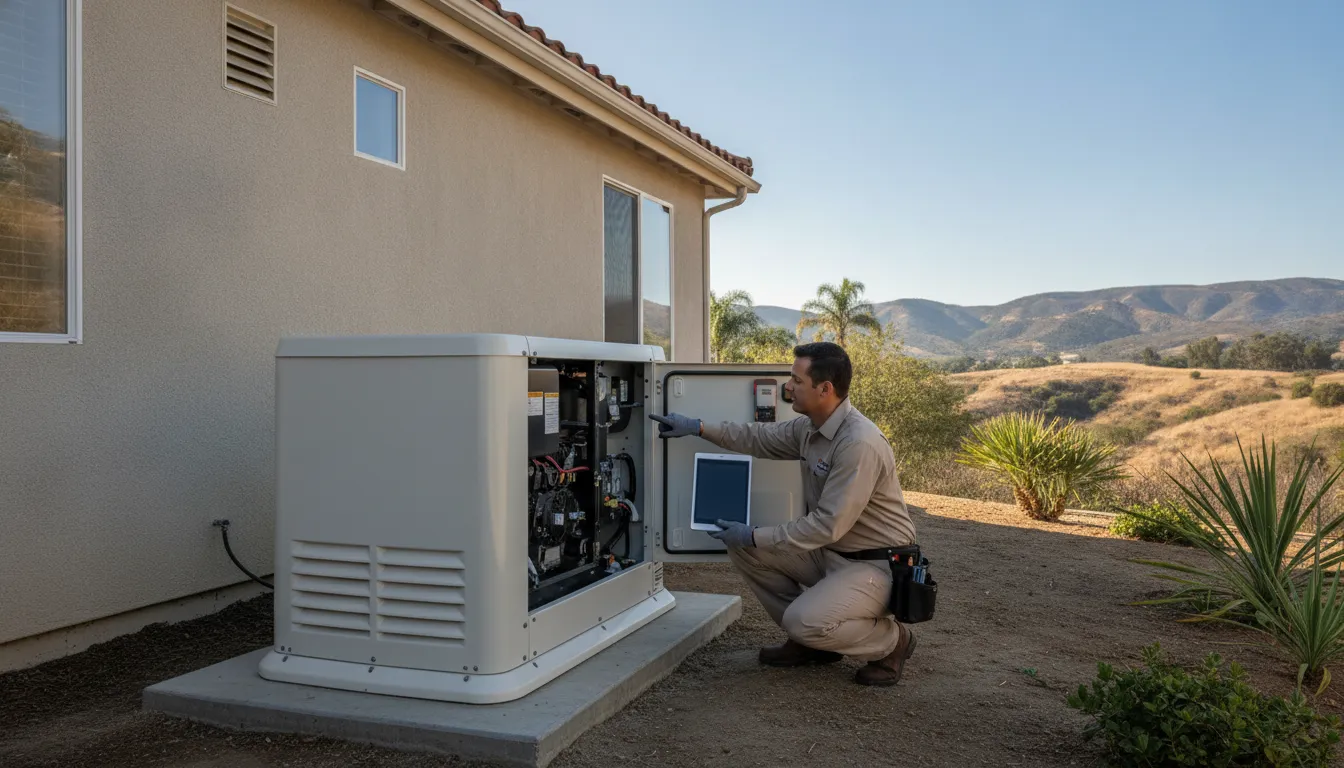
OSHA’s safety guide covers hazards associated with portable generators, including shock or electrocution, carbon monoxide, fire, and burns. Its scope is portable-generator safety, not a diagnosis guide for a permanently installed standby system. Do not handle electrical components if you are wet or standing in water. OSHA also advises that equipment submerged in water be properly evaluated before use. Read OSHA’s portable-generator safety guidance.
- Smoke, flames, or a strong burning odor: Move away and seek emergency help if there is an active or immediate fire risk. Do not approach the generator to shut it down. Only use a shutoff if you can do so safely and in accordance with the owner’s manual.
- Heat, visible damage, sparks, or unusual noise: Keep people away and stop trying to operate or inspect the equipment. Arrange professional evaluation.
- Water exposure or shock concern: Do not touch the generator, transfer equipment, wiring, or nearby standing water. Get clear and call a qualified electrician.
- Carbon monoxide alarm: Leave the building for fresh air and contact emergency services. Do not re-enter until it is safe to do so.
If there is no immediate hazard but the generator still runs without supplying power, avoid opening the panel or generator enclosure, resetting equipment repeatedly, or bypassing a transfer switch. Note what lost power and any visible status message from a safe distance, then share those observations with a technician. A qualified electrician can assess the electrical path and coordinate generator service when needed. Expert Electric Group provides electrical troubleshooting and diagnostics and emergency electrical service in Southern California.
Planned generator maintenance can support reliability, but it does not determine why a system has stopped delivering power; that requires diagnosis. For help with a generator or transfer-switch concern, call:
Next, these common questions address what a running engine can and cannot tell you about the power problem.
Frequently Asked Questions
Why is my generator not producing current even though it is running?
The engine and electrical output are separate parts of the system. The engine may run while the generator is not producing usable power, or power may not be reaching the home through the transfer equipment. A control or protective condition may also be involved. The exact cause requires proper inspection; an engine running by itself does not identify the fault.
How can I fix a generator that has no power?
Start with observations only: check the generator’s display or status indicator, note which circuits or outlets are affected, and consult the model manual for user-level checks. Do not open the generator or electrical panel, test live wiring, or repeatedly reset equipment. If the manual does not resolve it, have a qualified electrician diagnose the system.
What can cause a generator to run without supplying electricity?
Possible causes include a problem with electrical output, a protective or control condition, or an interruption between the generator and the circuits intended to receive power. A system may also be set up to serve selected loads rather than the entire home. These are possibilities, not a diagnosis; testing should be left to a qualified technician.
Will a generator run when utility power is out?
Many standby systems are designed to start when utility power is lost and transfer power to the circuits they are configured to serve. A portable generator can also run without grid power, but it must be connected and operated according to its manufacturer’s instructions. Never connect it to house wiring through a wall outlet or bypass transfer equipment.
Need Help Restoring Generator Power?
When a generator runs but your home is still without power, the issue may involve its output or transfer equipment. For electrical troubleshooting and generator power-delivery support in Southern California, contact Expert Electric Group.
