
A generator sizing calculator Pasadena homeowners use can help organize appliance loads before choosing backup power, but the estimate is only as useful as the information entered. If you are planning backup power for your home, call (747) 999-6090 to discuss your loads and installation questions.
Call (747) 999-6090 to discuss your generator plan
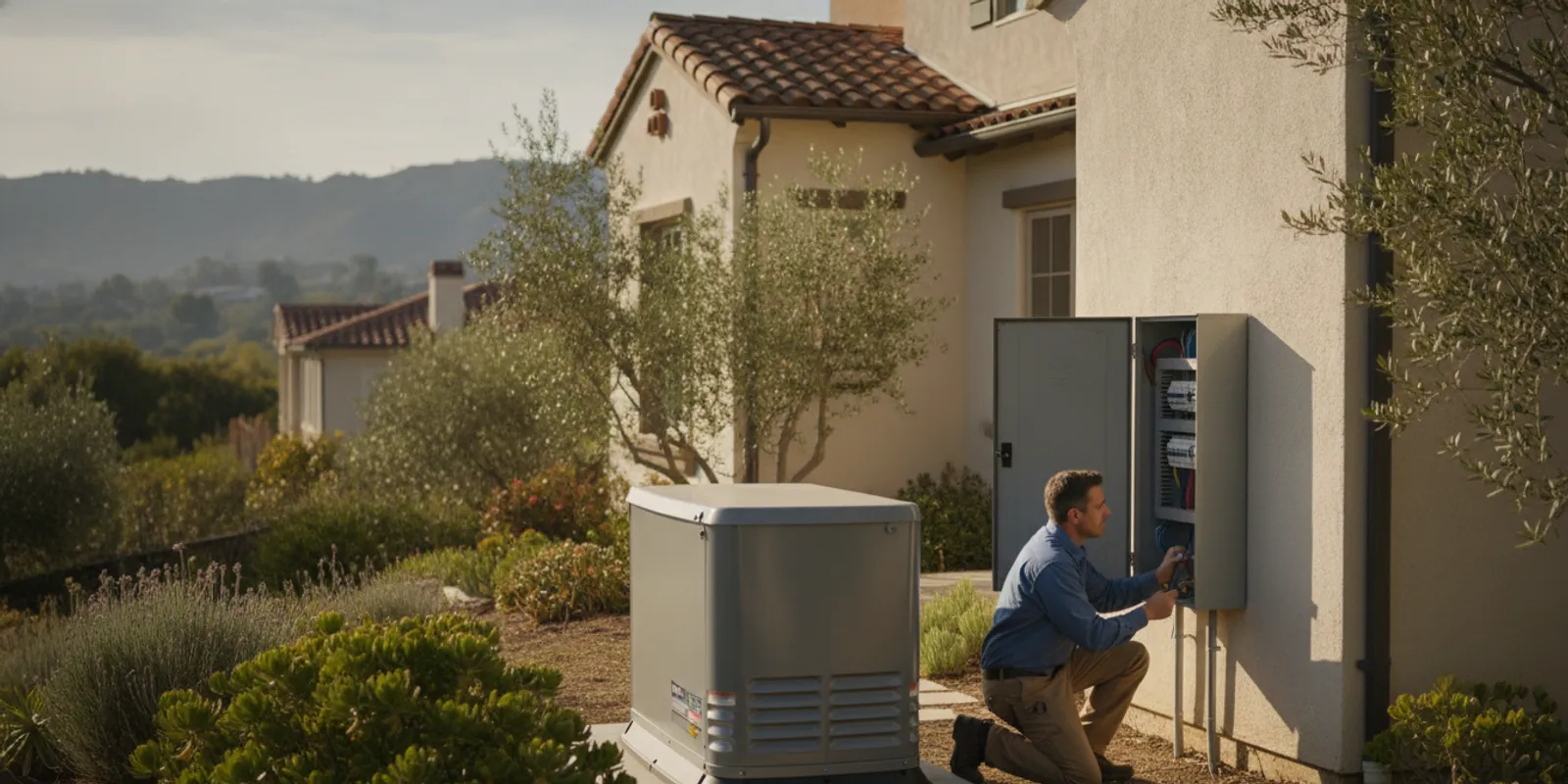
What Does a Generator Sizing Calculator Pasadena Homeowners Use Actually Estimate?
Short answer: A calculator estimates generator capacity by adding the electrical demand of selected appliances and accounting for equipment that needs extra power when it starts.
Most sizing tools ask for the appliances or circuits you want to power. They may request running watts, starting watts, or both. Running watts represent the power an appliance needs while operating. Starting watts describe a brief surge some motor-driven equipment draws as it starts. The generator must support the combination that can operate at the same time, including the relevant startup demand.
A calculator is a planning aid, not a final design. Appliance labels may list amps, volts, or several operating ratings rather than a convenient watt figure. Some equipment has variable demand, and the nameplate may not show the brief surge in a way that is easy to interpret. A qualified electrician can review the equipment, panel, transfer method, and intended circuits before you select a system. For a broader look at a permanent backup installation, see the guide to whole-house generator installation requirements.
Generator Sizing Calculator Pasadena: Which Loads Should You Include?
Short answer: Start with the circuits you cannot comfortably do without, then add appliances that may run at the same time and note their startup needs.
Make a room-by-room list, but think in circuits and operating priorities rather than assuming every appliance will run together. A practical first list might include refrigeration, selected lighting, internet equipment, and the outlets or equipment needed for basic household routines. Depending on the home and system, residents may also prioritize a furnace blower, well or sump equipment, or medical devices. Do not assume every generator can support every combination; confirm the specific requirements for critical equipment with a qualified professional.
- Essential continuous loads: Identify equipment you expect to keep operating during an outage, including how long it may run.
- Motor loads: Note air-conditioning equipment, pumps, refrigerators, and other motors. Their starting demand may be higher than their running demand.
- Intermittent loads: Mark appliances that can be switched off while another high-demand device starts or runs.
- Dedicated or sensitive equipment: Record manufacturer information and ask whether the equipment has special connection or power-quality requirements.
- Future plans: Include likely additions, such as a new cooling system or EV charger, before the electrical design is finalized.
For each item, write down its label information, circuit, and whether it must operate at the same time as other loads. If you are unsure how to interpret the label, photograph it rather than guessing. An electrician can help turn that list into a load plan and evaluate whether the electrical service and panel have the capacity and configuration the project requires. Related planning topics include minimum generator load considerations and how generator load is checked.
How Do Running Watts and Starting Surges Change the Result?
Short answer: The running total helps estimate ongoing demand; the largest relevant startup surge can raise the capacity needed at a particular moment.
Adding the running watts of every item gives a first-pass total, but it can miss the short-lived demand when a motor starts. If several motor loads could start at once, the calculator may need to account for their combined demand. Some tools ask you to designate the largest motor or identify starting watts. Others use a simplified estimate. Read the calculator’s instructions so you understand what its result includes.
Do not add every listed starting surge to the running total automatically. Whether those loads start together matters. Conversely, do not simply ignore a surge because it lasts only briefly: the generator must be able to handle the actual starting condition. A home’s control strategy or transfer equipment may help manage which circuits are available, but that approach must be designed for the selected generator and the connected loads.
For example, suppose a household intends to run refrigeration, lights, and a central air-conditioning system during an outage. The lights and refrigerator contribute their operating demand, while the compressor’s startup may be the deciding factor. If the air conditioner is not essential, a smaller backup plan might exclude that circuit; if it is essential, its nameplate and starting characteristics need careful review. This is why one household’s appliance checklist cannot be reused as another home’s sizing answer.
Should HVAC and EV Charging Be Included?
Short answer: Include HVAC or EV charging only if you plan to power it during an outage, and have its electrical demand and operating priority assessed before sizing.
Heating and cooling equipment can be a major part of the load plan. Central air conditioning includes equipment with motors and controls, and its starting behavior can affect generator selection. A ductless system, furnace blower, or other setup has different requirements. Use the equipment’s actual nameplate data and confirm what the generator and transfer arrangement can support. Avoid treating an HVAC label as a simple whole-system watt number unless the information has been verified.
EV charging is a separate planning decision. A Level 2 charger can add a substantial continuous load, so including it may change generator capacity and the home’s electrical design. Many households instead prioritize essential circuits and leave vehicle charging out of the backup plan. If you do want charging during an outage, have an electrician assess the charger, service capacity, generator output, and load management options together. The site’s guide to panel capacity and EV charging explains why panel capacity is part of the conversation.
Ask these questions before entering HVAC or EV loads into a sizing calculator:
- Which exact equipment do I expect to operate, and what does its rating label say?
- Does it have a startup demand or operating mode the calculator does not capture?
- Will it operate at the same time as other large loads?
- Can charging or cooling be postponed or controlled during an outage?
- Does the existing panel or service need an evaluation before the equipment can be connected?

How Can You Build a Useful First-Pass Load Worksheet?
Short answer: Record each intended load, its rating, startup behavior, priority, and likely overlap; then use the worksheet as a discussion tool, not as permission to install equipment.
- Choose an outage scenario. Decide whether you are planning for a few essentials, selected comfort loads, or a broader portion of the home. This choice is more important than adding every appliance by default.
- List the circuits. Use the panel directory as a starting point, but do not open or work inside the panel unless qualified. Note the rooms, equipment, and outlets served by each circuit.
- Collect equipment data. Use accessible labels and manufacturer documentation. Record voltage, amps or watts, and any starting information provided. Do not invent missing values.
- Mark priority and overlap. Identify which loads are essential, which are optional, and which are likely to run at the same time.
- Enter values carefully. Check whether the calculator expects watts, kilowatts, amps, or a specific starting-load value. Mixing units can produce a misleading result.
- Review the result with the installation plan. Confirm generator output, transfer equipment, connection method, location, fuel, panel compatibility, and any required permitting with a licensed professional.
One way to make the worksheet more useful is to record assumptions beside the numbers instead of entering a bare total. For each load, add a note such as “runs continuously,” “cycles on and off,” or “only needed if the weather is hot.” Then identify which appliances could overlap during the same period. For instance, a refrigerator may cycle while someone starts a pump or turns on cooling equipment; the plan should account for plausible overlap rather than relying on a best-case sequence. If the label gives several ratings, copy them as printed and note which one the calculator requests. Keep a separate “unknown” column for missing starting data, uncertain circuit assignments, or equipment that needs professional interpretation. This makes it clear which parts of the estimate are verified and which need follow-up. Do not use assumptions to justify a particular generator size; use them to show the electrician what needs confirmation.
Here is a simple comparison of planning approaches. It is not a generator recommendation: the right capacity depends on verified equipment data and the intended installation.
| Planning approach | Planning notes |
|---|---|
| Essential-circuit estimate | Loads: Selected lights, refrigeration, communications, and other chosen essentials. Useful for: Defining a focused outage plan. Limitation: May exclude comfort or high-demand equipment. |
| Managed-load estimate | Loads: Essentials plus selected larger loads operated at different times. Useful for: Exploring priorities and load sequencing. Limitation: Requires a workable, professionally reviewed control plan. |
| Broad home-load estimate | Loads: Many household circuits, potentially including HVAC. Useful for: Assessing a more comprehensive backup goal. Limitation: Can lead to a larger, more complex installation; calculator inputs still need verification. |
| EV-inclusive estimate | Loads: Selected home loads plus planned vehicle charging. Useful for: Evaluating whether charging during an outage is a priority. Limitation: Charging demand can materially affect capacity and electrical planning. |
Call (747) 999-6090 to review your load list
Keep a copy of the worksheet and identify anything uncertain. A useful estimate clearly labels assumptions instead of disguising them as measured facts. If two appliances might overlap but you do not know their operating schedule, show both possibilities and ask the electrician how to resolve them.
Why Does a Pasadena Home Still Need a Field Assessment?
Short answer: A calculator estimates demand, but it cannot inspect your electrical panel, confirm equipment condition, or determine the complete installation requirements at your property.
Two homes with similar appliance lists may need different solutions because their service equipment, panel space, wiring routes, generator location, and chosen backup circuits differ. A field assessment can connect the load estimate to the real electrical system. It can also identify whether the planned generator output matches the selected transfer equipment and whether the intended loads can be supported safely.
In Pasadena, discuss the project requirements with the contractor and the appropriate local permitting authority before installation. Requirements and site conditions can vary; do not assume a calculator result establishes permit approval or code compliance. The National Fire Protection Association publishes electrical safety and fire-safety resources; consult its official NFPA site for general safety information, and rely on the applicable authorities and licensed professionals for project-specific requirements.
Panel capacity may also matter, particularly if you are adding circuits or combining backup power with other electrical upgrades. A generator project should not be treated as a reason to guess at panel capacity. Review the existing system and ask whether an upgrade is appropriate; these resources cover larger residential panel planning and electrical panel upgrade factors.
For a look at generator connection and installation considerations, review home generator installation options and the guide to generator sizing with 400-amp service. The right choice should follow a site-specific review, not an assumption based only on a service rating or a calculator’s suggested size.
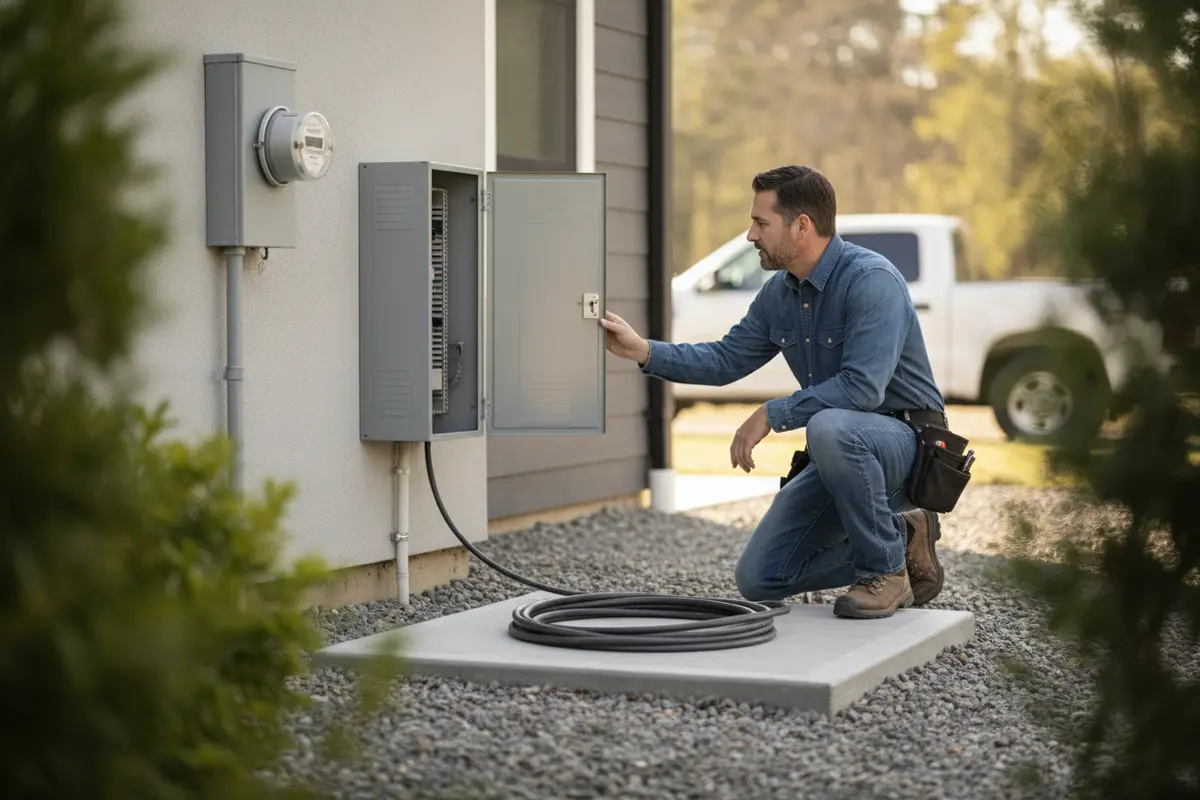
What Information Should You Have Ready Before Calling?
Short answer: Bring your appliance list, equipment label photos, panel details if safely visible, outage priorities, and questions about the installation.
A short preparation checklist can make the first conversation more productive:
- Your home address and the type of backup system you are considering.
- The circuits and appliances you want to keep available during an outage.
- Photos of accessible equipment labels, including HVAC and other motors.
- Any plans for EV charging or other major electrical additions.
- Whether you prefer essential-circuit backup or a broader home backup plan.
- Questions about equipment placement, fuel, transfer equipment, permits, inspections, and maintenance.
You do not need to arrive with a perfect wattage calculation. The goal is to make your priorities and unknowns clear, so a professional can determine what needs measurement or further review. Expert Electric Group provides generator sales, installation, and maintenance and is a Generac Authorized Dealer and Certified Installer, according to the company’s business information. Its electrical service overview and service-area information can help you learn more about available services and locations.
For system-specific planning, you can also review the company’s information on a Generac 22 kW installation. Treat any online article or calculator as background, not a quote or confirmation that a particular unit fits your property. Equipment selection and project scope depend on the home’s loads and site conditions.
Call (747) 999-6090 to discuss generator sizing and installation
Frequently Asked Questions
Can I use a generator sizing calculator as the final answer?
No. A calculator can help organize likely loads, but it cannot verify the equipment data, inspect the panel, or design the transfer and connection method. Have the inputs and installation plan reviewed before selecting or connecting a generator.
Should I size a generator for every appliance in my home?
Not necessarily. Start by deciding which circuits matter during an outage. A focused essential-load plan may differ substantially from a plan intended to support many household systems. Your priorities, equipment, and electrical setup determine what is practical.
Do starting watts matter for air conditioners and pumps?
They can. Motor-driven equipment may need additional power briefly when starting. Check the equipment’s ratings and ask a qualified electrician how startup demand affects the generator and the other loads that may operate at the same time.
Should I include an EV charger in my backup load estimate?
Include it only if charging during an outage is part of your goal. EV charging can add a significant load, so have the charger, home service, generator, and any load-management approach reviewed together.
What is the first step if my calculator result seems too large?
Review whether every listed appliance truly needs to run simultaneously, check units and label entries, and separate essential from optional loads. Do not remove a load that is important to your household just to force a smaller estimate; discuss the priorities with an electrician.
Call (747) 999-6090 to plan your home backup power system
Ready to Plan Backup Power for Your Pasadena Home?
A generator sizing calculator Pasadena residents use can provide a starting point when its assumptions are clear, but a dependable plan combines verified load information with a review of the home’s electrical system and installation needs. Make a list of essential circuits, note uncertain ratings, and ask a licensed professional to help translate the estimate into a safe, property-specific plan.
A generator sizing calculator Pasadena homeowners use can help organize appliance loads before choosing backup power, but the estimate is only as useful as the information entered. If you are planning backup power for your home, call (747) 999-6090 to discuss your loads and installation questions.
Call (747) 999-6090 to discuss your generator plan

What Does a Generator Sizing Calculator Pasadena Homeowners Use Actually Estimate?
Short answer: A calculator estimates generator capacity by adding the electrical demand of selected appliances and accounting for equipment that needs extra power when it starts.
Most sizing tools ask for the appliances or circuits you want to power. They may request running watts, starting watts, or both. Running watts represent the power an appliance needs while operating. Starting watts describe a brief surge some motor-driven equipment draws as it starts. The generator must support the combination that can operate at the same time, including the relevant startup demand.
A calculator is a planning aid, not a final design. Appliance labels may list amps, volts, or several operating ratings rather than a convenient watt figure. Some equipment has variable demand, and the nameplate may not show the brief surge in a way that is easy to interpret. A qualified electrician can review the equipment, panel, transfer method, and intended circuits before you select a system. For a broader look at a permanent backup installation, see the guide to whole-house generator installation requirements.
Generator Sizing Calculator Pasadena: Which Loads Should You Include?
Short answer: Start with the circuits you cannot comfortably do without, then add appliances that may run at the same time and note their startup needs.
Make a room-by-room list, but think in circuits and operating priorities rather than assuming every appliance will run together. A practical first list might include refrigeration, selected lighting, internet equipment, and the outlets or equipment needed for basic household routines. Depending on the home and system, residents may also prioritize a furnace blower, well or sump equipment, or medical devices. Do not assume every generator can support every combination; confirm the specific requirements for critical equipment with a qualified professional.
- Essential continuous loads: Identify equipment you expect to keep operating during an outage, including how long it may run.
- Motor loads: Note air-conditioning equipment, pumps, refrigerators, and other motors. Their starting demand may be higher than their running demand.
- Intermittent loads: Mark appliances that can be switched off while another high-demand device starts or runs.
- Dedicated or sensitive equipment: Record manufacturer information and ask whether the equipment has special connection or power-quality requirements.
- Future plans: Include likely additions, such as a new cooling system or EV charger, before the electrical design is finalized.
For each item, write down its label information, circuit, and whether it must operate at the same time as other loads. If you are unsure how to interpret the label, photograph it rather than guessing. An electrician can help turn that list into a load plan and evaluate whether the electrical service and panel have the capacity and configuration the project requires. Related planning topics include minimum generator load considerations and how generator load is checked.
How Do Running Watts and Starting Surges Change the Result?
Short answer: The running total helps estimate ongoing demand; the largest relevant startup surge can raise the capacity needed at a particular moment.
Adding the running watts of every item gives a first-pass total, but it can miss the short-lived demand when a motor starts. If several motor loads could start at once, the calculator may need to account for their combined demand. Some tools ask you to designate the largest motor or identify starting watts. Others use a simplified estimate. Read the calculator’s instructions so you understand what its result includes.
Do not add every listed starting surge to the running total automatically. Whether those loads start together matters. Conversely, do not simply ignore a surge because it lasts only briefly: the generator must be able to handle the actual starting condition. A home’s control strategy or transfer equipment may help manage which circuits are available, but that approach must be designed for the selected generator and the connected loads.
For example, suppose a household intends to run refrigeration, lights, and a central air-conditioning system during an outage. The lights and refrigerator contribute their operating demand, while the compressor’s startup may be the deciding factor. If the air conditioner is not essential, a smaller backup plan might exclude that circuit; if it is essential, its nameplate and starting characteristics need careful review. This is why one household’s appliance checklist cannot be reused as another home’s sizing answer.
Should HVAC and EV Charging Be Included?
Short answer: Include HVAC or EV charging only if you plan to power it during an outage, and have its electrical demand and operating priority assessed before sizing.
Heating and cooling equipment can be a major part of the load plan. Central air conditioning includes equipment with motors and controls, and its starting behavior can affect generator selection. A ductless system, furnace blower, or other setup has different requirements. Use the equipment’s actual nameplate data and confirm what the generator and transfer arrangement can support. Avoid treating an HVAC label as a simple whole-system watt number unless the information has been verified.
EV charging is a separate planning decision. A Level 2 charger can add a substantial continuous load, so including it may change generator capacity and the home’s electrical design. Many households instead prioritize essential circuits and leave vehicle charging out of the backup plan. If you do want charging during an outage, have an electrician assess the charger, service capacity, generator output, and load management options together. The site’s guide to panel capacity and EV charging explains why panel capacity is part of the conversation.
Ask these questions before entering HVAC or EV loads into a sizing calculator:
- Which exact equipment do I expect to operate, and what does its rating label say?
- Does it have a startup demand or operating mode the calculator does not capture?
- Will it operate at the same time as other large loads?
- Can charging or cooling be postponed or controlled during an outage?
- Does the existing panel or service need an evaluation before the equipment can be connected?
How Can You Build a Useful First-Pass Load Worksheet?
Short answer: Record each intended load, its rating, startup behavior, priority, and likely overlap; then use the worksheet as a discussion tool, not as permission to install equipment.
- Choose an outage scenario. Decide whether you are planning for a few essentials, selected comfort loads, or a broader portion of the home. This choice is more important than adding every appliance by default.
- List the circuits. Use the panel directory as a starting point, but do not open or work inside the panel unless qualified. Note the rooms, equipment, and outlets served by each circuit.
- Collect equipment data. Use accessible labels and manufacturer documentation. Record voltage, amps or watts, and any starting information provided. Do not invent missing values.
- Mark priority and overlap. Identify which loads are essential, which are optional, and which are likely to run at the same time.
- Enter values carefully. Check whether the calculator expects watts, kilowatts, amps, or a specific starting-load value. Mixing units can produce a misleading result.
- Review the result with the installation plan. Confirm generator output, transfer equipment, connection method, location, fuel, panel compatibility, and any required permitting with a licensed professional.
One way to make the worksheet more useful is to record assumptions beside the numbers instead of entering a bare total. For each load, add a note such as “runs continuously,” “cycles on and off,” or “only needed if the weather is hot.” Then identify which appliances could overlap during the same period. For instance, a refrigerator may cycle while someone starts a pump or turns on cooling equipment; the plan should account for plausible overlap rather than relying on a best-case sequence. If the label gives several ratings, copy them as printed and note which one the calculator requests. Keep a separate “unknown” column for missing starting data, uncertain circuit assignments, or equipment that needs professional interpretation. This makes it clear which parts of the estimate are verified and which need follow-up. Do not use assumptions to justify a particular generator size; use them to show the electrician what needs confirmation.
Here is a simple comparison of planning approaches. It is not a generator recommendation: the right capacity depends on verified equipment data and the intended installation.
On smaller screens, swipe horizontally to compare all planning approaches and limitations.
| Essential-circuit estimate | |
|---|---|
| Loads considered | Selected lights, refrigeration, communications, and other chosen essentials |
| Useful for | Defining a focused outage plan |
| Main limitation | May exclude comfort or high-demand equipment |
| Managed-load estimate | |
| Loads considered | Essentials plus selected larger loads operated at different times |
| Useful for | Exploring priorities and load sequencing |
| Main limitation | Requires a workable, professionally reviewed control plan |
| Broad home-load estimate | |
| Loads considered | Many household circuits, potentially including HVAC |
| Useful for | Assessing a more comprehensive backup goal |
| Main limitation | Can lead to a larger, more complex installation; calculator inputs still need verification |
| EV-inclusive estimate | |
| Loads considered | Selected home loads plus planned vehicle charging |
| Useful for | Evaluating whether charging during an outage is a priority |
| Main limitation | Charging demand can materially affect capacity and electrical planning |
Call (747) 999-6090 to review your load list
Keep a copy of the worksheet and identify anything uncertain. A useful estimate clearly labels assumptions instead of disguising them as measured facts. If two appliances might overlap but you do not know their operating schedule, show both possibilities and ask the electrician how to resolve them.
Why Does a Pasadena Home Still Need a Field Assessment?
Short answer: A calculator estimates demand, but it cannot inspect your electrical panel, confirm equipment condition, or determine the complete installation requirements at your property.
Two homes with similar appliance lists may need different solutions because their service equipment, panel space, wiring routes, generator location, and chosen backup circuits differ. A field assessment can connect the load estimate to the real electrical system. It can also identify whether the planned generator output matches the selected transfer equipment and whether the intended loads can be supported safely.
In Pasadena, discuss the project requirements with the contractor and the appropriate local permitting authority before installation. Requirements and site conditions can vary; do not assume a calculator result establishes permit approval or code compliance. The National Fire Protection Association publishes electrical safety and fire-safety resources; consult its official NFPA site for general safety information, and rely on the applicable authorities and licensed professionals for project-specific requirements.
Panel capacity may also matter, particularly if you are adding circuits or combining backup power with other electrical upgrades. A generator project should not be treated as a reason to guess at panel capacity. Review the existing system and ask whether an upgrade is appropriate; these resources cover larger residential panel planning and electrical panel upgrade factors.
For a look at generator connection and installation considerations, review home generator installation options and the guide to generator sizing with 400-amp service. The right choice should follow a site-specific review, not an assumption based only on a service rating or a calculator’s suggested size.
What Information Should You Have Ready Before Calling?
Short answer: Bring your appliance list, equipment label photos, panel details if safely visible, outage priorities, and questions about the installation.
A short preparation checklist can make the first conversation more productive:
- Your home address and the type of backup system you are considering.
- The circuits and appliances you want to keep available during an outage.
- Photos of accessible equipment labels, including HVAC and other motors.
- Any plans for EV charging or other major electrical additions.
- Whether you prefer essential-circuit backup or a broader home backup plan.
- Questions about equipment placement, fuel, transfer equipment, permits, inspections, and maintenance.
You do not need to arrive with a perfect wattage calculation. The goal is to make your priorities and unknowns clear, so a professional can determine what needs measurement or further review. Expert Electric Group provides generator sales, installation, and maintenance and is a Generac Authorized Dealer and Certified Installer, according to the company’s business information. Its electrical service overview and service-area information can help you learn more about available services and locations.
For system-specific planning, you can also review the company’s information on a Generac 22 kW installation. Treat any online article or calculator as background, not a quote or confirmation that a particular unit fits your property. Equipment selection and project scope depend on the home’s loads and site conditions.
Call (747) 999-6090 to discuss generator sizing and installation
Frequently Asked Questions
Can I use a generator sizing calculator as the final answer?
No. A calculator can help organize likely loads, but it cannot verify the equipment data, inspect the panel, or design the transfer and connection method. Have the inputs and installation plan reviewed before selecting or connecting a generator.
Should I size a generator for every appliance in my home?
Not necessarily. Start by deciding which circuits matter during an outage. A focused essential-load plan may differ substantially from a plan intended to support many household systems. Your priorities, equipment, and electrical setup determine what is practical.
Do starting watts matter for air conditioners and pumps?
They can. Motor-driven equipment may need additional power briefly when starting. Check the equipment’s ratings and ask a qualified electrician how startup demand affects the generator and the other loads that may operate at the same time.
Should I include an EV charger in my backup load estimate?
Include it only if charging during an outage is part of your goal. EV charging can add a significant load, so have the charger, home service, generator, and any load-management approach reviewed together.
What is the first step if my calculator result seems too large?
Review whether every listed appliance truly needs to run simultaneously, check units and label entries, and separate essential from optional loads. Do not remove a load that is important to your household just to force a smaller estimate; discuss the priorities with an electrician.
Call (747) 999-6090 to plan your home backup power system
Ready to Plan Backup Power for Your Pasadena Home?
A generator sizing calculator Pasadena residents use can provide a starting point when its assumptions are clear, but a dependable plan combines verified load information with a review of the home’s electrical system and installation needs. Make a list of essential circuits, note uncertain ratings, and ask a licensed professional to help translate the estimate into a safe, property-specific plan.
