
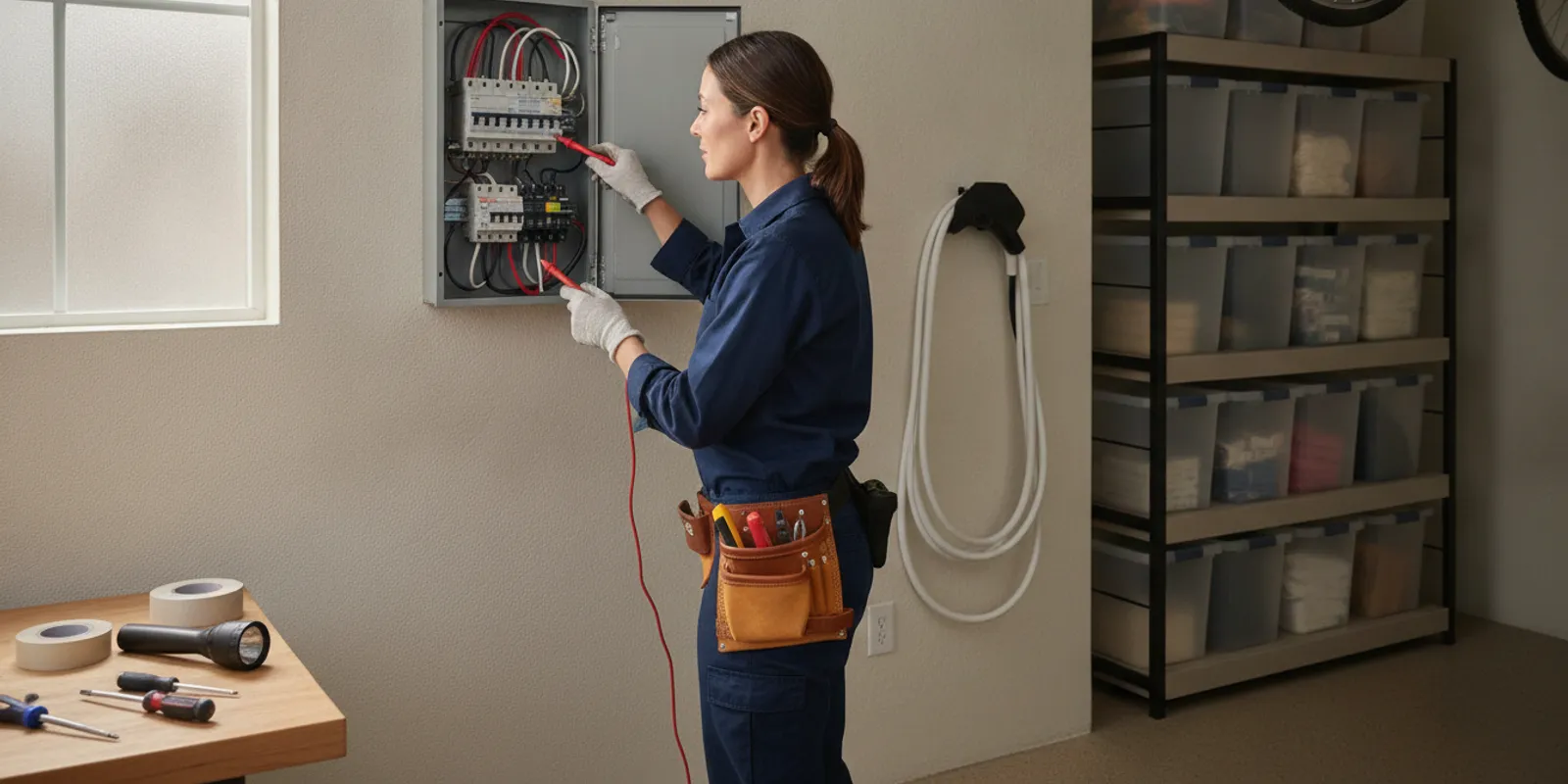
If you are asking, how much does it cost to replace a main breaker panel, the first step is to confirm what actually needs replacement. A failed main breaker, a damaged panel, and an electrical service upgrade are different jobs, so the scope and materials affect the estimate. For a home in Southern California, call Expert Electric Group at (747) 999-6090 to discuss an assessment.
Call (747) 999-6090 to discuss your panel
What does a main breaker panel replacement include?
Short answer: A complete panel replacement usually means replacing the enclosure and its compatible components, while a main-breaker repair may be much narrower. The electrician has to inspect the equipment before deciding which description fits.
The main breaker is the switch that disconnects power to the circuits served by the panel. It is not the same as each branch circuit breaker inside the panel. A homeowner may describe a problem as a “bad main breaker,” but heat damage, corrosion, loose connections, a worn panel, or an issue elsewhere in the electrical service can produce similar symptoms. Do not remove the panel cover or try to test live parts yourself.
A replacement project can involve disconnecting and reconnecting existing branch circuits, installing a compatible panel and breakers, labeling circuits, and coordinating the required inspection. Depending on what the electrician finds, the work may also call for repairs to conductors, grounding or bonding components, the meter equipment, or the service entrance. Those are not automatic parts of every panel replacement; they should be identified as separate scope items in the estimate.
It helps to separate three questions that are often mixed together: Is the main breaker defective? Is the panel enclosure or another component unsafe or unsuitable? Does the home need more service capacity? The answers can lead to different work. A breaker replacement does not automatically change the home’s capacity, and a capacity upgrade may require work beyond installing a new panel. Ask the electrician to explain each recommendation on its own terms.
If you are comparing a repair with a replacement, start with an inspection and written explanation of the defect. The main breaker panel replacement guide can help you understand the larger project, while the electrical panel upgrade service page describes a related service option.
Why can the cost vary from one home to another?
Short answer: The estimate depends on the condition and capacity of the existing equipment, how much of the service must change, access, materials, and local permit and inspection requirements. Two homes with panels that look similar from the outside can require different work.
- Repair or full replacement: Replacing a single approved component is not the same scope as changing the enclosure and reconnecting all circuits. A panel that is damaged or incompatible may need a broader solution.
- Existing service capacity: If the homeowner also needs additional capacity for planned loads, that request can turn a panel-only project into a service upgrade. An electrician should evaluate the existing service and the home’s loads rather than assume a larger panel is necessary.
- Condition of wiring and connections: Deteriorated conductors, heat damage, crowded wiring, or prior alterations may require corrective work. The estimate should explain what was observed and which repairs are essential.
- Location and access: A panel that is difficult to reach, or work that requires coordination around the meter or utility service, can affect labor and scheduling. Wall repairs or relocation are distinct scope items if needed.
- Equipment and materials: Panel type, compatible breakers, conductor requirements, and the materials needed for a code-compliant installation vary with the home’s configuration.
- Permits and inspections: Requirements depend on the work and the local authority having jurisdiction. Ask who will handle the permit and inspection, and whether those items are included in the estimate.
These factors interact. For example, a panel in an accessible location with a clearly identified component fault may call for a narrower job than a panel with heat damage, crowded conductors, and equipment that must be coordinated with a utility. Similarly, two homeowners asking for an upgrade to support new loads may have different existing service arrangements and different wiring conditions. A useful estimate explains the facts specific to the property instead of treating the panel’s amp rating as the only cost driver.
Ask which conditions are confirmed and which are possibilities that can only be checked once the work begins. If concealed damage is possible, the proposal should explain how the electrician will document it, what approval is needed before adding work, and how a revised estimate will be provided. This makes it easier to distinguish an appropriate contingency from an unclear allowance.
These are scope factors, not a guaranteed price list. For a cost discussion, Expert Electric Group’s electrical panel cost guide and main breaker panel cost overview offer related reading. Your project cost still depends on site conditions, the selected equipment, and the work approved after inspection.
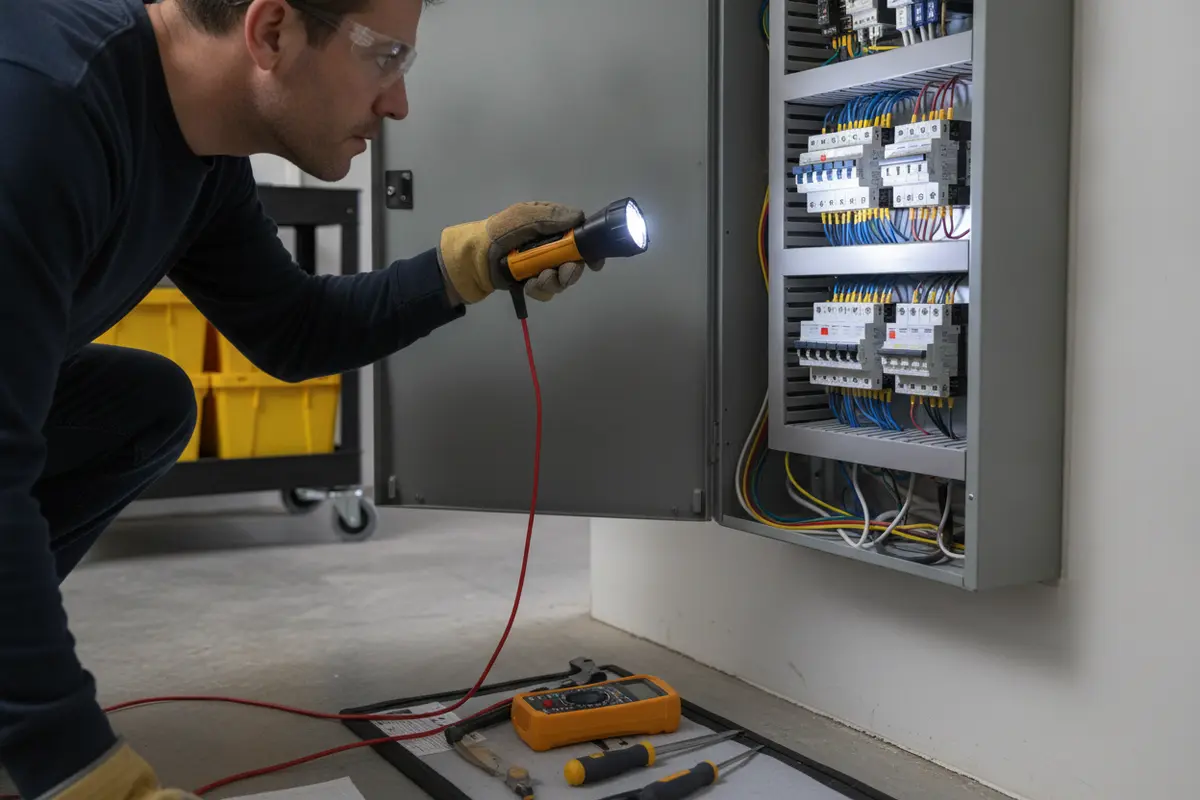
How can you tell whether the breaker or the whole panel is the issue?
Short answer: You cannot safely diagnose the equipment by appearance alone. An electrician needs to examine the panel, connections, and service context to determine whether a repair is appropriate or the panel should be replaced.
Notice and share the symptoms without touching the equipment. Useful details include when the issue began, whether the main breaker trips repeatedly, whether lights dim or flicker, whether there is a burning smell, and whether a particular circuit is affected. Also mention recent electrical work or new large appliances. These observations help guide an assessment, but they do not prove the cause.
Before calling, write down what you noticed and when. For example, note whether a problem happens only when several appliances are running, whether it began after a storm or a recent electrical change, and whether the issue affects one room or the whole home. Do not test the panel by deliberately switching loads on and off. A concise symptom history is useful; opening the equipment or attempting a reset is not required to describe the problem.
A hot or buzzing panel, visible scorching, smoke, or a strong burning odor should be treated as a safety concern. Keep people away and contact a qualified electrician promptly. If there is smoke or fire, leave the area and call emergency services. Do not repeatedly reset a breaker or open the panel to investigate.
Some problems attributed to the main breaker may involve a branch circuit, a loose connection, or the incoming service. A focused electrical service assessment helps establish what is actually wrong before you commit to a full replacement. If you are experiencing loss of power in part of the home, see this guide to power loss in one room; recurring panel buzzing also warrants professional attention.
What should a replacement estimate spell out?
Short answer: A useful estimate identifies the equipment and labor included, any separate repairs, permit handling, utility coordination, and the assumptions that could change the scope. Ask for a written breakdown rather than comparing one total against another without context.
Use this checklist when reviewing proposals:
- Does the proposed work replace only the main breaker, the panel enclosure and breakers, or additional service equipment?
- What condition or finding makes the recommended work necessary?
- What panel and breaker equipment is specified, and how will the electrician confirm compatibility?
- Are circuit reconnections, labeling, grounding or bonding work, and cleanup included?
- Are permit fees and inspection coordination included, or listed separately?
- Does the estimate identify excluded work, such as wall repair, service relocation, or correction of concealed wiring problems?
- What could change the scope after work begins, and how will additional work be approved?
- What is the expected sequence for power interruption, installation, and restoration?
When you receive multiple proposals, compare the written scope line by line. One estimate may cover only a panel and circuit reconnection, while another may include additional service equipment, permit handling, or repairs identified during an inspection. A lower total does not tell you whether the same work is included. Ask each contractor to clarify differences before deciding, and keep the answers with the proposal.
Also ask how the contractor will communicate if field conditions differ from what was visible during the estimate. A clear process identifies who can approve additional work, whether work will pause while you review the change, and how the new cost and schedule will be documented. These questions are especially useful when a panel is crowded or prior alterations are present, since the full condition may not be clear from an exterior view.
The table below helps separate different scopes before you compare estimates. It is a discussion aid, not a substitute for a site-specific evaluation or a promise about price.
| Possible scope | What it may involve | What to confirm |
|---|---|---|
| Main breaker repair or replacement | Work on the main disconnect component when the rest of the equipment is suitable | Why the part is considered faulty, compatibility, and whether related damage must also be repaired |
| Panel replacement | Replacing the panel equipment and reconnecting existing circuits | Panel and breaker specifications, circuit work, permits, inspection, and any excluded repairs |
| Panel replacement with service work | A broader project that may include changes to service equipment or capacity | Which additional components are involved, why they are needed, utility coordination, and approvals |
Call (747) 999-6090 to request a panel assessment
Before hiring, California homeowners can use the Contractors State License Board to review contractor licensing information. Ask the contractor to explain who will perform the work and how permitting and inspection will be handled.
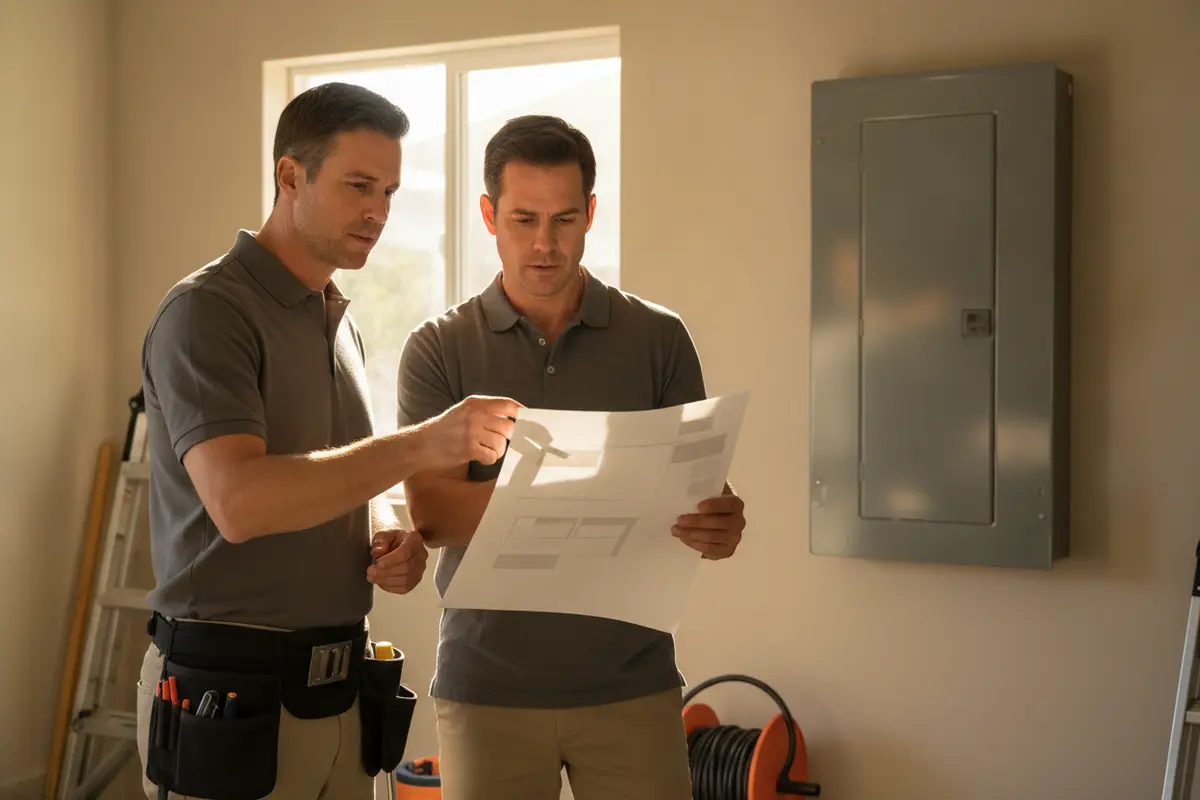
What should Southern California homeowners plan for?
Short answer: Confirm the permitting authority for your address, understand any utility coordination, and plan for a temporary power interruption. Local requirements and the exact service arrangement can vary across Southern California communities.
Do not assume that one city’s process applies to a home in another jurisdiction. Ask the electrician which authority reviews the work and whether the contractor will submit the permit application or needs the homeowner to take any step. Confirm how inspection will be scheduled and whether the work can be energized before the required inspection is complete.
When you discuss the permit, make sure the proposal says who obtains it and whether permit costs are included or shown separately. Ask what inspection stage applies to the job, who will arrange access, and whether any correction identified by the inspector would affect the schedule. The details depend on the authority and scope, so avoid relying on a neighbor’s past project as a substitute for confirmation at your address.
Also ask whether the serving utility must disconnect or reconnect its equipment. Utility-owned equipment and contractor-installed equipment are not necessarily handled by the same party. If a utility appointment or service change is required, clarify who coordinates it and how that affects the project sequence.
Plan for the period without power. Refrigerated food, medical equipment, remote work, alarms, and other essential needs may require advance arrangements. The electrician should explain the anticipated outage and restoration process. If you are already planning a larger capacity change, read about upgrading electrical service from 200 to 400 amps and the 400-amp panel considerations, then ask whether that scale of work actually fits your home’s needs.
Before the scheduled work, clarify what you should do with sensitive equipment and whether anyone needs to be home. If the household relies on electrically powered medical equipment, make arrangements with the relevant care provider before a planned outage. Do not assume backup power will be available unless a suitable system has been evaluated and arranged. A brief plan for food, communication, alarms, and essential devices can make a temporary interruption easier to manage.
When is it time to call an electrician?
Short answer: Call when the main breaker will not stay on, the panel shows signs of heat or damage, or the home has repeated unexplained power problems. Leave panel testing and repairs to a qualified professional.
Do not wait for a complete outage if you notice scorching, a burning odor, unusual heat, or repeated tripping. Do not remove the cover, tighten connections, substitute breakers, or attempt a replacement yourself. Electrical panels can contain energized parts even when a breaker is off.
For non-urgent planning, an electrician can assess the current panel, discuss whether a repair or replacement is appropriate, and explain any upgrade options. Expert Electric Group serves residential and commercial customers across the Greater Los Angeles area and Southern California, including Los Angeles, Ventura, Orange, Riverside, and San Bernardino counties. You can review the company’s Southern California service areas and whole-home rewiring service if the evaluation identifies broader wiring concerns.
For a planned call, have the panel location, the symptom history, and any known recent electrical changes ready to describe. You do not need to estimate the repair yourself. The purpose of the visit is to identify the cause and define a safe scope, then explain what is and is not included before work proceeds.
Call (747) 999-6090 to discuss your electrical panel
Frequently asked questions
Can I replace only the main breaker?
Sometimes a qualified electrician may determine that a main-breaker repair or replacement is appropriate, but it depends on the panel’s condition, equipment compatibility, and the cause of the problem. An inspection is needed to rule out damage to the panel or service components.
Does replacing a main breaker always require a new panel?
No. A breaker issue does not automatically mean the entire panel needs replacement. The decision depends on the specific equipment and condition. Ask the electrician to show or describe the finding that supports the recommended scope.
Will a panel replacement increase my home’s electrical capacity?
Not necessarily. Replacing a panel and increasing the electrical service capacity are related but distinct scopes. If you need capacity for new equipment, have the home’s existing service and loads evaluated before choosing a larger service.
How long will the home be without power?
The outage duration depends on the work, equipment, access, inspection process, and utility coordination. Ask for the expected sequence and plan around essential electrical needs; the electrician can refine the timing after assessing the property.
Call (747) 999-6090 to plan your panel assessment
What is the next step?
There is no reliable one-price answer without knowing whether the job is a breaker repair, a panel replacement, or a broader service project. Request an itemized assessment, compare the work included, and confirm permitting and inspection responsibilities before approving the job. For a Southern California home, call Expert Electric Group at (747) 999-6090 to discuss the panel and arrange the next step.
