
Malibu generator regulations can affect where equipment goes, how it connects to your home, and which approvals are needed. Before you buy a unit, confirm the rules for your parcel and equipment rather than relying on a neighbor’s installation or a generic checklist. For help planning the electrical work, call Expert Electric Group at (747) 999-6090.
Discuss your generator installation. Call (747) 999-6090
What do Malibu generator regulations cover first?
Short answer: Confirm the approval path, site constraints, fuel plan, and electrical scope before selecting a generator. Requirements depend on the location, equipment, and installation details.
“Malibu” does not automatically identify every agency or rule that applies to a property. First establish the parcel’s jurisdiction and whether the proposal is permanent or temporary. Then ask which planning, building, electrical, fire-safety, and utility reviews apply. The City of Malibu publishes a generator permit form that is a useful starting point, but the current form and instructions should be checked for the specific project. The form’s listed criteria are not a substitute for a site-specific determination.
Make a brief project file before calling an agency or contractor. Include the property address, generator type and model if known, fuel source, intended location, approximate distance to nearby openings and property lines, and the loads you want to support. Note whether the system is a permanently installed standby generator or a portable unit. Those differences can change the applicable safety and installation questions.
For a broader overview of the work involved, review the company’s guide to requirements for installing a whole-house generator. Homeowners can also confirm that the proposed contractor serves their area through the Southern California service-area page.
Where can a generator be placed?
Short answer: Placement must account for the equipment instructions, property boundaries, openings, access, ventilation, noise, and any local approval conditions. Do not assume one clearance works for every generator or site.
For permanent equipment, location is a design decision, not an afterthought. A generator needs a suitable, stable place outdoors, with the clearances and conditions required by its manufacturer and the reviewing authorities. It must also be positioned so exhaust does not create a hazard, service personnel can reach it, and routine access to doors, paths, meters, and other equipment is not blocked. Sloped ground, retaining walls, narrow side yards, landscaping, and nearby windows can all affect what is feasible.
The City of Malibu’s streamlined form lists a minimum three-foot distance from property lines and level terrain among its generator criteria. Treat that as a prompt to verify the current requirement and how it applies to your parcel and model, not as permission to install any generator three feet from a boundary. Other clearances, equipment instructions, permit conditions, and site-specific constraints may require a different layout. Keep written confirmation with the permit documents.
Before settling on a spot, walk the proposed route from the street or service access to the equipment. Check whether the unit can be delivered and serviced without removing permanent structures. Consider nearby bedrooms, outdoor living areas, neighboring homes, and the location of intake and exhaust. Ask the installer to identify the exact manufacturer clearances on the plan, not just describe the location as “far enough away.”
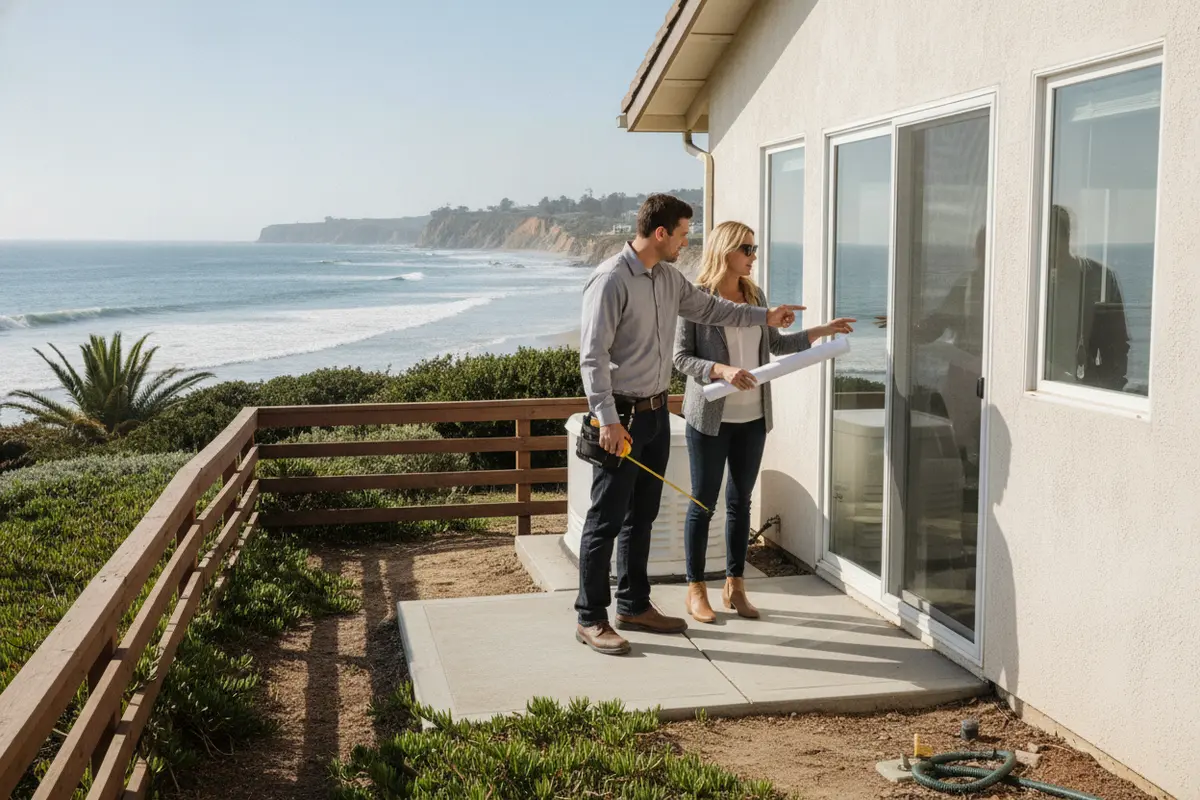
Placement also interacts with electrical equipment. A generator may need to be near the transfer equipment or a practical route for wiring, but electrical convenience does not override safe clearances or local review. If service capacity or panel condition may affect the design, an electrician can assess whether the existing equipment is suitable and whether a panel upgrade or other electrical work should be considered.
Which approvals do Malibu generator regulations require?
Short answer: Ask the local authority having jurisdiction which planning and building permits, electrical permits, inspections, and supporting documents your project needs before work begins.
Approval can involve more than one review. A local planning review may address the proposed location or property-specific conditions. Building and electrical review may cover the equipment, wiring, transfer arrangement, and code compliance. Fuel work may require a separate review by the relevant authority or utility. The actual process depends on the proposal and current local rules, so confirm it directly rather than treating this list as a complete permit determination.
When contacting the City or other applicable office, ask these practical questions:
- Is the proposed location allowed for this parcel, and is planning approval required?
- Which permit applications, plans, manufacturer specifications, or site drawings must be submitted?
- Are there special requirements for permanent versus temporary equipment?
- Which inspections are required, and at what stages must they occur?
- Does the fuel connection require review by another department or utility?
- Are there conditions related to noise, operating hours, screening, or fire access?
The City’s generator permit materials emphasize review of code compliance, installation method, and placement. A separate government generator submittal guide likewise describes review of code compliance, installation method, and placement; use it as general context, not as Malibu’s rule. Check the latest official documents and submit the actual proposed equipment details. Read the Fontana residential standby-generator submittal guide. A permit form or a neighbor’s prior approval does not necessarily establish the right answer for another property. For permitting and installation planning, see the electrical service overview and the guide to hard-wiring a generator to a house.
Keep copies of the approved plans, permit, inspection results, and equipment information with the home’s electrical records. If a reviewer asks for revisions, have the installer update the plans before moving equipment or changing wiring. A change in model, fuel type, location, or connection method can affect what was reviewed.
How should you plan generator fuel?
Short answer: Choose a fuel arrangement only after confirming availability, storage and connection rules, required clearances, and the generator manufacturer’s specifications.
Generators may use different fuel arrangements, and they do not all have the same installation needs. A permanently connected fuel source involves different planning than a portable unit supplied by a container. Confirm the exact fuel type for the chosen model and ask the appropriate local officials and qualified fuel professional what applies at your property. Do not assume a tank, cylinder, gas line, or fuel connection can be placed wherever there is room.
For a permanently installed system, coordinate the generator selection with the fuel supply and the electrical plan. The proposed load, generator capacity, and fuel arrangement must work together. A generator that appears adequate on a product label may not support every appliance or starting load you expect. Use a load assessment rather than guessing; the company’s guide on checking generator load can help you prepare questions about what should be backed up.
For portable generators, fuel handling and operation are separate safety issues. Miami-Dade County’s generator guidance says portable units should be stored indoors without fuel when not in use and operated outdoors at least 10 feet from windows and doors. Those are safety recommendations from Miami-Dade, not Malibu permit rules; check current local instructions and the manufacturer’s manual for your equipment. Never run a fuel-burning generator indoors or in an enclosed area.
List the likely backed-up loads before choosing a fuel configuration: refrigeration, selected lighting, communications, heating or cooling equipment, and any medical or work needs. A licensed installer can explain what the selected system can support and which loads need to be left off. See the overview on minimum generator load for another way to frame that discussion.
What electrical interconnection and transfer equipment is needed?
Short answer: A generator must be connected using equipment designed to separate the home from utility power when required, with sizing and installation reviewed for the specific system.
A standby generator is not simply plugged into a home circuit. Its connection needs to manage which source supplies the selected circuits and prevent unsafe backfeed to the utility. The transfer equipment, generator output, service equipment, conductors, grounding and bonding details, and backed-up loads must be coordinated. The appropriate design depends on the home and the generator.
Before signing off on the design, ask the electrician to explain which circuits will receive backup, how the transfer equipment operates, whether the existing electrical panel can accommodate the plan, and what inspections are expected. If the home has a large service or several high-demand appliances, ask for a load calculation and a clear explanation of any loads that should not run together. Do not rely on a generator’s advertised capacity alone.
These planning questions are useful if a future EV charger or other major load is part of the household’s plans. A guide to generator sizing for a 400-amp service covers one specific service scenario, while the article on panel capacity and EV charging can help identify related electrical planning questions. Neither replaces a site assessment or load calculation.
Use a licensed electrical contractor for the interconnection and required electrical work. Expert Electric Group is a licensed and insured electrical contractor and a Generac Authorized Dealer and Certified Installer, according to its company information. Its recent project gallery offers examples of electrical work, but your system still needs its own design, review, and inspection.
How do noise and fire safety affect the plan?
Short answer: Verify the applicable local noise and fire-safety conditions before choosing a site; do not rely on a universal distance or decibel limit.
Generator noise can be heard indoors and by nearby residents, especially at night or during extended outages. Ask local officials whether noise limits, operating-hour restrictions, screening rules, or other conditions apply to your address. Then compare the manufacturer’s sound information for the actual model and operating conditions. A screen or enclosure may affect airflow, service access, and the manufacturer’s required clearances, so have the installer review any proposed noise treatment.
Fire safety also depends on the equipment, fuel, location, and surrounding conditions. Keep the generator and fuel arrangement away from combustible materials as required by the manufacturer and approving authorities. Do not block access for inspection or emergency response, and do not store fuel in a way that conflicts with applicable requirements. Ask the relevant fire authority whether additional property-specific restrictions apply. Do not infer that a setback on one permit form resolves every fire-safety issue.
For portable equipment, maintain the outdoor operating distance and other precautions in current official guidance and the manufacturer’s instructions. Miami-Dade County, for example, advises keeping a portable generator at least 10 feet from doors and windows while running. This is a safety reference, not a Malibu regulation. Check carbon-monoxide alarm operation in the home and follow the generator maker’s warnings; never route exhaust toward an occupied space.
Homeowners in areas with changing fire conditions should ask their local authority and insurer whether site access, vegetation management, or fuel storage restrictions apply. Do not assume a generator is exempt from property-specific fire requirements simply because it is intended for emergencies.
What should you compare before buying equipment?
Short answer: Compare the approval path, installation requirements, fuel plan, and backed-up loads, not just generator output or purchase price.
Use this table to organize the questions for your local review and contractor. It does not establish that a specific option is allowed at a particular address.
| Planning item | What to verify | What to have ready |
|---|---|---|
| Location | Applicable setbacks, stable surface, access, clearances, and distance from openings | Site sketch, property constraints, proposed model instructions |
| Fuel | Allowed fuel type, supply or storage rules, and any separate review | Model fuel specification and proposed connection or storage plan |
| Electrical connection | Transfer equipment, service and panel compatibility, selected loads, inspections | Panel details, load list, generator output and installer design |
| Noise and fire safety | Local noise conditions, fire access, combustible clearance, and operating guidance | Equipment sound data, site photos, fuel and placement details |
| Approvals | Planning, building, electrical, fuel, and inspection steps that apply | Parcel address, plans, equipment cut sheets, permit correspondence |
Talk through generator planning. Call (747) 999-6090
Ask for the contractor’s proposed scope in writing. It should identify the generator model or selection criteria, where the equipment will go, which circuits will be supported, the transfer method, fuel coordination, permit responsibilities, and the expected inspection sequence. If the plan changes after approval, ask whether revised documents or additional review are needed before installation continues.
What are common planning mistakes to avoid?
Short answer: Avoid buying first, guessing at clearances, or treating a generic online rule as approval for your specific property.
- Buying before confirming placement. The selected model may not fit the available space while meeting required clearances and service access.
- Assuming every generator follows one setback. Requirements can depend on the parcel, model, and authority review. Check the current Malibu materials and ask how they apply.
- Ignoring fuel coordination. Confirm supply, connection, storage, and any separate approvals before finalizing equipment.
- Planning only for running watts. Identify starting loads and the circuits that matter during an outage, then have the design checked.
- Skipping transfer equipment and permitting. Never improvise a home connection. Have the system designed and inspected by qualified professionals.
- Assuming quiet operation or an enclosure solves noise. Check local rules and preserve manufacturer-required ventilation and access.
- Mixing portable and standby guidance. Operating procedures and installation requirements differ. Follow the instructions for the exact equipment type.
A careful review before purchase can help prevent a costly change in location, equipment, wiring, or fuel plan. If a generator is already installed and you have a concern about its connection or operation, avoid opening equipment or making wiring changes yourself. Arrange an assessment by a qualified electrician. For urgent electrical hazards, use the company’s information on 24-hour emergency electrical service.
Frequently asked questions
Does every Malibu generator installation need a permit?
Do not assume the answer is the same for every equipment type or property. Check with the authority having jurisdiction about the proposed permanent or temporary installation, required applications, and inspections before work begins.
Is a three-foot property-line distance enough?
The City of Malibu’s streamlined generator form lists a three-foot minimum from property lines among its criteria. That does not mean three feet is sufficient for every model or site. Confirm the current rule, manufacturer clearances, and any additional conditions with the reviewing authority.
Can I run a portable generator in a garage if the door is open?
No. A fuel-burning portable generator should be operated outdoors, not in a garage or other enclosed area. Follow the manufacturer’s manual and current safety guidance, including the required distance from doors and windows.
Who decides whether my generator location is acceptable?
The applicable local planning, building, electrical, or fire authority can tell you which reviews apply. A licensed installer can help prepare a site plan and coordinate technical details, but the relevant authority makes its own approval decisions.
Should I choose a generator before asking about permits?
It is usually more practical to check site constraints and approval requirements before purchasing. If you have a model in mind, share its specifications with the officials and installer so they can assess the actual equipment and proposed location.
Plan your generator installation. Call (747) 999-6090
Generator planning is site-specific, so confirm current Malibu requirements with the appropriate local offices and use a qualified contractor for the electrical and fuel coordination. A careful review before buying helps you make a safer, better-informed backup-power decision.
