

If you are looking for a manual transfer switch wiring diagram pdf, start with the safety question before the wiring question: does the document match your exact switch, generator, service arrangement, and local requirements? A PDF can help you understand the intended flow of power, but it is not a universal installation plan. Manual transfer switches connect utility power, generator power, and selected loads through equipment that must prevent both sources from energizing the same conductors. This guide explains what to look for, what a diagram cannot tell you, and when a licensed electrician should take over.
What does a manual transfer switch wiring diagram PDF show?
Short answer: A useful diagram identifies the utility source, generator source, transfer mechanism, protected loads, neutral arrangement, equipment grounding path, overcurrent protection, and the terminals or lugs where each connection belongs.
A wiring diagram is a map of the equipment design. It is not a picture of your particular panel, and it does not replace the installation manual supplied for the exact model. Start by checking the model number, voltage, phase, ampacity, enclosure rating, and whether the switch is listed for the way you intend to use it. A diagram for a small portable-generator switch may not apply to a service-rated switch, a three-phase system, or a permanently installed standby generator.
Most manual transfer switch diagrams contain several recognizable zones:
- Utility or normal source: the conductors entering from the utility side or main service equipment.
- Generator or emergency source: the conductors arriving from a generator connection, inlet box, or generator disconnect.
- Load terminals: the protected circuits or panelboard that receive power from one selected source.
- Transfer mechanism: the switch, mechanically interlocked breakers, or other listed equipment that prevents an unsafe source-to-source connection.
- Neutral and grounding conductors: the conductors and bars shown for the specific equipment configuration.
- Overcurrent protection and ratings: breaker, conductor, and equipment limits that must be coordinated with the installation.
Lines and symbols are only meaningful when you also read the legend, notes, terminal labels, and revision information. A manufacturer may show more than one approved configuration in the same PDF. The correct page depends on the switch model, whether the neutral is switched, the generator’s bonding arrangement, and whether the transfer equipment is service-rated.
How should you read a manual transfer switch diagram safely?
Short answer: Read the document as a design and verification aid: confirm the source and load paths, compare every label with the equipment, then stop before any panel work unless a qualified electrician is performing the installation.
Read the PDF in a fixed order instead of jumping straight to a connection drawing. This makes it easier to detect when a diagram is for a different model or installation method.
- Identify the exact equipment. Match the model and catalog number on the enclosure to the manual cover. Check the revision date and any model-specific supplement.
- Read the ratings first. Confirm voltage, phase, maximum current, short-circuit rating, conductor requirements, and enclosure location. A drawing is not permission to exceed any rating.
- Trace each power source. Follow the utility path and generator path separately until each reaches the transfer mechanism. The two source paths must not bypass the switching or interlocking equipment.
- Trace the load side. Identify which circuits the switch is designed to supply. A selected-load switch is not automatically a whole-home system, and a whole-home switch may require different service equipment.
- Locate neutral and equipment grounding details. Do not infer these connections from wire color alone. Follow the manufacturer’s specific diagram and have the configuration checked by a professional.
- Read the installation notes and testing procedure. Warnings, torque values, bonding instructions, enclosure requirements, and inspection steps often appear outside the main drawing.
Use the PDF to ask better questions, not to improvise connections. If the diagram and the installed equipment disagree, stop. Photographing the label and asking a licensed electrician or the manufacturer for the correct manual is safer than adapting a similar-looking diagram.
Why is backfeeding the main risk?
Short answer: Backfeeding can energize utility conductors from a generator, exposing lineworkers and neighbors to unexpected voltage while also risking fire, equipment damage, and electric shock.
During an outage, a portable generator can seem like a quick way to restore power. Connecting it to a building through an improvised cord, an unapproved panel connection, or a bypassed breaker can send generator power backward into utility wiring. The danger remains even when the neighborhood appears to be without power because utility crews may be working on lines they believe are de-energized.
The OSHA portable generator safety fact sheet says not to attach a generator directly to a structure unless a qualified electrician has properly installed a transfer switch. OSHA also notes that a building connection without a properly installed transfer switch can energize wiring over great distances. The OSHA grounding requirements fact sheet distinguishes grounding from bonding and emphasizes that transfer equipment must be approved and installed according to the manufacturer’s instructions.
A listed manual transfer switch creates a controlled changeover between sources. Depending on the equipment, this may use mechanically interlocked breakers or another open-transition mechanism. The important safety outcome is that the utility and generator sources cannot power the same load at the same time. Read the switch’s position indicators and operating instructions, but do not defeat an interlock or use a homemade jumper.
For a broader explanation of the hazard and safe alternatives, see Expert Electric Group’s guide to generator backfeeding and approved connections. The existing guide covers the general danger; this article focuses on how to interpret a manual-switch PDF without turning it into a DIY wiring recipe.
What do grounding and bonding details mean?
Short answer: Grounding and bonding are related but different safety functions, and the correct arrangement depends on the generator, transfer switch, service equipment, neutral switching, and applicable code requirements.
Many diagram searches fail because the reader treats the green or bare conductor as the entire grounding answer. Grounding provides a connection to earth or a grounding electrode system when required. Bonding connects conductive metal parts and establishes a low-impedance fault-current path. The neutral is a grounded circuit conductor, but it is not interchangeable with the equipment grounding conductor in every part of the system.
Portable generators can have different neutral arrangements. Some have a bonded neutral, while others are configured differently. A transfer switch may switch the neutral or leave it unswitched depending on the system design. A generator connected to a structure may have grounding electrode requirements that do not apply when the generator only supplies cord-and-plug-connected equipment. Those choices must be resolved from the generator manual, transfer-switch manual, service arrangement, and local authority requirements.
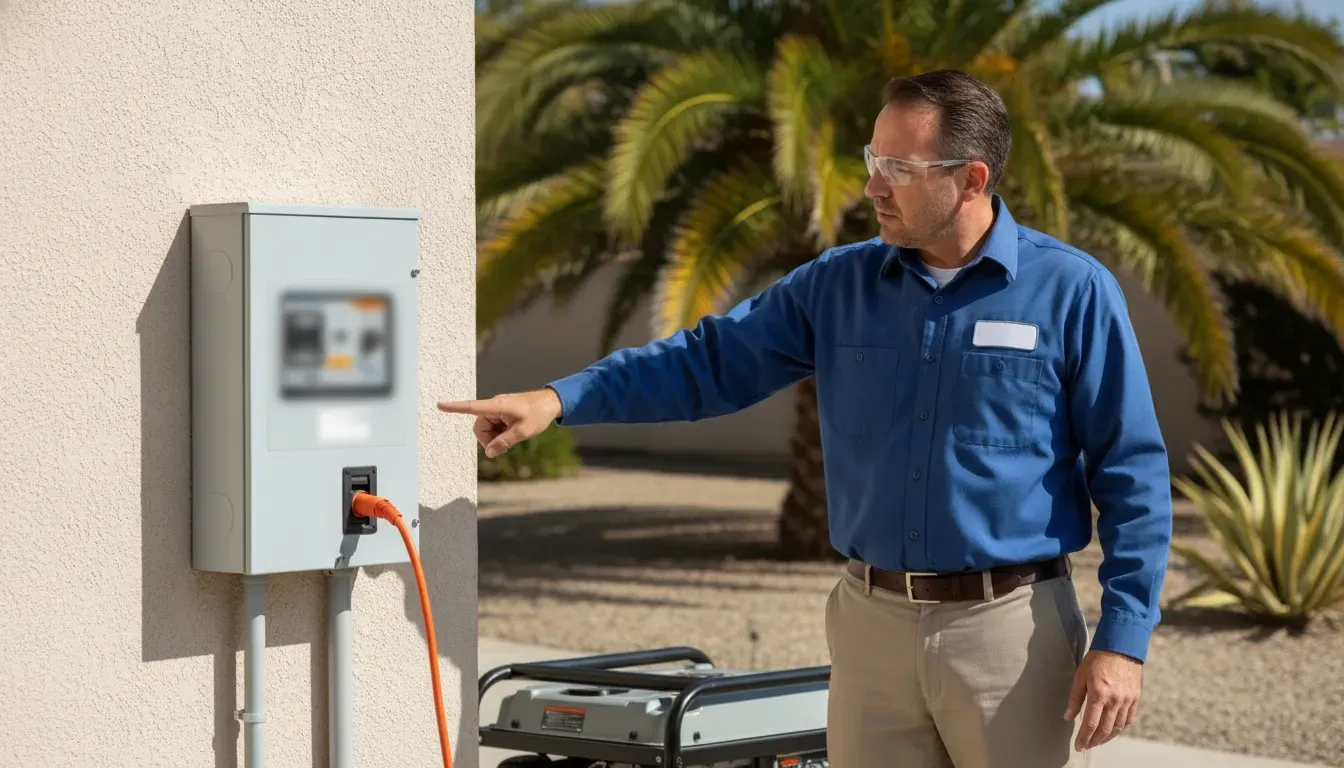
OSHA explains that the frame, neutral, bonding, and grounding electrode system each have specific roles. It also advises using the manufacturer’s instructions and a qualified electrician for a structure connection. Do not add a ground rod, remove a neutral bond, or move a conductor based only on a generic online diagram. The wrong correction can create objectionable current, nuisance tripping, an ineffective fault path, or an unsafe energized enclosure.
Expert Electric Group can review generator connections as part of a whole-home backup system installation or a transfer-switch project. A professional can confirm whether the proposed equipment matches the service and whether the grounding and bonding details are consistent with the approved design.
Call (747) 999-6090 to discuss a safe whole-home backup connection before opening the panel.
Is a wiring diagram PDF a DIY installation plan?
Short answer: No. A PDF can explain the manufacturer’s intended configuration, but it cannot account for the existing service, concealed wiring, local permits, utility requirements, inspection conditions, or site-specific hazards.
Transfer-switch work often involves service equipment, energized conductors, large fault currents, and connections that can remain live even after a branch breaker is turned off. The cover may be removed only under the procedures and safety controls appropriate to the equipment. A homeowner may be able to read the PDF and make a list of questions, but reading it is not the same as installing the system.
A licensed electrician should determine whether the proposed switch is compatible with the generator and building. The evaluation may include:
- Available service capacity and the generator’s continuous and starting loads.
- Whether the system will supply selected circuits or the whole home.
- Conductor sizing, raceway routing, disconnects, and overcurrent protection.
- Neutral switching, generator bonding, grounding electrodes, and equipment bonding.
- Outdoor placement, working clearances, weather exposure, fuel considerations, and carbon monoxide safety.
- Permit, utility, fire, and inspection requirements that apply in the local jurisdiction.
California projects may require coordination with the local authority having jurisdiction. The City of Chino Hills transfer-switch guidance is one example of a local government page that directs property owners toward a properly installed generator connection rather than an improvised backfeed. Requirements vary by jurisdiction, so use local guidance as a starting point and confirm the exact requirements for the property.
For project planning, see Expert Electric Group’s code compliance inspection and correction service. For the installation itself, the transfer switch installation service is the appropriate next step. The goal is a system that can be inspected, operated, and maintained safely, not merely a set of conductors that resembles an internet diagram.
What should you verify before trusting a PDF?
Short answer: Verify the source, model, revision, ratings, configuration, and local applicability. If any of those are uncertain, treat the PDF as background information and request a professional review.
Not every PDF in a search result is authoritative. Some are copies with missing pages, outdated revisions, or diagrams separated from the warnings that make them understandable. Before using one as a reference, check these points:
- Manufacturer or authority source: Prefer the equipment manufacturer, a government agency, or a recognized code and safety organization.
- Exact model match: Confirm that the manual names the switch installed or being considered, not just a similar product family.
- Complete document: Make sure safety warnings, installation notes, terminal diagrams, and testing instructions are included.
- Current revision: Compare the revision or publication date with the equipment and any manufacturer updates.
- System type: Confirm whether the drawing is for single-phase or three-phase service, portable or permanently installed generation, and selected-load or whole-home backup.
- Neutral and grounding arrangement: Find the exact notes for the generator and service configuration instead of relying on color conventions.
- Authority having jurisdiction: Confirm permit and inspection requirements before work begins.
For example, the official Generac manual transfer switch owner’s manual includes typical diagrams and manufacturer warnings, but it also states that the illustrations are not specific installation plans and that applicable laws, codes, and standards take precedence. That is the right way to use a manufacturer’s PDF: understand the equipment, then have the exact installation designed and verified for the property.
How is a manual switch different from an automatic transfer switch?
Short answer: A manual transfer switch requires an operator to start or connect the generator and change the source position, while an automatic transfer switch senses a utility outage and changes sources through its controls.
Both systems must prevent unsafe parallel connection between the utility and generator. The difference is how the transfer decision is initiated and controlled. With a manual system, the owner follows the manufacturer’s operating sequence during an outage and returns the system to utility power when normal service is restored. With an automatic system, control wiring and switching equipment manage the changeover after the system detects the required conditions.
This article does not replace the separate guidance for an automatic system. Expert Electric Group’s Generac home generator installation and maintenance service can help homeowners evaluate a complete standby solution. If your goal is to protect only selected circuits, ask about a load-specific backup setup. If your goal is broader continuity, compare the transfer equipment with the generator, panel, and whole-home backup design as one system.
Frequently Asked Questions
Short answer: A manual transfer switch PDF is useful for understanding a listed device, but exact installation and grounding decisions must follow the model manual, the system design, and a qualified electrician’s review.
Can I use any manual transfer switch wiring diagram PDF?
No. Use the current manual for the exact switch model and configuration. A similar-looking PDF may show different ratings, terminal locations, neutral switching, bonding, or approved use. If the model cannot be confirmed, do not use the diagram for installation decisions.
Does a transfer switch eliminate backfeeding risk?
A properly selected, listed, and installed transfer switch is designed to isolate the utility and generator sources. It does not make an incorrectly wired, damaged, modified, or bypassed system safe. Never defeat an interlock or connect a generator through a receptacle to energize a building panel.
Do I need a ground rod for a generator connected to my home?
The answer depends on how the generator and transfer equipment are configured and on applicable requirements. OSHA explains that grounding and bonding depend on the use and connection method. A qualified electrician should review the generator manual, transfer-switch diagram, neutral arrangement, and local requirements instead of relying on a generic rule.
Can I wire a manual transfer switch if I understand the PDF?
Understanding a diagram does not substitute for training, required safety procedures, code knowledge, permits, or inspection. Because the work can involve hazardous service conductors and unexpected sources of power, have a licensed electrician perform or directly supervise the installation as allowed by local rules.
What should I do if my diagram does not match my equipment?
Stop and do not adapt the drawing. Record the model and serial information, locate the current manufacturer manual, and ask a qualified electrician or the manufacturer to confirm the correct configuration. A mismatch is a reason to pause, not a reason to guess.
