
The best home standby generator for a Southern California home is the system that fits your household’s backup priorities, electrical setup, fuel supply, and installation site. If you are asking what is the best home standby generator, start with the loads you need—not a brand name or the largest rating. Call Expert Electric Group at (747) 999-6090 to discuss an assessment.
Call (747) 999-6090 to plan your generator assessment
What makes a home standby generator the right choice?
Short answer: Choose a system only after an electrician matches its capacity, transfer equipment, fuel arrangement, and location to the loads you want to support.
A standby generator is installed at a property and connected through transfer equipment so selected circuits—or a broader portion of the home—can receive backup power. The generator is only one part of the system. Its controls, transfer arrangement, fuel connection, site, and intended use all affect what happens during an outage.
Start by describing what an outage means in your household. One family may prioritize refrigeration, lighting, communications, and a few outlets. Another may need heating or cooling, a well pump, medical equipment, or other essential systems. Those priorities change the system design. A recommendation should explain which loads it supports, what it leaves out, and whether you may need to manage when certain appliances run.
It can help to write down what you mean by “whole house.” Do you mean every circuit can receive power, or do you mean the household can use its usual major appliances at the same time? Those are different expectations. Ask the installer to put the proposed coverage and operating limits in writing. Expert Electric Group is a Generac Authorized Dealer and Certified Installer, but a useful comparison still focuses on the complete proposal rather than a product label. See its electrical services for an overview of its work.
Which home loads should you include in the plan?
Short answer: Rank the loads by importance, then have a qualified electrician assess their electrical demand, startup behavior, and likely simultaneous use.
Walk through the home and sort equipment into three groups. This first pass does not size the generator; it gives the electrician a clear picture of how you expect to use backup power.
- Essential: refrigerator or freezer, selected lighting, communications equipment, and outlets for necessary devices.
- Important: heating or cooling, garage access, cooking equipment, or a sump or well pump where applicable.
- Optional: loads that can wait during an outage, such as a second major appliance, workshop equipment, or laundry.
For each item, note its room or circuit if known, whether it runs continuously or intermittently, and whether it can be paused. Do not open an electrical panel or remove covers to identify circuits. An electrician can verify circuit assignments and assess the electrical characteristics needed for the design. The company’s generator load guide can help you prepare questions about expected use.
Large motors and compressors deserve special attention. Air-conditioning equipment and pumps can draw more power while starting than while running. If the cooling system is a priority, identify the equipment and ask how the proposed system handles its starting demand. If a pump and cooling system might operate together, ask whether the generator can support both under the expected conditions or whether load management is part of the proposal.
Load management can prioritize circuits or prevent selected loads from operating at the same time. Ask which loads are controlled, what happens automatically, and whether someone in the household must change appliance use. A practical answer might say that refrigeration and lighting remain available while a large optional load is delayed when demand is high. Ask for the specific plan, not a vague assurance that the generator can “run everything.”
How do fuel and generator type affect the decision?
Short answer: Compare the fuel source and complete operating arrangement, and confirm that the proposed equipment and property can support them.
Standby models commonly use natural gas or liquid propane, depending on the model and site. Natural gas may be practical where a suitable utility connection exists; propane may be considered where that connection is unavailable or the design calls for stored fuel. Neither choice should be assumed suitable before the contractor checks the equipment requirements, property conditions, local rules, and fuel supply.
An existing gas connection does not automatically mean it can support a generator. Ask how the fuel supply will be assessed for the specific equipment and whether any related work is included in the estimate. If propane is proposed, discuss storage and replenishment planning as part of the design. Consider access for service and the practical arrangements for keeping the system ready, not simply which fuel sounds more convenient.
Ask for the exact model and its stated output under conditions relevant to the proposal. Then ask how that output relates to your ranked loads and what routine care the manufacturer recommends. Compare equivalent system packages: generator, transfer equipment, electrical work, fuel work, permits, inspections, startup, and exclusions. The company’s home generator installation and maintenance information can provide a starting point for installation questions.
Consider a household that values cooling during an outage but can postpone laundry and use a smaller number of kitchen appliances. Its plan should identify the cooling equipment, determine what may operate alongside it, and state how optional loads are handled. A household that wants several large appliances available at once needs that expectation assessed explicitly. A generator model cannot be chosen responsibly from a general household description alone.
What should you compare in generator proposals?
Short answer: Compare load assumptions, equipment, scope, approvals, and commissioning—not just the brand or the quoted total.
| Planning item | What to compare | Questions to ask |
|---|---|---|
| Capacity and loads | Selected circuits, simultaneous use, starting demand, and load management | Which loads are included, and what happens when a large motor starts? |
| Fuel | Fuel type, supply capacity, connection or storage work, and assumptions | Has the arrangement been checked for this equipment? |
| Transfer equipment | Transfer switch or other approved arrangement and circuit coverage | Which circuits receive power, and how does transfer work? |
| Site and approvals | Location, clearances, access, permits, and inspection responsibilities | Who confirms local requirements and coordinates approvals? |
| Completion and care | Startup, testing, homeowner orientation, and maintenance guidance | What is included at handover, and what care is recommended? |
A project’s typical range depends on scope and materials, including generator size, transfer equipment, electrical service needs, fuel work, site preparation, and local approval requirements. Request a written estimate that states its assumptions and exclusions. If proposals differ, ask each contractor to clarify the scope line by line before comparing totals. A lower figure may reflect a different equipment package or omitted work rather than a like-for-like alternative.
Ask whether the estimate includes site preparation, fuel work, required electrical changes, permit coordination, inspections, system startup, and homeowner orientation. Check whether it names work that is excluded or conditional on what an inspection reveals. When a proposal says “as needed,” ask which findings would trigger extra work and how those changes would be approved and documented.
Electrical service capacity is one part of the assessment, not a substitute for load planning. If a proposal raises questions about the home’s existing equipment, review the company’s service capacity planning guide and discuss whether the concern applies to your project. Its generator sizing guide for larger electrical services offers a related point of reference, but your own loads and installation conditions still need review.
Where should a standby generator be installed?
Short answer: Choose a location only after checking manufacturer instructions, applicable rules, exhaust and ventilation, property layout, fuel and electrical routes, and service access.
Placement is not simply a matter of finding an empty patch of yard. The installer needs to consider required clearances, ventilation and exhaust, nearby openings, property boundaries, noise, fuel and electrical routes, and access for future service. Local authorities may have requirements that depend on jurisdiction and site. Carbon monoxide is a serious generator safety concern; consult the U.S. Consumer Product Safety Commission’s consumer safety information and follow equipment instructions and local requirements.
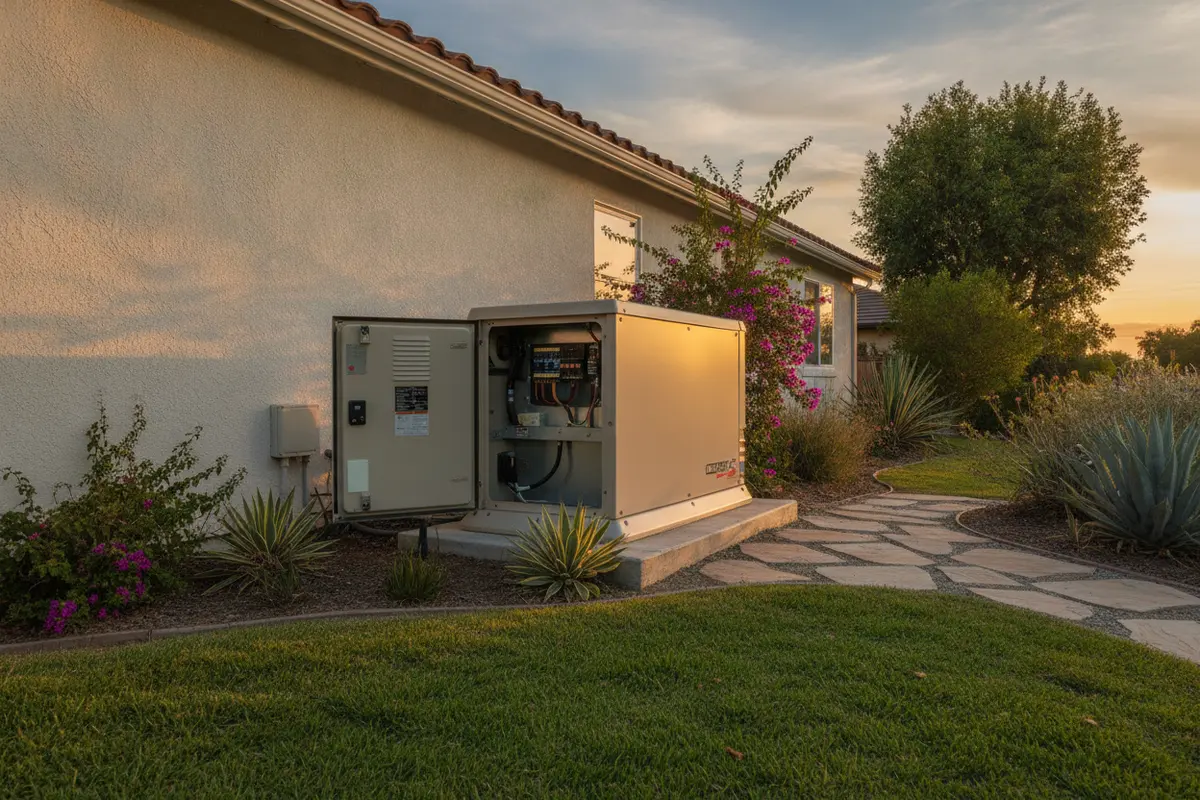
Before an assessment, note possible locations and constraints: a narrow side yard, nearby windows, fences, landscaping, utility equipment, or limited access. Take photos from several angles and share relevant property plans if available. Photos help explain the setting, but they do not establish whether a location meets required clearances. An installer must evaluate the site and identify whether preparation or a different location is needed.
Ask who will determine which permits and inspections apply, submit applications, and coordinate visits. Requirements can depend on jurisdiction, site, and work scope, so a general checklist cannot replace local review. The location should also allow suitable access for installation and future service without creating an obstacle for ordinary household use. The company’s generator placement and regulation overview illustrates why local review matters; do not assume the same local rules apply everywhere in Southern California.
Do not select a site or build an enclosure based on a photograph of another home. Conditions such as the distance to openings, surrounding structures, access routes, and manufacturer instructions may differ. Include the proposed location in the written plan and ask what conditions could require a change before work begins.
How can you prepare for an installation assessment?
Short answer: Bring a ranked load list, information you already have about fuel and electrical service, site photos, and questions about approvals and handover.
- List the appliances and circuits you want supported, separating essential from optional loads.
- Identify major equipment, including heating and cooling systems, pumps, and other motors or compressors.
- Gather information already available about your electrical panel and fuel service; do not remove covers or attempt electrical testing.
- Photograph possible outdoor locations, access routes, and nearby openings or obstacles.
- Ask for the proposed model, transfer arrangement, included work, approval responsibilities, and maintenance expectations in writing.
For a concrete example, imagine refrigeration, lighting, internet, and air conditioning are priorities. Before the assessment, decide whether cooling must run throughout an outage or only at certain times. Make a note of other large loads that might run at the same time. The electrician can use those details to assess realistic use instead of sizing around a vague request to “run everything.” If laundry or cooking can wait, state that; if they cannot, explain why.
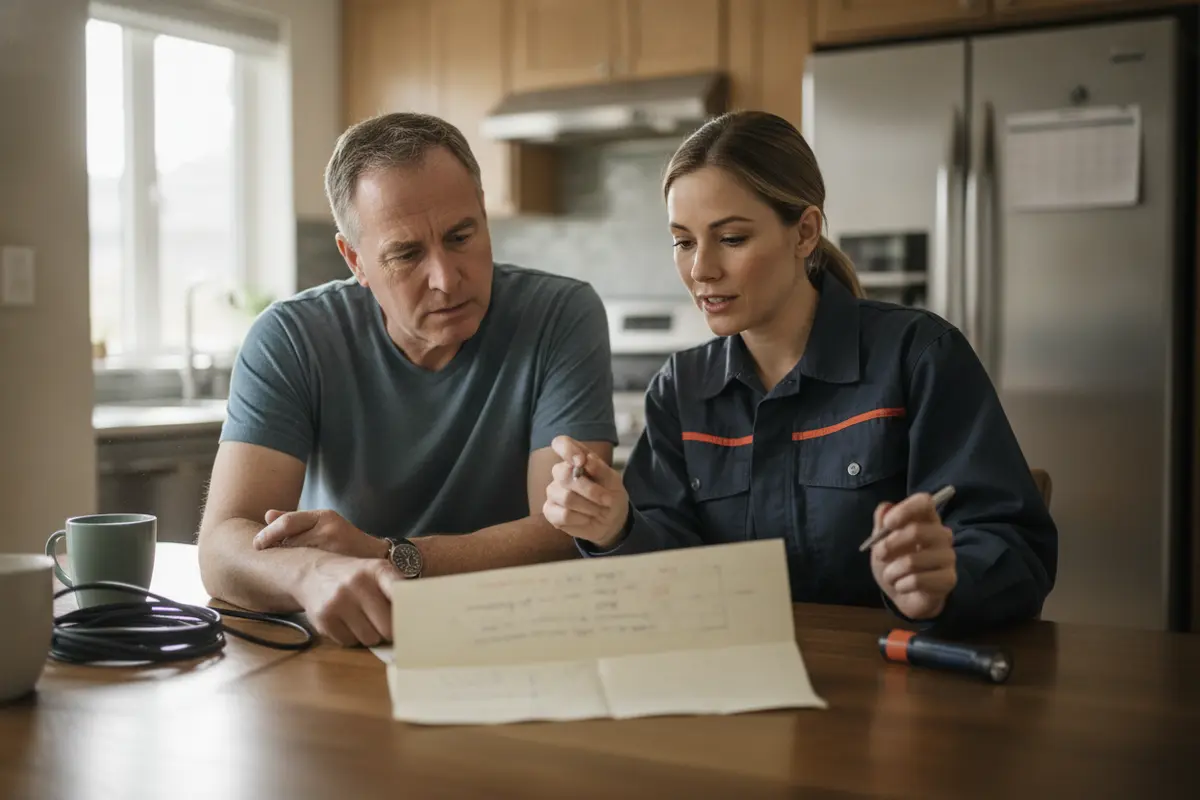
Ask for a walkthrough of how the system will work when utility power is lost and restored. The installer should explain which equipment transfers, how any load controls behave, and what the household should expect if demand is high. Ask what the homeowner can safely observe and which issues require a service call. These details are especially useful for anyone who has not used a standby generator before.
If an assessment raises broader electrical capacity questions, the company’s panel upgrade information and meter base guide can help frame a separate discussion. Existing wiring concerns may warrant a review of its whole-home rewiring service. These are not automatic requirements for every generator installation; the existing equipment and site determine whether related work is relevant.
What questions help you make the final choice?
Short answer: Ask the contractor to connect each recommendation to your priorities and clearly explain operating limits, approvals, and responsibilities.
- Which circuits and appliances are included, and which are excluded?
- How were startup demand and likely simultaneous use considered?
- What fuel supply assumptions were checked, and what remains to verify?
- Which permits and inspections may apply, and who coordinates them?
- What site conditions could alter the scope or typical project range?
- How will the system be started, tested, and explained at completion?
- What maintenance does the equipment manufacturer recommend?
- What should household members expect if load management delays or disables a selected load?
Clear answers help distinguish a complete proposal from one that leaves responsibilities unresolved. Make sure changes to equipment, work scope, or site preparation are documented. If the home has older or limited electrical equipment, ask whether the plan depends on a separate upgrade and request an explanation before authorizing work.
It is also reasonable to ask how the proposal would change if your priorities change. For example, if you initially list cooling as optional but later decide it is essential, which sizing, transfer, fuel, or load-management assumptions would need to be revisited? Getting that distinction clear before installation helps avoid assuming that adding a priority later is a simple adjustment.
Expert Electric Group serves customers across Southern California. Check its service areas and company background before arranging an assessment. For related planning context, see its whole-house generator requirements guide and step-by-step generator load guide.
Call (747) 999-6090 to discuss your generator plan
Frequently asked questions
Is a larger standby generator always better?
No. A larger unit may add capacity you do not need, while a smaller unit may not support the loads you expect. Base the choice on a documented load plan, equipment capabilities, and how your household expects to use the system.
Can a standby generator power the whole house?
It depends on generator capacity, the home’s electrical service, transfer equipment, and which loads operate together. Ask for a clear list of backed-up circuits and any load-management limits instead of assuming every circuit will be available at once.
Do I need to upgrade my electrical panel?
Not necessarily. The need depends on existing equipment, the proposed generator and transfer arrangement, and project conditions. An electrical assessment can identify whether panel changes or other work are needed.
How do I compare the typical range for two proposals?
Compare equipment and complete scope, including fuel work, transfer equipment, site preparation, permits, testing, and exclusions. A typical range depends on scope and materials, so ask contractors to explain differences in writing.
Contact Expert Electric Group—call (747) 999-6090 to discuss your generator assessment
The best home standby generator is the system that fits your household’s priorities and property conditions, with its capabilities and limits clearly explained before installation.
