
When homeowners ask, “What size Generac generator do I need for my house?” the safest answer is not based on square footage alone. The right capacity depends on which circuits you want to power, the starting demand of large equipment, your electrical service, fuel supply, and whether load management will be part of the design. A professional load calculation turns those details into a practical recommendation for your home in Southern California.
Call Expert Electric Group at (747) 999-6090 to plan the right Generac generator for your home.
What size Generac generator do I need for my house?
Short answer: Many residential standby-generator plans fall in the 10 kW to 22 kW range, but the correct Generac size depends on your selected loads and their starting demand. A smaller unit may cover essential circuits, while whole-home coverage may require more capacity or an approved load-management strategy. A licensed electrician should confirm the final size.
Generac’s own sizing guidance emphasizes electrical demand rather than house size. Its residential standby lineup includes multiple capacities, and the manufacturer’s sizing tool asks about the appliances and systems you want to protect. That is why a 1,500-square-foot home with gas appliances can have a different recommendation from a 1,500-square-foot home with electric heat, central air conditioning, an EV charger, and an electric range.
As a rough conversation starter, a 10 kW to 14 kW system may be considered for a carefully selected group of essential circuits. A 14 kW to 18 kW system may fit a broader set of loads in some homes. An 18 kW to 22 kW system may be considered when the goal is broader whole-home coverage, especially when load management controls large starting loads. These ranges are not a quote or a final design. The panel, wiring, transfer equipment, fuel source, and actual appliance data still have to be evaluated.
For the manufacturer perspective, see the Generac home generator sizing guide. It explains why a load-based assessment is more useful than choosing a unit from square footage alone.
What determines the generator size besides square footage?
Short answer: Generator size is driven by running watts, starting watts, the number of loads that may operate together, and the circuits included in the backup plan. Air conditioning, heat pumps, well pumps, electric ranges, dryers, and EV chargers can change the recommendation more than the home’s floor area.
A sizing visit should identify the electrical loads that matter during an outage and separate normal demand from startup demand. Motors and compressors can draw a higher surge when they start. If several high-demand appliances start at the same time, the generator must either have enough capacity for that event or use a properly designed load-management system.
- Running demand: The electricity an appliance uses while operating normally.
- Starting demand: The temporary surge some motors, compressors, pumps, and HVAC equipment need at startup.
- Simultaneous demand: The loads that may run together during a real outage.
- Backup priority: The circuits you need first, such as refrigeration, lighting, internet equipment, medical equipment, or heating.
- Service capacity: The rating and condition of the main panel, feeders, breakers, and transfer equipment.
Do not assume that every circuit can be moved to generator power simply because it is already connected to the house panel. A qualified electrician must confirm compatibility, conductor sizing, overcurrent protection, grounding, clearances, and the transfer method. If your panel is older or already near capacity, the right solution may include an electrical assessment before the generator is selected.
Should I choose essential-load or whole-home backup?
Short answer: Essential-load backup powers a defined group of priority circuits and can reduce generator capacity requirements. Whole-home backup aims to support most or all household circuits, but it still requires a load calculation, transfer-switch design, and a plan for high-demand equipment.
| Backup approach | Typical priority | What the design must confirm |
|---|---|---|
| Essential-load backup | Refrigerator, lighting, internet, selected outlets, garage access, and other priority circuits | Which circuits are protected, their running and starting demand, and how loads are separated |
| Broader partial-home backup | Essential circuits plus selected HVAC, kitchen, or comfort loads | Whether major loads can operate together and whether load management is needed |
| Whole-home backup | Most household circuits, subject to the generator and electrical design | Total demand, starting surges, service-panel compatibility, transfer equipment, and fuel capacity |
An essential-load plan is not an inferior option. It can be a deliberate way to keep the refrigerator, lights, communications, security equipment, and selected comfort systems running without asking one generator to start every major load at once. A whole-home plan can make sense for homeowners who want fewer manual decisions, but it still must be engineered around the actual electrical system.
How do I size a Generac generator for air conditioning, heat pumps, and pumps?
Short answer: Start by identifying the equipment with motors or compressors, then record its running and starting requirements. Central air conditioning, heat pumps, well pumps, sump pumps, and similar equipment can create the largest startup challenge. The final design may use generator capacity, staged starting, or load management.
In Southern California, air conditioning is often one of the loads homeowners want during an outage. A central AC system may draw a large startup surge, while an electric heat pump can add substantial demand when heating or cooling. Pool pumps, well pumps, refrigerators, freezers, and garage equipment also use motors that should be included in the assessment.
Electric cooking, electric water heating, clothes dryers, and EV charging can add continuous demand. The goal is not automatically to run every one of these loads at full output at the same time. The goal is to make a safe plan that reflects how your household will use the home during an outage. A generator professional may recommend priority circuits, sequencing, or load-management equipment to keep demand within the system’s limits.
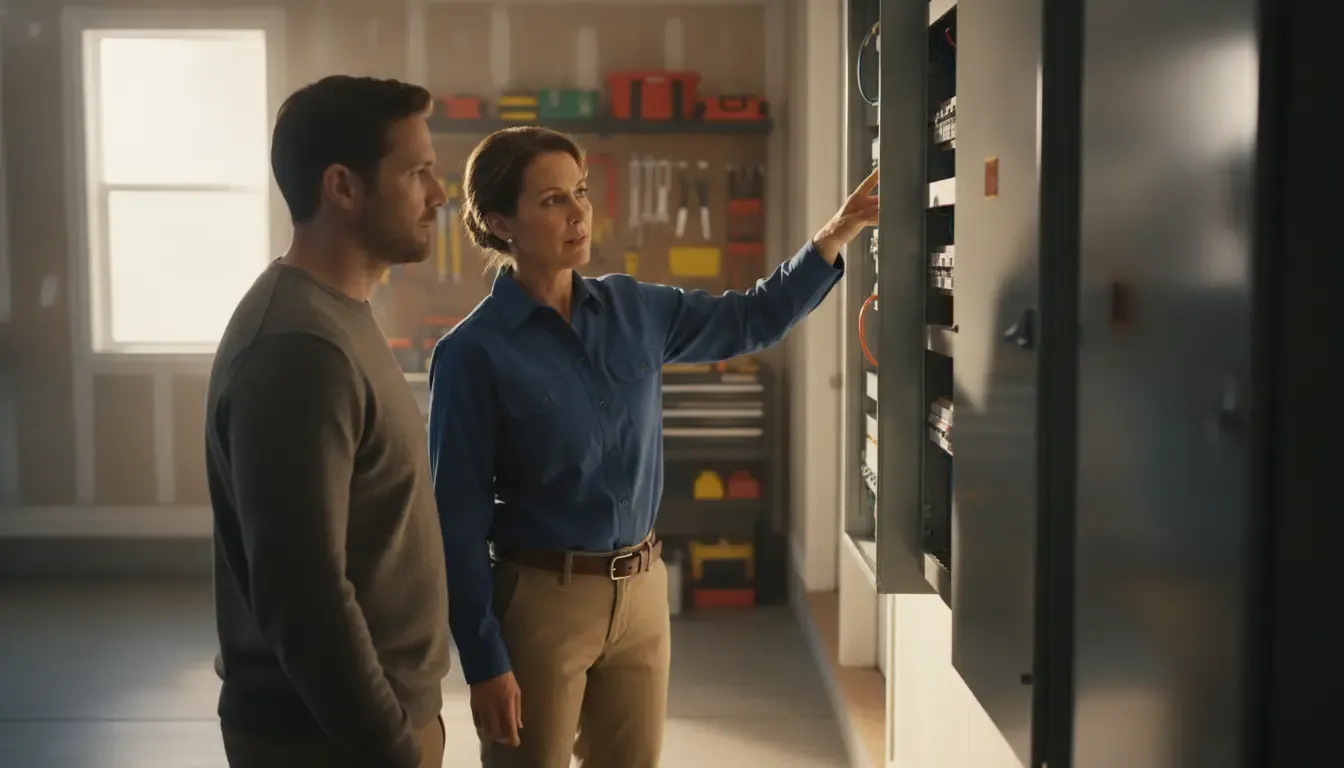
Generac’s home standby generator solution finder can help homeowners organize the conversation, but an online tool does not replace an on-site electrical review. Equipment labels, panel condition, local requirements, and the transfer-switch installation all affect the final recommendation.
What generator size is common for a 1,500 to 2,500 square foot home?
Short answer: Home size can provide a starting point, but it cannot determine a Generac capacity by itself. A smaller home with gas appliances and essential-load backup may need less capacity than a larger home with electric HVAC, an EV charger, or multiple motor loads. Use square footage to start the discussion, not finish it.
For a 1,500-square-foot home, ask whether the plan covers only essential circuits or includes central air, electric cooking, and other large loads. For a 2,000-square-foot home, the same questions matter more than the extra floor area. For a 2,500-square-foot home, the electrical service and equipment mix still determine whether a moderate-size system, a larger system, or managed loads are appropriate.
The following examples show how the planning conversation changes. They are not replacement calculations:
- Essential circuits in a gas-equipped home: Prioritize refrigeration, lighting, communications, selected outlets, and safety systems.
- Home with central AC: Confirm the AC startup demand and whether it can run with the refrigerator, lighting, and other priority circuits.
- Home with electric heat or a heat pump: Include heating and cooling demand instead of relying on a generic square-footage estimate.
- Home with an EV charger: Decide whether charging is excluded, scheduled, or included in the backup plan.
- Home with several large motors: Evaluate pumps, compressors, and starting sequence so the generator is not selected only from running watts.
For a personalized recommendation, Expert Electric Group can review the home’s loads, panel, transfer equipment, and backup priorities. The company’s Generac generator sales service can be paired with installation planning instead of treating equipment selection as a stand-alone purchase.
Does my electrical panel or transfer switch affect generator sizing?
Short answer: Yes. The main panel, service rating, feeder conductors, transfer switch, breakers, grounding, and available space all affect how backup power can be connected. A generator that looks large enough on paper may still need a different transfer arrangement or electrical upgrade before installation.
A standby generator is not connected by simply plugging it into a wall outlet. An automatic transfer switch separates the home from the utility and transfers approved circuits to generator power. The equipment must be selected and installed so utility power and generator power cannot be connected in an unsafe way.
Panel condition is also important. Corrosion, obsolete equipment, overloaded circuits, limited breaker space, or an undersized service can change the scope. If a future EV charger, addition, workshop, or electric HVAC upgrade is planned, mention it during the load review. Sizing only for today’s loads can make a future change more complicated.
Expert Electric Group provides transfer switch installation and can coordinate the electrical side of a Generac project. A licensed contractor should confirm the equipment arrangement, local permit requirements, utility considerations, and inspection path before work begins.
What should I ask before buying a Generac generator?
Short answer: Ask which circuits will be backed up, how starting loads will be handled, whether your panel and fuel source are compatible, what transfer equipment is included, and who will handle permits, inspections, commissioning, and maintenance. A written scope should explain the design assumptions.
- Which appliances and circuits are included in the backup plan?
- Were running watts and starting watts evaluated for the major equipment?
- Will the design use load management or staged starting?
- Is the existing electrical panel suitable for the transfer equipment?
- Does the project require a panel upgrade, new wiring, gas work, or other coordination?
- Who will handle permits, inspections, startup, and homeowner instruction?
- What maintenance schedule and service path will keep the generator ready?
These questions help separate an equipment-only purchase from a complete backup-power project. In addition to generator installation, Expert Electric Group offers generator maintenance plans so homeowners can plan ongoing service after commissioning.
Frequently Asked Questions About Generac Generator Size
What size Generac generator do I need for a 2,000-square-foot house?
A 2,000-square-foot home does not have one automatic generator size. The answer depends on the appliances, HVAC, pumps, electrical service, and whether you want essential-load or whole-home backup. A professional load calculation is the reliable way to choose the capacity.
Will a 20,000-watt generator run a whole house?
A 20 kW-class generator may support broad household coverage in some homes, especially with an appropriate transfer switch and load management. It may not support every high-demand appliance at the same time. Have the actual loads and starting demands evaluated before selecting the unit.
Is a 22 kW Generac large enough for a whole house?
It can be a suitable whole-home starting point for some residential designs, but it is not a universal answer. Central AC, electric heat, pumps, EV charging, and electric appliances can change the load calculation. The installation design must confirm the capacity.
Can I size a standby generator by square footage?
Square footage is only a rough screening factor. Two homes with the same floor area can have different generator needs because their HVAC, cooking, water heating, pumps, and backup priorities differ. Use a load-based assessment for the final recommendation.
Do I need a transfer switch for a Generac standby generator?
Yes, a permanently installed standby generator needs an appropriate transfer arrangement to move approved circuits from utility power to generator power safely. The transfer equipment must match the generator, panel, service, and selected backup loads.
Can an electrician help me choose the right Generac size?
Yes. A qualified electrician can review the panel, calculate the relevant loads, discuss essential versus whole-home coverage, coordinate transfer equipment, and explain permitting and maintenance. Expert Electric Group serves homeowners throughout Southern California.
Choosing the right generator size protects your home without paying for capacity you cannot use. If you are comparing Generac options, schedule a load and installation discussion with Expert Electric Group at (747) 999-6090.
