
For Malibu homeowners, wildfire season backup power planning is about more than keeping the lights on. A Public Safety Power Shutoff, damaged utility equipment, or a fast-moving emergency can interrupt refrigeration, communications, security, medical equipment, and garage access. If you are planning backup power in Malibu, call Expert Electric Group at (747) 999-6090 to discuss the home, the loads that matter most, and a safe installation path before an outage is imminent.
Call (747) 999-6090 to plan whole-home backup power in Malibu
What should Malibu homeowners plan for before wildfire season?
Malibu’s hills, coastal exposure, overhead utility infrastructure, and dry-season conditions create a different planning problem than an ordinary short outage. The goal is not to guess which generator is popular. The goal is to decide which systems must remain available, then design a compliant way to supply them without exposing your home, neighbors, or utility workers to avoidable hazards.
Start while conditions are calm. A licensed electrician can review your service equipment, available fuel, generator location, access for inspection, and the loads you want to support. That review also helps identify whether the project needs a transfer switch, panel work, a gas-meter conversation, a battery-based option, or a combination of systems.
For official local context, the City of Malibu’s PSPS information explains why residents should prepare for utility shutoffs and emergency conditions. Conditions and local rules can change, so use current City and utility guidance for emergency decisions.
Which backup power option fits a Malibu home?
There is no single best backup system for every Malibu property. Compare the options against the way your home is used and the conditions you may face.
- Portable generator: This can be useful for temporary, limited loads when an adult can operate it safely. It must remain outside, away from openings, and connected according to the manufacturer’s instructions. It is not a substitute for a permitted connection to the home’s wiring.
- Permanently installed standby generator: A standby system can start automatically when utility power fails and can supply selected circuits or a larger portion of the home, depending on the design. It needs a fixed location, fuel connection, electrical connection, transfer equipment, commissioning, and a maintenance plan.
- Battery energy storage: A battery system can provide quiet backup power without an engine exhaust stream. Its usable capacity, recharge plan, solar integration, location, and fire-code requirements must be evaluated for the property.
- Load-specific backup: A smaller design can focus on refrigeration, communications, security, a medical device, selected lighting, a garage door, or other priority circuits. This may be appropriate when whole-home service is not necessary or when the existing electrical system needs a staged plan.
Do not select a unit by the number printed on a shopping page alone. A load calculation considers starting current, continuous loads, HVAC equipment, pumps, electric ranges, water heating, EV charging, and the circuits that should remain off during an outage. Expert Electric Group can also discuss load-specific backup setup when a focused plan makes more sense than powering everything.
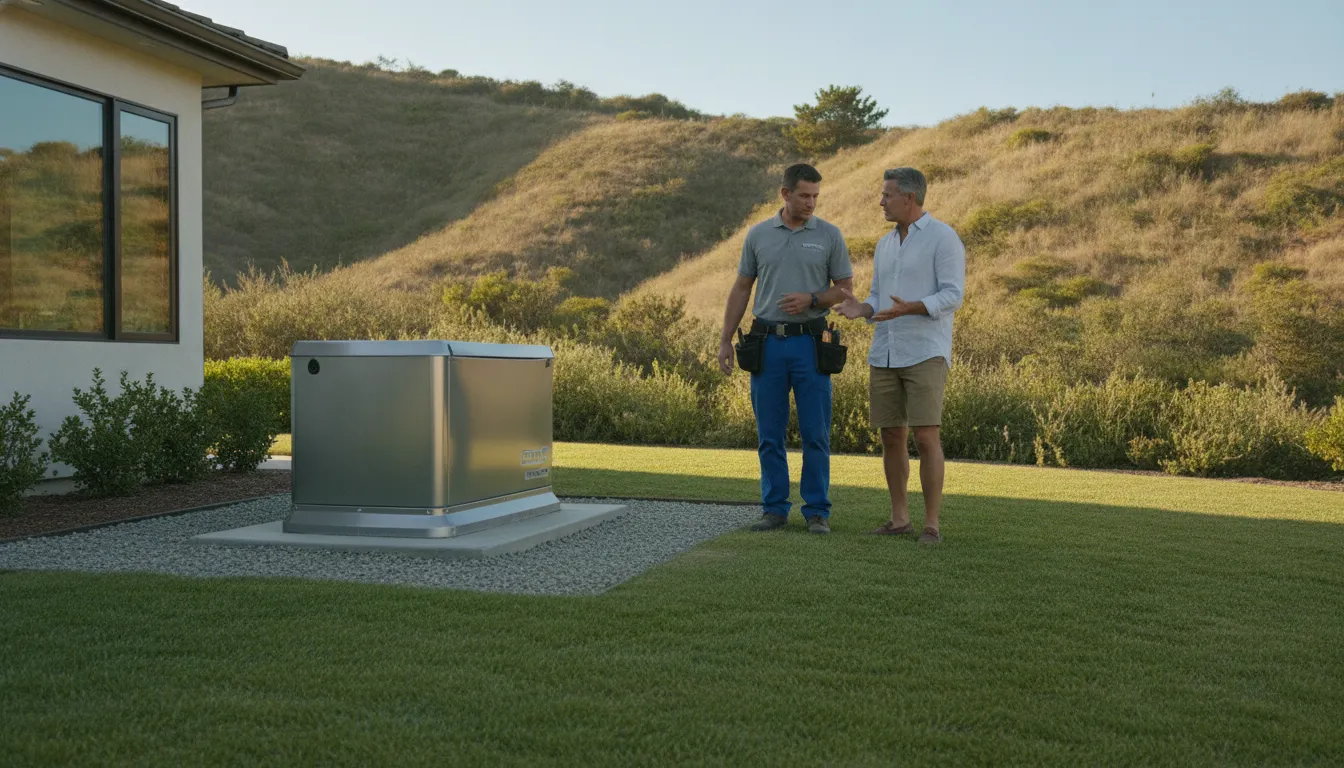
How do you choose the right generator loads?
Begin with the consequences of losing power, not with the appliances you happen to remember first. A Malibu backup-power plan may prioritize the following:
- Refrigeration and freezer circuits
- Internet equipment, phone charging, and lighting
- Security, gate, garage-door, and access systems
- Medical equipment or temperature-sensitive needs
- Heating, cooling, or ventilation equipment where appropriate
- Sump, well, pool, or other pumps that protect the property
- Selected kitchen or laundry circuits, if the system can support them
Then identify what should not operate during a constrained outage. Electric vehicle charging, resistance heating, large pool equipment, electric water heating, and multiple motor loads can change the design quickly. Turning every breaker on after an outage is not a load-management strategy.
Older homes may also have panel conditions, crowded service equipment, missing labeling, or previous additions that need correction before backup power is connected. A panel review can prevent a system from being ordered before the electrical path is known. If the service needs more capacity, review the options for main panel upgrades and power distribution as part of the project rather than treating it as a last-minute surprise.
What transfer equipment prevents dangerous backfeed?
Transfer equipment is the dividing line between a designed backup system and an improvised connection. An automatic transfer switch can detect a utility outage, isolate the home from the grid, and transfer selected loads to the generator. A manual transfer switch requires an operator to move the system through the approved sequence. The correct method depends on the generator, panel, service configuration, and local requirements.
Never use a male-to-male cord, never plug a portable generator into a wall outlet, and never defeat an interlock or breaker arrangement. These shortcuts can backfeed the electrical system, damage equipment, create a fire risk, and put lineworkers in danger when utility power is being restored.
The City of Malibu’s residential generator submittal packet asks for electrical documentation such as the generator rating, a backup-load schedule, conductor sizing, circuit identification, and required service-panel signage. It also calls for manufacturer information and site-specific plans. You can review the current Malibu generator permit submittal requirements, then have a professional confirm which requirements apply to your property.
For homeowners who need a new or corrected connection, Expert Electric Group provides transfer switch installation and can evaluate whether the existing panel and generator interface are suitable.
Where can a generator be placed safely near a Malibu home?
Placement is especially important in a hillside community. A generator pad is not a wildfire defense system, and installing one does not remove the need for defensible-space maintenance or an evacuation plan. The site should be evaluated for heat, exhaust, access, drainage, slope, fuel routing, vegetation, property lines, doors, windows, vents, and the path needed for inspection or service.
For portable generators, the U.S. Consumer Product Safety Commission advises operating them outside at least 20 feet from homes, with exhaust pointed away. It also warns never to use a generator inside a home or garage, even when doors and windows are open. Read the CPSC carbon-monoxide safety guidance before operating a portable unit.
Permanent installations still require a site-specific review. Do not transfer a portable-generator distance to a permanently installed system without checking the equipment manual and the authority having jurisdiction. Malibu’s permit packet asks the applicant to document distances from combustible construction and vegetation, property lines, operable doors and windows, screening, fuel equipment, and electrical trenches. The current packet and the manufacturer’s instructions should control the final layout.
Keep the area around the equipment free of cardboard, firewood, fuel containers, dry yard waste, and other stored materials. Avoid placing a generator where runoff, falling debris, or an emergency access route could compromise it. The safest location is one that works for electrical safety, combustion air, service access, fire considerations, and the home’s actual site conditions at the same time.
What permits and approvals may be needed in Malibu?
Permit planning should start before equipment is ordered. Malibu’s submittal requirements identify several items that can affect the project:
- Manufacturer specifications and installation instructions
- A site plan showing the generator, property lines, structures, vegetation, openings, screening, and trench locations
- Fuel information, including generator BTU requirements and the gas-meter location
- Electrical information, including a single-line drawing, generator rating, backup-load schedule, conductor sizing, and circuit identification
- Planning Division approval when the project does not qualify for the applicable streamlined process
- Additional review when the property has unusual service size, a large propane tank, existing solar, or other site conditions
These are planning considerations, not a promise that every Malibu project follows the same path. The City, the building official, the fire authority, the fuel utility, and the equipment manufacturer may each have a role. Expert Electric Group offers permit and utility coordination to help connect the electrical and fuel portions of the project.
California air rules are another reason not to wait until a PSPS warning. The California Air Resources Board explains that stationary and portable backup engines may be subject to local air-district requirements, emissions limits, permits, or operating restrictions. CARB advises owners and operators to contact the air district where the engine will operate. Read the CARB PSPS backup-engine guidance and confirm the current local requirements for your equipment.
What should you test before wildfire season?
A backup system is only useful if the property team knows what it can do and the equipment is ready when utility power is interrupted. Before the high-risk season, ask a qualified professional to review the installation and help confirm:
- The generator starts, transfers, and shuts down through the intended sequence.
- Priority circuits are labeled and match the agreed load plan.
- The transfer equipment prevents utility and generator sources from being connected at the same time.
- The battery, controls, fuel supply, and connections receive the maintenance required by the manufacturer.
- Airflow, exhaust direction, clearances, drainage, and service access remain unobstructed.
- CO alarms are installed and tested according to the manufacturer’s instructions.
- Household members know when not to operate a portable unit and where emergency instructions are stored.
- Contact information for the electrician, utility, gas provider, and emergency services is current.
Do not wait for the first red-flag warning to discover that a gate is locked, a shrub has grown into the safety area, a battery is weak, or a permit question remains open. A scheduled generator maintenance plan can support recurring checks, but the exact service interval should follow the equipment manufacturer and the installed system.
Schedule a Malibu generator planning review at (747) 999-6090
Wildfire-season backup power checklist for Malibu homeowners
| Planning step | What to confirm |
|---|---|
| Define the outcome | List the circuits and functions that must remain available during an outage. |
| Review the service | Check panel condition, capacity, labeling, grounding, and existing solar or battery equipment. |
| Choose the system | Compare portable, standby, battery, or load-specific backup based on operation, fuel, capacity, and site constraints. |
| Plan the connection | Use approved transfer equipment and a design that prevents backfeed. |
| Review the site | Confirm clearances, vegetation, openings, combustible materials, drainage, access, exhaust, and service space. |
| Confirm approvals | Ask the City, utility, air district, and installer which permits, reviews, and inspections apply. |
| Test and maintain | Follow the manufacturer’s schedule and document a pre-season test and operating plan. |
Get a wildfire-season backup power plan for your Malibu home at (747) 999-6090
Frequently asked questions
Can a portable generator power a Malibu home during a PSPS event?
A portable generator can supply temporary power when operated outdoors and connected according to the manufacturer’s instructions. It should not be connected to a home’s wiring through an improvised cord or outlet. A licensed electrician can review whether a transfer switch or another approved method is appropriate.
Does a standby generator eliminate wildfire risk?
No. A generator provides backup electricity, but it does not replace evacuation planning, defensible-space work, local fire guidance, or utility safety instructions. Keep the equipment area clear and have the site reviewed for heat, exhaust, vegetation, fuel, and access concerns.
Does Malibu require a permit for a residential generator?
Many permanent generator projects require permits and inspections, and the City of Malibu publishes residential generator submittal requirements. The exact path depends on the property, equipment, fuel source, electrical service, and current local rules. Confirm the current requirements before ordering equipment.
Should I choose whole-home or load-specific backup?
That depends on which circuits you need, the home’s service capacity, the generator or battery technology, and the installation site. A load calculation can compare essential-circuit backup with a broader whole-home design without relying on guesswork.
Call Expert Electric Group at (747) 999-6090 before wildfire season to plan safe Malibu backup power
Expert Electric Group serves Malibu and homeowners across Southern California with generator installation, transfer equipment, backup-power planning, and electrical coordination. Start with a site-specific conversation so your system is designed for the home, the loads, and the approvals that apply.
